• 83 Announcements

Let’s Take It To Go (Grouping away from WiFi)

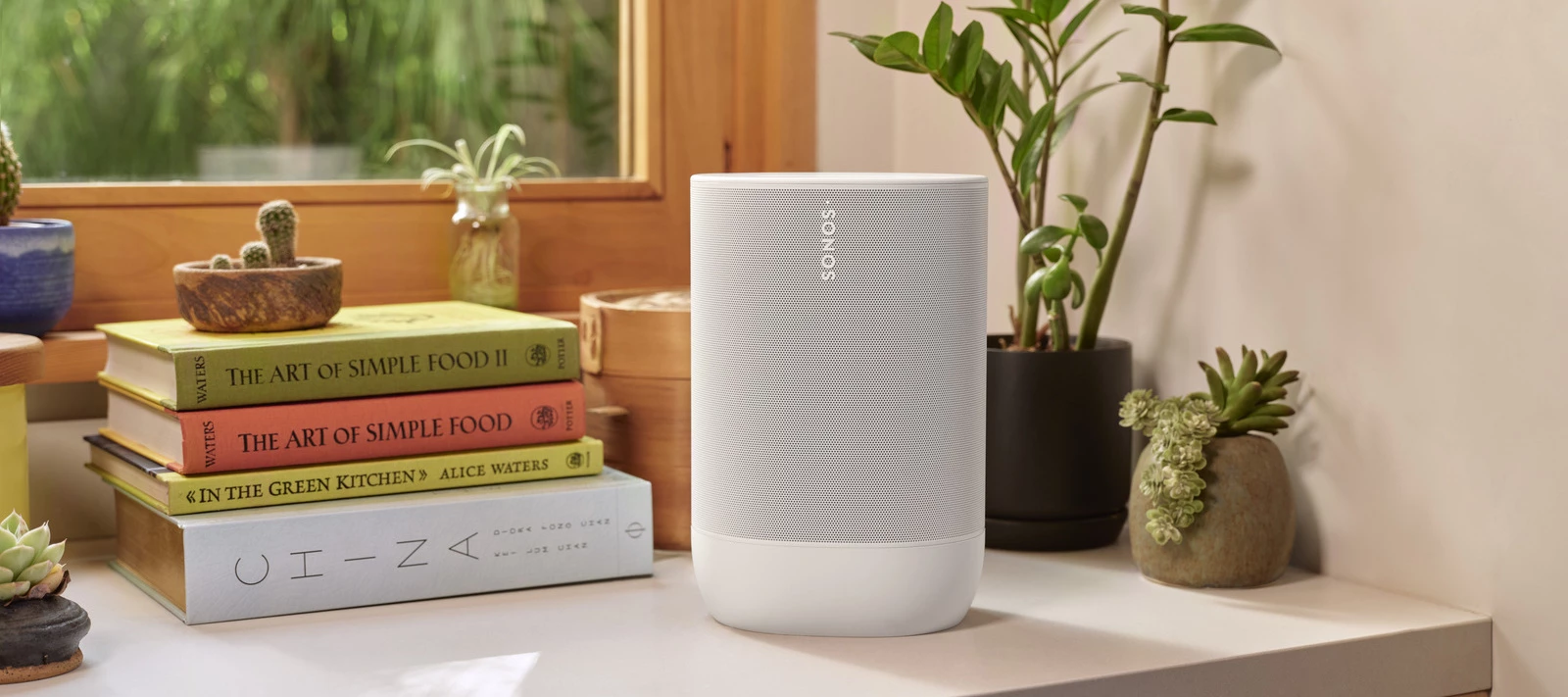
Have you ever wanted to synchronize your portable Sonos speakers while you're away from home and out of WiFi range? Guess what…You can now group up to four Move 2 and Sonos Play speakers while you're out on the go, without a wireless network nearby to connect to! 🔊🔊🔊🔊Starting with system version 94.1-75011 and later, you can now group Move 2 and the new Sonos Play while you're at the beach, camping in the woods, or catching a ride on a spaceship to The Dark Side of the Moon. Spaceship not included. 🚀 How to get the party started Before you leave home:First things first: Grouping on the go does not work "out of the box". All of the Sonos products need to be added to the same Sonos system before you’re out of WiFi range. To confirm this, check the Sonos app before you leave. If your products are all powered on and connected to your network, they should all be showing in the app, without needing to use the "Switch System" feature in Settings.Note: technically speaking, they must be part of the same "household ID" (HHID)When you're on the go:Once you're out of WiFi range, connect your source device (phone, tablet, laptop, etc.) to your first speaker via Bluetooth. Here's a refresher on how to do that. After connecting, start playing audio on the source device so that you can hear it from the first speaker. If you don’t start playing audio first, step 2 might not work correctly. this speaker is called the "group coordinator" On your second speaker, tap-and-hold the Play/Pause button until you hear it make the first and second chime, about 1-2 seconds. This is the same ‘press-and-hold to group’ action that's available while you're at home with the rest of your system, allowing you to easily move a speaker between groups without needing to open the app. The LED will blink briefly during this process. Audio should start playing within 5-10 seconds. this speaker is called a "group member" Repeat step 2 on up to two additional Move 2 or Play speakers, for a total of 4 speakers in the group (1 group coordinator and 3 group members). Enjoy the music!Pretty simple, and you don't need to use the Sonos app during this process. In fact, since the Sonos app doesn't play music directly, you won't be able to use it for controlling the speakers in this configuration. I checked the app to confirm, and it gave a screen explaining steps 1-4 above much more succinctly than I did:“Start content on one speaker, then press and hold the play/pause button on another to play them together.”The app forgot step 4, though. That’s my favorite part.When you get back home:If the speakers weren't powered off, they’ll still be grouped when you get home. They will show as being “Away” in the Sonos app. In that case, simply tap and hold the Play/Pause button on the group coordinator (which should have a blue LED, since it is directly connected to the Bluetooth source). That will ungroup all of the players at once, which will then allow them to search for your home network and reconnect automatically.   Alternatively, you can reboot the speakers to force them to reconnect to your home WiFi. So if they were powered off when you left the beach or the camp site (or the Moon), just power them back on when you get home. Nice and easy. Controlling the group  Basic playback controls work the way you might intuitively expect. Play, pause, skip forward, and skip backward can each be done using physical controls on each speaker in the group, when the service supports it. For example, you still can’t skip songs on terrestrial radio stations from the TuneIn or iHeartRadio apps. But you can skip forward (press > or double tap the Play/Pause button) or skip backward (press < or triple tap the Play/Pause button) while playing content from apps like Spotify or Apple Music.If you control the volume on an individual speaker, it changes the volume just for that speaker. If you control the volume from the Bluetooth source device (your phone or what have you), it will change the volume for the whole group. That’s the only one that caught my attention the first time I did it, since I initially expected it to only change the volume for the group coordinator. But then it made sense from that point forward. The source device is the One Speaker To Rule Them All.  Range limits  Officially speaking: The maximum supported distance is about 50 feet (~15 meters) from the group coordinator to the group members. That's pretty far! There are caveats, of course. The maximum distance can be reduced significantly by sources of wireless interference in the environment. Try to shoot for line-of-sight distances, where possible.We recommend starting the grouping process while the speakers are within about 10 feet (~3 meters) of each other, and making sure they group successfully before moving them further. And the controller (Bluetooth source) should stay in close proximity to the group coordinator, within about 25 feet (~8 meters) or less. Also, this is not a mesh network (like SonosNet of yesteryear); all group members must be in range of the group coordinator. For my fellow enthusiasts: think more like a star (hub and spoke) network topology.Unofficially speaking: one of the things that really blew my mind with this feature is how far I was able to separate each speaker from the group coordinator. I tested myself, and I was probably closer to 60 feet (18 meters) before I started hearing any noticeable audio interruptions. Other tidbits Fun facts ⬇️Follow the data: content (audio) is shared from the source device to the group coordinator via Bluetooth Classic grouping (synchronization) is done via an ad-hoc wireless connection between the group coordinator and the group members other products besides Sonos Play and Move 2 are not supported Roam’s hardware architecture requires Bluetooth and WiFi to share the same radio resources. Because grouping while away from home relies on coordination between those two wireless connections, enabling it on Roam could impact performance and reliability. some features from home that aren’t supported on the go: on-device voice services (Sonos Voice Control and Alexa) are unavailable in this setup stereo pairs are not supported USB-C line-in is not supported  with wireless networking, there is such a thing as "too close" - move your source device at least 6"/15 cm away from the group coordinator to prevent communication problems stereo pairs of Move 2 or Sonos Play will automatically separate when you leave your network, and automatically re-pair once they’re back in range groups are not persistent when leaving or reconnecting to a network; if you group your Move 2 and Play before leaving, you will still need to regroup them when you’re away from WiFi, and vice versaOne last thing that I tested for fun: you can, if so desired, have multiple group coordinators with their own sets of group members. As long as they’re part of the same Sonos household ID, they’re pretty flexible. I connected my phone to a Move 2, and a laptop to another Move 2. Then I grouped and ungrouped a pair of Plays with each Move, just for kicks. Why would anyone do this? I’m not quite sure. Maybe to listen to music on one group and play a gaming system on the other group for the true glamping or desert party (🔥👨) experience? You’ve got me. But it’s there if you want it. Share your dream setups in the comments if you plan on pushing the limits in ways I’ve yet to imagine.  Wrap-Up One of the best things about Sonos products is that we are committed to bringing awesome new features, long after a product was purchased, via free software updates. The system gets better over time. And it’s the systemness that makes the whole better than the sum of the parts.To me, the ability to group your speakers while away from your WiFi network is just the latest example of this commitment. It wasn’t available when Move 2 was released in September 2023, but it’s available now. Let us know what you think in the comments!

Related content:Software News
Era 100 SL
Sonos Play

Come out and Play!

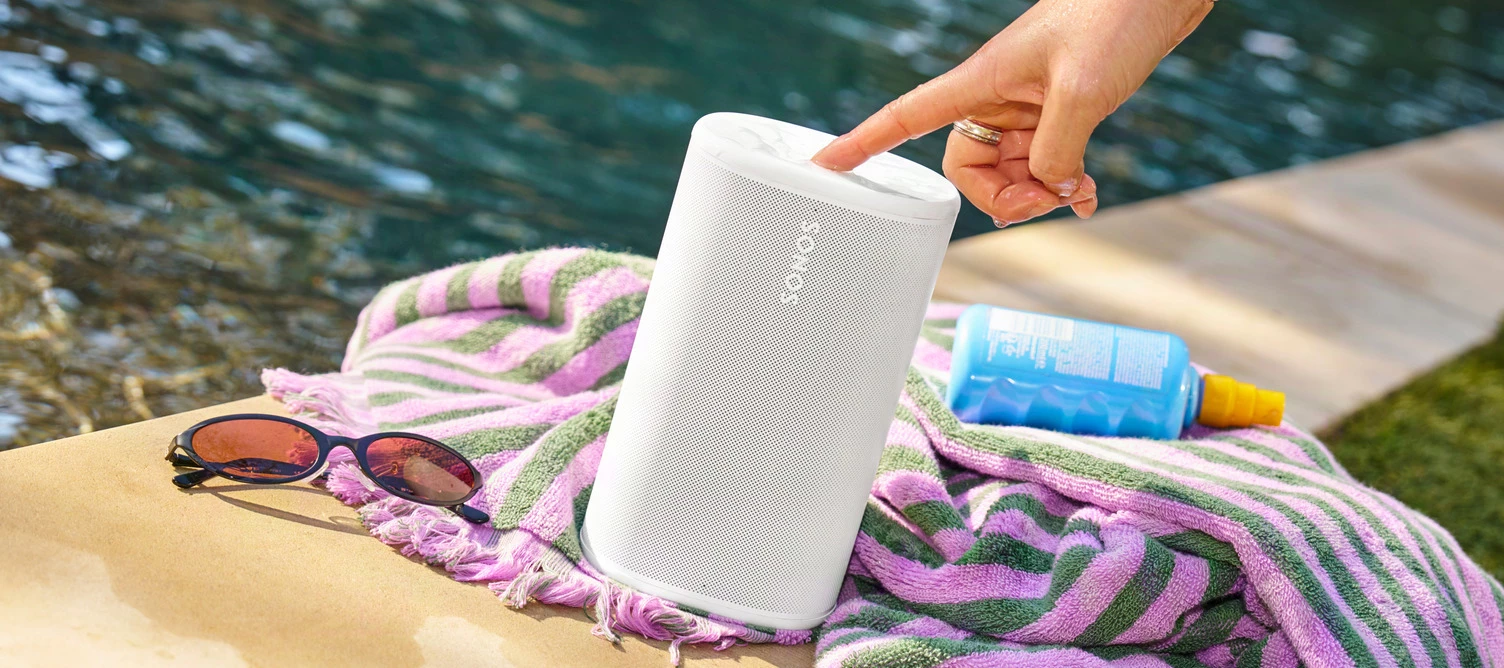
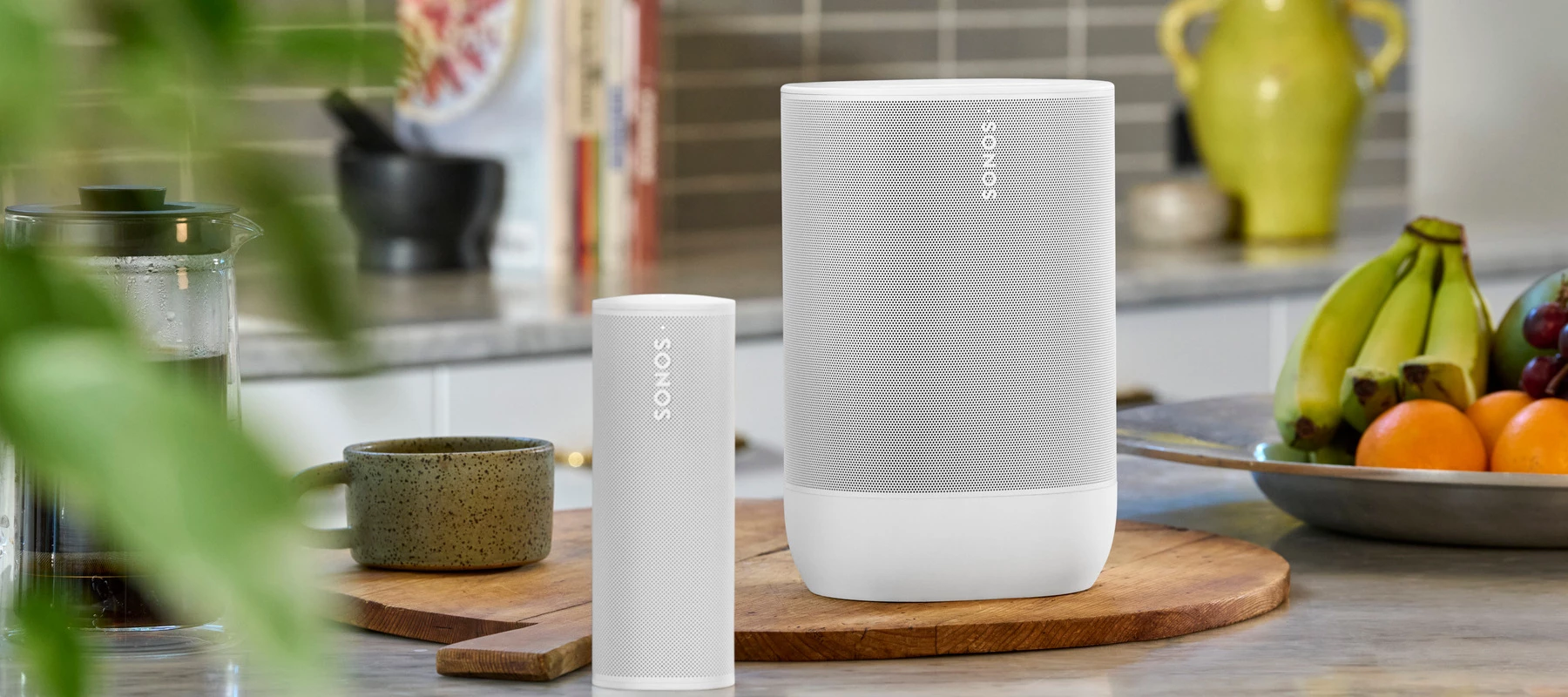
The day is finally here! A few weeks ago, we introduced you to our newest portable speaker, and today, I am excited to announce that Sonos Play is officially available for purchase at sonos.com and in a store near you.Play was designed to be the most versatile building block in your Sonos system—a true home speaker that just so happens to be able to join you on your travels. Let’s get into the product specs, technical details, and all the cool new stuff Sonos Play can do. Basics Sonos Play features:stereo sound 24 hours of battery life IP67 water rating drop resistant WiFi 6, Bluetooth 5.3 charging base included convenient and removable utility loop grouping on the goThe hardware playback controls can be used by pressing the play/pause button once (to play or pause), twice (to skip to the next track), or three times (to skip to the previous track). There are also dedicated volume buttons, a Voice Control button (for Sonos Voice Control and Alexa), a microphone on/off switch (this also impacts Automatic Trueplay), a Bluetooth pairing button, and a power/sleep button. It has a microphone LED at the top, a status LED facing front, and a power LED at the bottom, along with three microphones and an ambient light sensor on top.  Audio Let me jump straight to your most frequently asked question - how does Play compare to Move 2 and Roam 2? Play is essentially the offspring of the two, just about a 50/50 split down the middle - closer in size to the Roam 2, but closer in audio profile to the Move 2. It really is the “just right” Goldilocks speaker. One thing they all share in common: Automatic Trueplay tunes each speaker to the unique acoustics of the environment you use them in. Where Roam has maximum portability and the smallest design, there's only room for one tweeter and one woofer, which limits the ability to accurately reproduce stereo audio. In my book, Roam takes a slight lead for portability, but Play knocks Roam 2 out of the park on sound quality. Move 2 is bigger and bulkier, which gives it extra low-end compared to Play, but that also makes it less convenient to throw in a backpack or bring in a carry-on bag. Once you get above a certain threshold, Move 2 takes the lead in terms of maximum volume and overall bass response. But especially at lower volumes, you might not be able to easily distinguish between them. Play features three class-H digital amplifiers that power one midwoofer and two tweeters, which allows for stereo separation like Move 2. But unlike Move 2, it also incorporates two passive radiators to deliver deeper bass.And of course, you can easily pair two Play speakers together over Wi-Fi for an even wider soundstage. Just a quick tip: to get the most spatial separation, don't keep your stereo pair of Play speakers too close together. You've gotta keep 'em separated. Battery and Charging Let me be up front: Sonos Play comes with a really cool charging base, but it doesn't include a power adapter. I know this may lead to some frustration, and we've had quite a lot of discussions about this internally.What it boiled down to is that we have made a genuine commitment to reducing our environmental impact. We've found that USB-C chargers have become quite ubiquitous with our customers, and we know that a potentially significant portion of chargers in the box would become e-waste.For those that are interested in sustainability, I'd encourage Sonos customers to check out our commitments to sustainability to learn more. For instance, check out our work on developing the world's first Sound Sanctuaries! 💙To charge Sonos Play, we recommend a USB-PD certified 15V / 3A (45W) power adapter. With a 45W or higher USB-PD adapter, Play charges from 0-50% in about 1 hour, and 50-100% in about 2 hours (3 hours total from 0-100%). The minimum supported adapter is 9V / 2A (18W). If the adapter is less than that, the charging base will blink red and the speaker will fail to charge. Note: for more info on Sonos charging requirements, check out this article by u/LizFromSonos!A few neat power tips:Power Drain: When resting fully charged on its base, idle power consumption is only about 1.6W. When off the charging base and fully powered off (not sleep mode), it should lose 1% or less per day. In my own testing, it lost less than 0.5% per day in a temperate environment Power Bank: If your phone battery gets low while off the grid, Play can charge your devices via the USB-C port at up to 5V / 1.5A (7.5W).   Portability Sonos Play features a convenient utility loop/carrying strap, which is both removable and replaceable, and it really adds to the flexibility of this product. I've found myself hanging it all over the place: on a hook outside the shower, from the corner of a chair in the backyard, around the handle of a cabinet in the kitchen. It really elevates the sound (pun intended) and makes it much more adaptable to the environment.The strap isn't indestructible, though; it's been tested to hold up to 4 times the weight of the speaker itself, which weighs 4.48 lbs/2.03kg. Be careful not to stretch, pull, or swing the loop too hard (as I did for testing purposes) and you'll find it's built to last.With the IP67 rating, you can submerge Play in up to 1 meter of water for up to 30 minutes. To put it another way - you don't have to worry about accidentally dropping Play into the bath or getting it wet in the shower. Keep in mind that other chemicals (like pool water sanitizers and salty ocean water) can cause unexpected damage and should be avoided. Networking & Connectivity As part of my testing for grouping outside of WiFi (more on that below), I found myself also testing the boundaries of what Bluetooth 5.3 could do. For those of us that remember the early days of Bluetooth, it's fair to say that the range of Bluetooth these days is pretty mind boggling.For example, I tried putting my Play on one side of the house, then went upstairs and across to the other side of the house and started playing music on my phone. When I went back to the speaker, it was playing without a hitch - so I took it outside. It wasn't until I started getting to my neighbor's neighbor's house (two doors down) that I finally heard interruptions. Mind blown! 🤯 Of course, this entirely depends on the environment, and your mileage may vary. Try it out and let me know in the comments how it goes.The line-in functionality is also pretty handy. I tested with an iPod, a record player, and a phone, all of which came through loud and clear. Note that you may need to adjust the line-in settings (particularly the Line-In Level) to get the best audio without clipping. New Features One of my favorite new features is the ability to group up to four Sonos Play and/or Move 2 speakers while you're away from WiFi. I've written a separate deep-dive about grouping on the go, so jump on over for all the glorious details on that topic. But suffice it to say - I look forward to using that to push the boundaries in new and exciting ways. Sonos on a boat!The other feature that I think of as the "Ace in the hole" is that Sonos Play can be used as a power bank for your phone or other USB-C devices. This is one of those features that I don't imagine most people would use frequently, but when you do need it (say, while out in the middle of the woods and your phone dies), it will come in clutch. It can provide 5V up to 7.5W, meeting the USB BC 1.2 standard. Wrap-Up Sonos Play is available globally starting today in Matte Black and Matte White for $299 USD / $399 CAD / €349 EUR / £299 GBP / $499 AUD.I know that’s a ton of info, so if you have any thoughts, questions, or feedback, let me know! I know some of you have already gotten your hands on Play, and I can’t wait to hear what you think. I'll be hanging out in the comments to join in on the discussion.

Related content:Hardware News
📲 New Sonos App & Player Updates Now Available! 🔊
📲 New App Update Available! 🔊
📲 New Sonos App & Player updates for early-March are now available! 🔊
Era 100 SL
Sonos Play

Coming Soon: Sonos Play

Hi, everybody 🖖 I’ve been looking forward to today for some time now. I’m super stoked to announce our most versatile speaker yet: Sonos Play!We designed this speaker to deliver seriously big stereo sound and deep bass in a compact, take-anywhere design. With up to 24 hours of continuous battery life, an IP67 waterproof rating, and a handy utility loop, it is fully equipped to handle whatever your day brings. It's just as comfortable on a table top or desk as it is in a backpack or carry-on bag. And it’s a first-class upgrade for its spiritual predecessor, the original Play:1. At Home And On The GoWhen you're at home, Play can rest on its convenient 45W (15V/3A) charging base. It connects to your home network over WiFi 6 as a seamless part of your larger Sonos system. You can control everything using the built-in touch controls, the Sonos app, or hands-free with three beam-forming microphones supporting Sonos Voice Control and Amazon Alexa. Group it with the rest of your system, or use it to share Bluetooth audio all around the home.When you're headed out, Play supports Bluetooth 5.3 for convenient, high-quality audio. Wherever you place the speaker, Automatic Trueplay™ continually optimizes the sound for the acoustics of your environment. The utility loop comes in handy – it’s easy to grab on the way out the door, and convenient to hang almost anywhere you go. And for sustainability, the battery was designed to be easily replaceable so you can keep the music going for years to come.More New FeaturesI also want to highlight two of my favorite new features. First, you can now group your speakers on the go, without requiring a WiFi network! If you're completely off the grid at a campsite or the beach, you can group up to four of your Sonos Play (or Move 2) speakers together directly from a Bluetooth connection when away from home, filling the space with synchronized audio. I’ll have more to share on this feature when it’s released in a future post.Second, if your phone battery gets low, Sonos Play doubles as a power bank. Just plug it right into the USB-C port to charge it up while the music plays.Coming SoonSonos Play is available for pre-order starting today for $299 USD / €349 EUR / £299 GBP / $499 AUD in matte finish with Black and White color options. I’ll be back with a deeper dive on tech specs and a full review of Sonos Play after the official launch on March 31st. In the meantime, let me know your thoughts and questions down below – I'll be hanging out in the comments to help answer whatever I can.Cheers! 

Related content:Hardware News
📲 New Sonos App Update Now Available! 📲
📲 The new Sonos Player Update for late-February is now available! 🔊
📲 The new Sonos App & Player Updates for late-January are Now Available! 🔊

📲 The new Sonos App & Player Updates for late-January are Now Available! 🔊

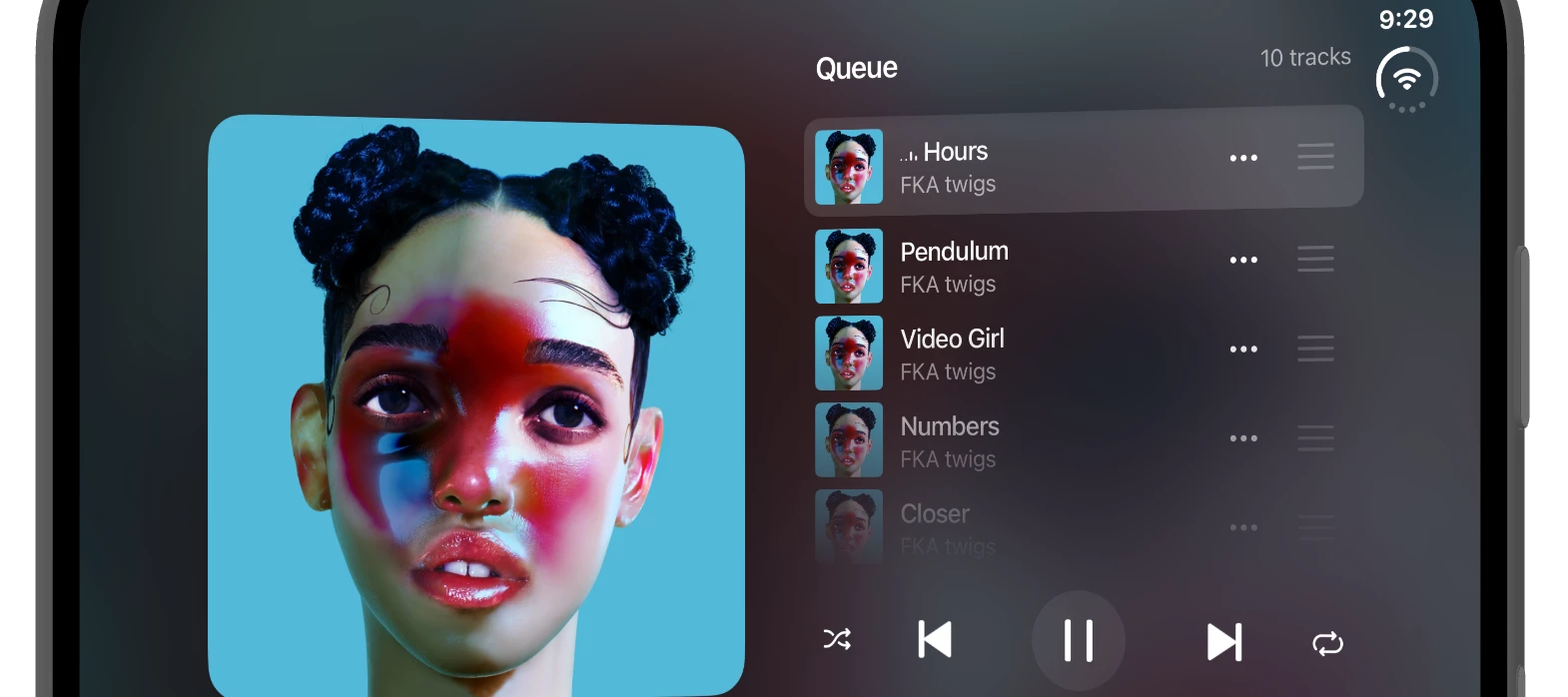
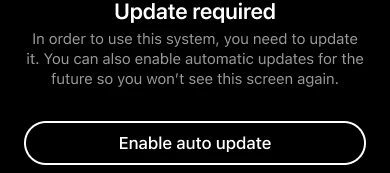
Hey everyone!This morning, the team is deploying an update to both the Sonos app and player firmware. This release introduces a long-requested feature and several stability fixes to keep your system running smoothly. As always, if you’d like to look at previous updates check out our App Release Notes here, as well as our System (Player) Release Notes here.This will be another Phased Rollout, which means that the update may not get pushed to your system right away. Some iOS users update by going directly to the App Store. If you still do not see the update, try refreshing the App Store by pulling down (as if you were refreshing a page) on the Account page that shows all your pending app updates.Note that this rollout will take approximately 2 weeks to reach all users. App UpdateiOS - 81.00.52Android - 81.00.51 Save Queue as Playlist: You can now save your current queue as a playlist, making it easy to revisit your favorite listening moments anytime. Fixed issue with slider size not changing when font set larger than medium Player Update Security Improvements Player Stability Fixes Release Notes & SupportYou can find our full archive of release notes for previous updates here: App Release Notes System Release Notes Questions or feedback? Let us know in the comments below! Our team is listening and we appreciate your input as we continue to improve the Sonos experience.

Introducing Amp Multi: 8 channels, 125W/ch and efficient GaN technology
📲 The new Sonos App & Player Updates for mid-December are Now Available! 🔊
Latest Software Update - Early December '25
Latest Software Update - Early November '25
Latest Software Update - Early October '25

Latest Software Update - Early October '25

Hello everyone! Earlier today we deployed an update on iOS and Android for the Sonos App and also an update to our firmware (Player). Have a quick look at what's changed below. If you are interested to know what has changed over the last few months, check out our App Release Notes here, as well as our System (Player) Release Notes here. Once again, this will be a Phased Rollout. You might have the update ready and waiting for you within the App store or you will need to be patient until it becomes available to you. In the App update: iOS - 80.30.35Android - 80.30.31 Fast Scroll in Queue for AndroidQueue Improvements: You can now jump to the currently playing song in a queue and scroll through long queues faster.Android 8 & 9 no longer supportedFor Android 8 and 9 users: The Sonos app will now operate in an unsupported mode, meaning it will no longer receive updates, and will be limited to music playback controls. To access all system configuration options, update to Android 10 or higher. Additional changes:Minor UI improvements (Android). Swipe-to-dismiss usability improvements on iOS. Improved performance for playlist editing on iOS. In the Player update: New Firmware version - 91.0-70011 Fix for some issues that may result in popping artifacts on Arc UltraThis update addresses some of the reported popping artifacts on Arc Ultra. Please keep in mind that these sounds can also result from cables or other peripherals/software affecting the signal. If you continue to experience this issue, contact our support team if you haven’t already. Feel free to share your feedback, it is much appreciated as always! Sotiris C 👻 = O 

Related content:Software News
Hey Sonos, turn on the lights 💡

Hey Sonos, turn on the lights 💡

Hey everyone - the time has come! Starting today, you can use Sonos Voice Control with Hue lights and smart plugs. Just speak to your voice-capable Sonos speakers to turn lights on or off, adjust brightness, change colors, or set a scene. The integration is supported in English (en-US) and French (fr-FR). From my own personal testing, there are a few things to call out for awareness. First - you’ll start this process in the Hue app, not the Sonos app. Equally important - make sure you have both apps first. Clicking the “Sonos Voice Control” button in the Hue app won’t open the Sonos app unless it has already been downloaded to your device. Both apps will also need to be up-to-date to proceed, and both systems will need up-to-date firmware as well. If you happen to use multiple Sonos or Hue accounts (as I occasionally do), make sure to log in to the correct account in both apps first.  Setup ProcessAfter updating, open the Hue app and go to Settings > Smart home > click the plus sign (+) in the upper right corner, then select “Sonos Voice Control”. This will take you to the Sonos app; follow the prompts to connect your Sonos system to the correct Hue Home (in case you have more than one), and you’re all set. If needed, you can also unlink Sonos Voice Control from the same “Smart home” section of the Hue app, or from the Hue website here. Available CommandsAll of the basic commands you’d expect are there, just start with “Hey Sonos” - “turn on the lights in the kitchen,” “set the living room lights to 80%,” “turn the porch lights to blue.”, etc. You can also activate Hue scenes (“turn on my movie scene”), and if you use Hue smart plugs, you can turn them on or off with a voice command as well. If the room name in the Hue app matches the room name in the Sonos app, you can just say “turn on the lights” without including the room name. Nice! Otherwise, “turn on the lights” will turn on all of the lights, so make sure to include the room name when appropriate.One thing to be aware of, turning off Hue scenes via SVC is not currently available. Also, if you have multiple devices with the same room name (such as a smart light, a smart plug, and a Sonos speaker) and tell Sonos “turn on the kitchen”, the lights will take priority. That way, it doesn’t also start playing music and turning on your smart plug.  How It WorksOne thing that’s pretty neat - once you’ve configured this integration (using an active internet connection), Sonos Voice Control will continue to work in an offline environment. Add that to the list 👏And for my fellow tech nerds that might be interested in this sort of thing, this all happens over an SSL-encrypted connection between your Sonos products and Hue Bridge, before being relayed over the Zigbee protocol to the lights and smart plugs. With that in mind, Sonos and Hue have to be able to communicate directly over the Local Area Network (LAN); you won’t be able to control a Hue light in your summer home remotely from the Sonos system at your primary residence, for example. Other DetailsAnother thing to be aware of - changing room names can take up to 24 hours to sync between services. For example, voice commands might not work as expected immediately after changing a room name in the Hue app from “Living Room” to “Family Room”. It might be significantly faster than this…hours, or perhaps even minutes…but give it up to 24 hours and try again. Using multiple requests in one command (“turn the lights off in the kitchen and dim the lights in the living room”) isn’t supported, and scheduling still needs to be done in the Hue app (“turn the lights on at 6 am” won’t work as intended).Sonos Voice Control will work with both Hue Bridge (v2) and Hue Bridge Pro, so those of us that have been using Hue for a minute can continue to use our existing setup. I haven’t tried out the Hue Bridge Pro yet, but based on what I’ve seen so far, I think I’m going to pick one up and give it a try. Resources and Wrap-UpAll of this should be pretty straightforward, but I’ll be here to help if you have any questions or feedback. I’ve personally found myself using this feature daily, and I hope you enjoy it as well. Special thanks to our partners at Hue in this collaborative effort! As always, feel free to hit us up any time on Reddit chat with myself and the rest of TeamFromSonos. We appreciate the chance to be there in the sub and enjoy hearing from each of you directly.  🦇 = N 

Related content:Software NewsPartner News
Latest Software Update - Mid September '25

Latest Software Update - Mid September '25

🗣️ Hi Everyone 🔊 This afternoon, we deployed an update for iOS and Android as well as an update to our firmware (Player). See below for a rundown of what's changed. If you'd like a look at what has changed over the last few months, check out our App Release Notes here, as well as our System (Player) Release Notes here.As with most updates, this will be a Phased Rollout, which means that you may (or may not) get the update pushed to your system straight away. Some iOS users have sidestepped this in the past, by going directly to the App Store. If you still do not see the update, try refreshing the App Store by pulling down (as if you were refreshing a page) on the Account page that shows all your pending app updates. In the App update: iOS - 80.28.32Android - 80.28.36 Sonos Voice Control x Philips Hue Support More info below in Player section. Play ButtonWe’ve revamped the Play button on content screens to make it clearer where playback will start and to let you easily change the room or group without leaving the page. Android versions 8 & 9 enter limited compatibilityDevices on Android 8 or 9 will soon be unsupported and will no longer receive updates—please upgrade to Android 10+ to keep enjoying the latest Sonos features. Devices not fully supported will be able to control playback but will not be able to configure the system. Additional changes:Minor UI improvements (Android and iOS) Improvements to TalkBack UX on Home Edit screen Fix-it flow for unbonded SubsOnce you have updated the app, you will be required to update the system (Players). In the Player update: Firmware - 91.0-68261 Sonos Voice Control x Philips Hue SupportWe're excited to announce that you'll soon be able to use Sonos Voice Control to manage your Philips Hue smart lights and plugs directly from your Sonos speaker.Simply use your voice to turn lights on/off, dim them, change colours, or activate scenes.Requirements:A Sonos voice-enabled speaker A Philips Hue Bridge Linked Sonos and Hue accountsThis feature will be available in US-English and French.See the related Community post here for more information.Note: After installing this update, Hue integration will not yet be available - the feature is yet to roll out over the coming weeks. As always please do not hesitate to share your feedback, we genuinely appreciate it! 🙏🏽Corry P Edit: Emphasised that Hue feature is not immediately available after updating.

Related content:Software NewsPartner News
Introducing Hue x Sonos Voice Control

Introducing Hue x Sonos Voice Control

Hi everybody 💡🔊💡🔊 I'm excited to announce that you will soon be able to use Sonos Voice Control with Hue smart lights and plugs! Simply speak to your Sonos voice-capable speakers to turn your lights on or off, change colors, and more.  What You’ll Need When available, you’ll need:a Sonos Account and a Hue account a Sonos product with Sonos Voice Control enabled a Philips Hue Bridge or Bridge Pro  a Hue light or smart plug the latest updates (apps and firmware) for both Sonos and HueSonos products with built-in Sonos Voice Control include: Arc Ultra, Arc, Beam (gen 1 and 2), Era 100, Era 300, One, Move, Move 2, Roam, Roam 2, and Era 100 Pro.Note: Hue bluetooth-only systems are not supported; a Philips Hue Bridge or Bridge Pro is required to keep everything in sync. Available Voice Commands With a simple voice command, you’ll be able to:Switch the lights on/off Dim or brighten lights Change light colors (Hue color lights required) Start scenes Turn smart plugs on/offSonos Voice Control is available in US-English and French. Additional Details These new features are part of an update to the Sonos and Hue apps and firmware, rolling out in the coming weeks. Sonos Voice Control commands are processed locally on your speaker, and never stored or sent to the cloud, only to your Hue Bridge over the local network. You can take a look on our website for more about Sonos Voice Control. I’ll make sure to update the sub when this goes live as well.Thoughts, questions, feedback? Share ‘em below.  🧟 = M 

Related content:Partner NewsSonos News
New Player and App Update Available! Sept '25🔊

New Player and App Update Available! Sept '25🔊

🗣️ Hi Everyone 🔊This morning, we deployed an update for iOS and Android as well as a small patch to our firmware (Player). See below for a run down of what's changed. If you'd like a look at what has changed over the last few months, check out our App Release Notes here, as well as our System (Player) Release Notes here.As with most updates, this will be a Phased Rollout, which means that you may (or may not) get the update pushed to your system. Some iOS users have sidestepped this in the past, by going directly to the App Store. If you still do not see the update, try refreshing the App Store by pulling down (as if you were refreshing a page) on the Account page that shows all your pending app updates. In the App update:Android & iOS - 80.27.6 Fast Scroll in Queue for iOS You can now fast scroll in the queue, and opening the queue will jump to the track that is currently playing. Group Volume sync with haptic feedback. Want to have all your rooms at the same volume level? Move the group volume all the way to the left, wait for a small buzz, now all your rooms will follow the group volume.  Once you have updated the app, you will be required to update the system (Players). In the Player update: Firmware - 90.0-68140  Fix for unexpected increase in bass output Fix for Trueplay tuning failing on Arc Ultra with Sub or surrounds. As always please do not hesitate to share your feedback (about the new Group Volume sync, or anything really), myself and the team genuinely appreciate it! 🙏🏽 

Related content:Software News
A new Sonos App update is now available!
A new player update is live!

A new player update is live!

Hello everyone! Today we released a new update for your players. Player version - 85.0-66270Requires App version 80.23 or above To strengthen overall security and meet evolving regulatory expectations (including those in the EU), we’ve introduced enhanced user authentication controls. These new features are optional and are detailed below. This update is focused on improving system security and includes some features many of you have been asking for.To access the new settings, go to your Account Settings and open Privacy & Security. You’ll find a new section called Connection Security, where you can configure the following three options:  The new settings you have are:Authentication: This setting applies to third-party integrations that use Sonos cloud services and Local Area Network (LAN) APIs. When enabled, it requires those integrations to authenticate before connecting. This may also affect services like Direct Control (e.g., music apps with direct playback to Sonos devices) and some features using AirPlay.UPnP (Universal Plug and Play): This setting controls support for the older UPnP protocol, which is no longer actively maintained. Disabling it may prevent older apps and devices - such as the original desktop controller or some third-party apps - from connecting, especially if they rely on UPnP instead of newer protocols like MUSE. Guest access: This option controls whether devices to the same WiFi network as your Sonos system can control playback, volume, and group configuration without needing admin-level access. When disabled, only authenticated or authorized users can control the system. The default setting of these settings are:Authentication is off by default UPNP is on by default Guest Access is on by defaultEnabling/Disabling them may affect how certain third-party apps or legacy components interact with your system. We’re making you aware of them so you can choose to enable them if you’re looking to apply additional security controls and are not relying on features such as UPnP.  Also, we are discontinuing support for the legacy WEP (Wired Equivalent Privacy) standard, which is recognized as outdated and insecure. If your network is still using WEP, we recommend updating your router settings or upgrading to a modern router. While this change may require a one-time adjustment, it aligns with current security best practices and helps maintain a more secure wireless environment. After the update, Sonos speakers won’t connect to WEP-secured networks anymore. To avoid any connection issues, make sure your WiFi uses a modern encryption standard like WPA2 and/or WPA3. As usual, the new features will be rolled out gradually over the coming weeks to help ensure stability and performance. We’ll post another update once the release has been completed. 

Related content:Software News
The Sonos Ace is getting a big update!

The Sonos Ace is getting a big update!

Hey everyone! I wanted to create a separate post to announce a big update that we have been working on for a long time.This one goes out to our Ace users, be they using it exclusively as a pair of bluetooth headphones, or with our soundbars. Now some of you have asked for a few features that I know the team has been working hard on implementing, some even before Ace was even released! Here are the highlights for Ace in update (3.9.7):First the two big ones!TrueCinema. It’s finally here! When using HomeTheater swap, TrueCinema adjusts the audio to better match the acoustic properties of the room so it sounds like you’re not wearing headphones at all. One of the engineers was showing this off at a few events I attended last year, and back then it required a laptop, and about 30 minutes of complete silence to let him work and tweak everything. Now it takes just a few seconds to complete the tune! Multiuser TV Audio Swap. This is one of the features I remember most people asking about when Ace was released “Why can’t I connect two Aces to my soundbar?” Well now you can 😉 And the rest:Adaptive ANC - an improvement over Ace ANC that improves performance for people wearing glasses or other facial obstructions that compromise the acoustic seal. Side tone. When on a phone call and using ANC, a portion of the user’s voice is fed back into the headset to provide a more natural speech. High quality call audio using the latest in audio codec technology Improved donning detection. The app also will behave differently when you have Ace connected to it.Firmware update notifications will inform the user, via the app, when there is a firmware update available for their headset. The Ace product tour will describe the new Ace features, after a user performs an update. There are three requirements for users to get access to the Sonos Ace feature enhancements:Requires the latest version of the Sonos App (version 80.22)** Requires the latest system/player updates on the Sonos App (version 85.0-65270 or higher. More information on how to update here.) Requires Sonos Ace to be connected to the App, and then once connected requires an Ace update (version 3.9.7 or higher).** These will be available starting on June 10th, and please note that Sonos app releases are rolled out over the course of several days. You can check for updates in your iOS or Android app store to download the latest version of the app when it’s available. On Android, the latest App and System versions may take 2-3 days after release on 6/10, to become available. Want to know more about what was in the app and player update? Head over to the post we dedicated to talking about it. We would love to hear what you think about these updates, let’s have a chat in the comments below 👇 

Related content:Software News