
Ryan S
Retired Sonos Staff
January 21, 2020

End of Software Updates for Legacy Products
Related content:Software
End of Software Updates for Legacy Products

Please note that we’ve created a new thread with some clarifications to questions that have come up several times in this thread. Please see here to continue the discussion if you still have any questions. The information contained in this thread is outdated and may no longer be accurate.


We have some important news regarding our oldest Sonos devices shared on the Sonos Blog today. The text of that blog post is being included here for your convenience:


Starting in May 2020, some of our oldest products will no longer receive software updates or new features. We want to explain why and your options. 

When we first set out almost 20 years ago to invent the technology to easily listen to any song in any room, most of the ways we listen to music today did not exist. In fact, the first Sonos products were introduced before the first iPhone was announced and when Myspace still ruled social media. 


In order to invent multi-room music and smart speakers, we combined the worlds of high-fidelity audio and computing. Every Sonos product has a microprocessor, flash memory, and other hardware components typically found in computers and smartphones.  


Since launching our first products, technology has advanced at an exponential rate; from streaming services and voice assistants to wireless networking and Bluetooth capabilities.  Through all of this transformation, we have continued delivering new features via software updates. We’re extremely proud of the fact that we build products that last a long time, and that listeners continue to enjoy them. In fact, 92% of the products we’ve ever shipped are still in use today. That is unheard of in the world of consumer electronics. However, we’ve now come to a point where some of the oldest products have been stretched to their technical limits in terms of memory and processing power.  

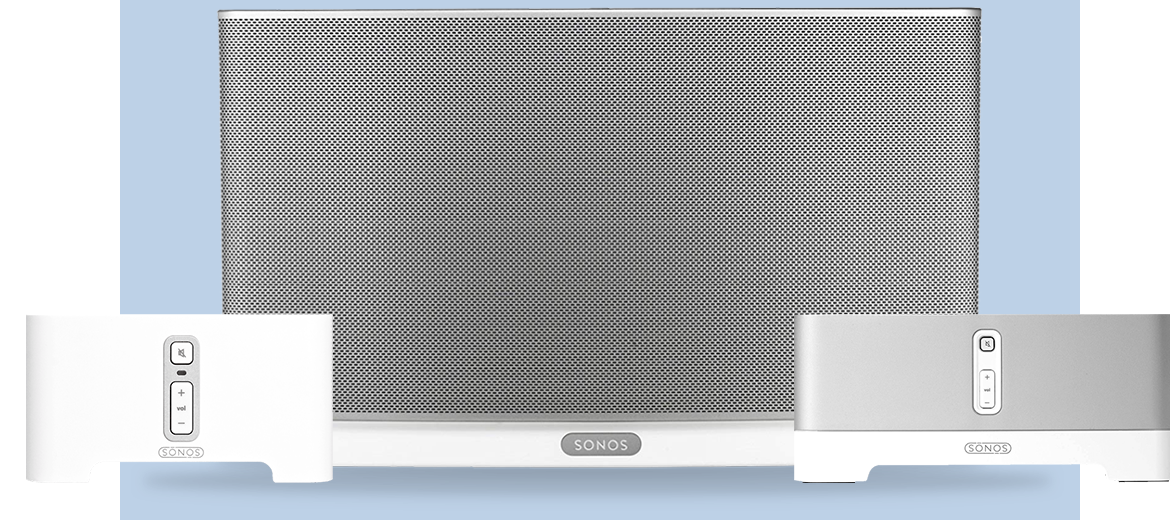
This coming May, these legacy products—our original Zone Players, Connect, and Connect:Amp (launched in 2006; includes versions sold until 2015), first-generation Play:5 (launched 2009), CR200 (launched 2009), and Bridge (launched 2007)—will no longer receive software updates or new features. 

 Today the Sonos experience relies on an interconnected ecosystem, giving you access to more than 100 streaming services, voice assistants, and control options like Apple AirPlay 2. Without new software updates, access to services and overall functionality of your sound system will eventually be disrupted, particularly as partners evolve their technology. 

To help you through this transition, we’re providing two options:

Option 1: Continue using these legacy products, recognizing that your system will no longer receive software updates and new features.  

Option 2: Trade up to a new Sonos product with a 30% credit for each legacy product you replace.

If you’re not sure if your products are affected, you can check in the System tab in your sonos.com-account

If you choose to participate in the trade up program, your legacy products will be put in Recycle Mode, a state that deletes personally identifiable information and prepares these products for e-recycling. Recycle Mode also protects unsuspecting people from buying legacy products that are approaching the end of their useful life and won’t provide the Sonos experience customers expect today. Recycle Mode will only apply to the legacy products listed above.


We ask that you take your legacy products to a nearby certified e-recycling facility. This is the most environmentally friendly way to recycle. That said, if there isn’t a facility in your area, we are happy to pay for you to ship your products back to Sonos for responsible recycling.    


Ideally all our products would last forever, but for now we’re limited by the existing technology. Our responsibility here is threefold: build products that last a long time; continually look for ways to make our products more environmentally friendly through materials, packaging, and our supply chain and take responsibility for helping you through the transition once products near the end of their useful life.  


We’ve always believed in freedom of choice, whether that means choosing a certain streaming service or way to control your listening experience. We hope the choices provided here—continuing to use these products without new software updates or trading up to our modern products—enable you to make the choice that’s right for you. 


We are honored to have a place in your home and want to make sure that we help continue to bring the best experience we can, even when products reach the end of their useful life. 


More information.


Please let us know if you have any questions.

    This topic has been closed for further comments. You can use the search bar to find a similar topic, or create a new one by clicking Create Topic at the top of the page.

    1377 replies

    January 21, 2020

    Sonos needs to have an ironclad way of ensuring that software updates don’t get unwittingly applied after May to systems such as mine where half the zones involve legacy products, thereby at one shot bricking half of it; just because I changed phones and did something silly while doing so.

    January 21, 2020

    Good question, Kumar. That’ll be answered in May when we have more details to share, but powered off devices that are still registered to a system shouldn’t cause you any trouble.

    Ryan, powered off legacy devices should still prevent the rest of the “good” products from being updated; just because legacy products are powered off does not mean they have been junked. Hopefully, that is what you mean in the last bit of the quote!

    January 21, 2020

    I foresee that this will be a thread of record length!

    And something for Sonos to think about is how to transfer the clarifications that arise here to the same thread in all the other languages that I see opening up; I doubt that those will otherwise carry all information and nuances that will be available here.

    Ryan S
    Ryan SAuthor
    Retired Sonos Staff
    January 21, 2020

    Good question, Kumar. That’ll be answered in May when we have more details to share, but powered off devices that are still registered to a system shouldn’t cause you any trouble.

    Ryan, powered off legacy devices should still prevent the rest of the “good” products from being updated; just because legacy products are powered off does not mean they have been junked. Hopefully, that is what you mean in the last bit of the quote!

    We’ll have to get into this a bit more in May. Currently, I believe that having a powered off legacy device wouldn’t prevent an update, assuming everything powered on is modern. But I’ll bring your concerns to the team.

    Mark good posts by pressing the like button, and select the best answer on questions you've asked to help others find solutions.
    melvimbe
    January 21, 2020

    One more question.


    I’d assume that you could decide to stay on the legacy version come May, but then change your mind later on.  For example, keep my Connect:amp in my system till October, but then decide a want a new Sonos product.  Remove the connect:amp, get my system updated, and add the new product at that time?

    Danny
    January 21, 2020

    Currently, I believe that having a powered off legacy device wouldn’t prevent an update, assuming everything powered on is modern. But I’ll bring your concerns to the team.

    Ryan, please do elevate this concern; and I don’t think I am alone in using a multi zone system with not every zone powered on all of the time, to save electricity consumption on zones not in daily use. In my multi zone system for instance, the bedroom play 1 pair is always on. Now if that were to get an update - and an irreversible one! - simply because the Connect Amp zone is not powered on at the time the update is released, the Connect Amp will be immediately rendered useless.

    Or perhaps, I will be ok, because my bedroom 1 pair is now anchored to Sonos net via a wired to network legacy Bridge unit that is always on. Which will make sure that the powered off Connect Amp/Connect don’t end up unwittingly bricked.

    I suggest that this issue needs to well managed in the interest of many that may otherwise fall into this trap.

    pwt
    Virtuoso
    January 21, 2020

    @Ryan S What specific hardware versions of the Connect (ZP90) and Connect:Amp (ZP120) will be affected by this? For example, my Connects are h/w version 1.16.5.5-2.

    Edit: never mind, the ‘System’ page answers my question.

    4 x P:5 | Sub | 4 x P:1 | 3 x Connect | 2 x Boost | Connect:Amp | 2 x One | Amp | Move | Port | Era 300
    melvimbe
    January 21, 2020

    I foresee that this will be a thread of record length!


    Maybe.  Hard to tell.  This is a little different than other announcements since nothing is being bricked involuntarily.  You can continue to use what you have till it dies or doesn’t work with your streaming services anymore.    You just can’t expand your system.  This fits what a lot of people wanted when the CR100 incident happened.    

    I think people who just about a legacy Sonos product used, or about to sell, are going to be upset.  That value just hit rock bottom.  It might be a while before we start hearing those complaints.  There will be those asking for a full refund, not just 30% tradeup. 

    And if a device has been factory reset after May, and thus not registered to any one, I don’t see how it can be claimed for 30% tradeup by anyone.  This won’t make the reuse/recycle bunch happy at all.  Maybe Sonos can prevent factory resets for these after May?  Or maybe I don’t understand tradeup and factory reset properly?

    There may also be some difficulty in telling the difference between a legacy connect or connect:amp and a still supported, 2015+ connect or connect:amp.  That will bring some complaints.

    Probably not thinking of some aspects.  Still very early.


    I’m not quite sure how I feel.  I understand and respect dropping updates for products that are over 5 years old.  At the same time, I would like to keep using the non-updated products without lcoking down my system.  Seems like I should be able to take advantage of new products and features without losing the old.  However, I did get a lot of features added to my legacy products that were not even on the horizon when I originally bought my speakers, which I certainly took advantage of.

    Danny
    pwt
    Virtuoso
    January 21, 2020

    Shame about my three Connects. I don’t want to replace them with Ports (deficient product: no optical output, no hardware controls, an ugly external power supply, while being too expensive).

    4 x P:5 | Sub | 4 x P:1 | 3 x Connect | 2 x Boost | Connect:Amp | 2 x One | Amp | Move | Port | Era 300
    January 21, 2020

    It was clear that this was going to have to be done at some point, and it is probably more surprising that the inevitable has not happened sooner.  I’m not surprised, either, that the frozen system option is ‘all-or-nothing’. But that makes it a non-option for me, as I don’t want to close off future developments, given that I have only one ‘legacy’ component.  I must admit I didn’t expect Connects sold as recently as 2015 to go at this point though.

    I think my only gripe is the lack of generosity in the discount offered.  I find myself facing an unexpected bill of £280 for a Port to replace my Connect, with little real benefit. Sure, I get a new Port that may last longer than my Connect would have done (or may not, I shall never know).  Better DAC?  I use digital out to a DAC / pre-amp.  Airplay? Never use it, don’t own anything Apple.  12V trigger?  No use for it.

    So that’s a bit disappointing, but nobody died.   I suspect there will be some posts coming up that equate Sonos’ decision to murder, or possibly genocide, to judge by some past threads.