
Ryan S
Retired Sonos Staff
January 22, 2020

End of Software Support - Clarifications
End of Software Support - Clarifications

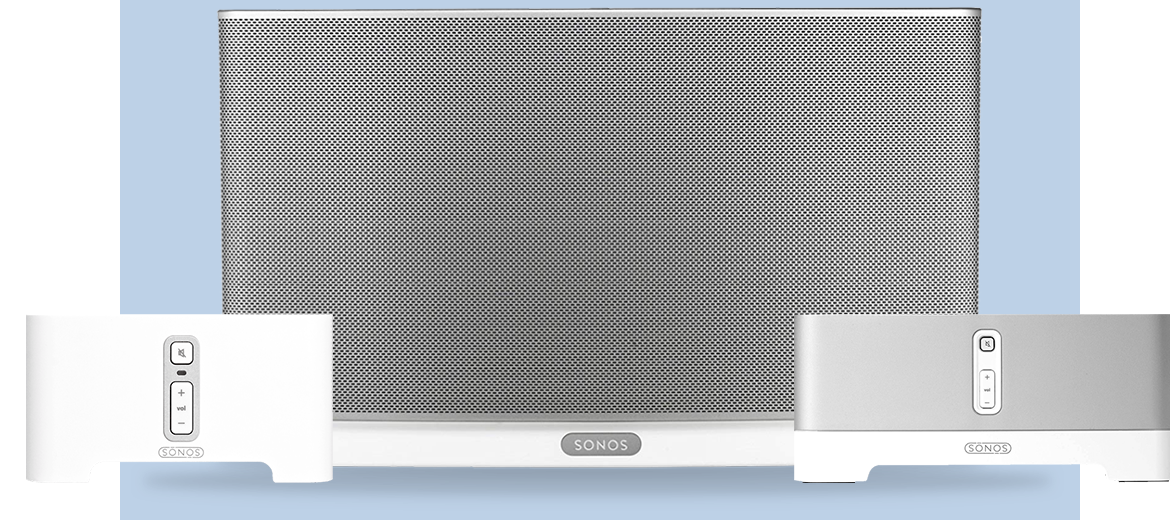
We announced yesterday that some of our oldest Sonos products will be moving into a legacy mode in May of 2020. Our commitment is to support products with regular software updates for a minimum of five years after we stop selling them, and we have a track record of supporting products far longer. 

Here is some public information we’ve shared, gathered into one place to respond to some of your questions in one easy thread, so that people can find the correct information easily.

Beginning in May, software updates and new features from Sonos will only be delivered to systems with only modern products.

After May, systems that include legacy products will continue to work as before - but they will no longer receive software updates or new features. 

Sonos will work to maintain the existing experience and conduct bug fixes, but our efforts will ultimately be limited by the lack of memory and processing power of these legacy products.

We don’t expect any immediate impact to your experience, but access to services and overall functionality will eventually be disrupted, particularly as partners evolve their own services and features. 


Customers with both legacy and modern products have time to decide what option is best for them. You can continue to use your whole system in legacy mode - in this case, it will stop receiving updates and new features. 

You will also be able to separate your legacy products from your modern products, so that the modern products can still receive updates and new features, and legacy products can still be used separately. We’ll have more information on how to do this in May when you can take that action.

Another option available to all customers with legacy products is to take advantage of the Trade Up program, which allows you to upgrade older Sonos products to modern ones with a 30% discount. Trade Up will be open to customers at any time should they decide to upgrade. 

We recognize this is new for Sonos owners, just as it is for Sonos. We are committed to help you by making options available to you to support the best decision for your home.
 

If you have any further questions, please don’t hesitate with asking.

Update 2/22: A message from our CEO

We heard you. We did not get this right from the start. My apologies for that and I wanted to personally assure you of the path forward:

First, rest assured that come May, when we end new software updates for our legacy products, they will continue to work as they do today. We are not bricking them, we are not forcing them into obsolescence, and we are not taking anything away. Many of you have invested heavily in your Sonos systems, and we intend to honor that investment for as long as possible. While legacy Sonos products won’t get new software features, we pledge to keep them updated with bug fixes and security patches for as long as possible. If we run into something core to the experience that can’t be addressed, we’ll work to offer an alternative solution and let you know about any changes you’ll see in your experience.

Secondly, we heard you on the issue of legacy products and modern products not being able to coexist in your home. We are working on a way to split your system so that modern products work together and get the latest features, while legacy products work together and remain in their current state. We’re finalizing details on this plan and will share more in the coming weeks.

While we have a lot of great products and features in the pipeline, we want our customers to upgrade to our latest and greatest products when they’re excited by what the new products offer, not because they feel forced to do so. That’s the intent of the trade up program we launched for our loyal customers.

Thank you for being a Sonos customer. Thank you for taking the time to give us your feedback. I hope that you’ll forgive our misstep, and let us earn back your trust. Without you, Sonos wouldn’t exist and we’ll work harder than ever to earn your loyalty every single day.

If you have any further questions please don’t hesitate to contact us.


Patrick Spence
CEO, Sonos

This topic has been closed for further comments. You can use the search bar to find a similar topic, or create a new one by clicking Create Topic at the top of the page.

4256 replies

Ryan S
Ryan SAuthor
Retired Sonos Staff
January 22, 2020

So Sonos will still release firmware to fix bugs. Will a streaming service that is currently supported changing API be considered a bug and receive a fix on legacy hardware?

This is the crux of the issue for me. If say Spotify changes something that means Sonos needs to change, then will it get fixed? I don’t see “upgrading” at 30% reduced price as an incentive, far from it. 

@MrSwadge, I replied to this a few pages back, but I know some replies get missed. These legacy devices are stretched to the limits of their hardware already. Where possible, we will work to maintain the existing experience and conduct bug fixes on the legacy devices where the computing hardware will allow. 


Ryan - this is the most concerning thing (for me at least) - you say: Streaming services will work the same as well, but at some time in the future, service software changes might cause it to degrade or stop working. - So you are confirming that you won’t be updating legacy devices to cope with service software changes. It seems unlikely that these changes would impose unrealistic demands on legacy devices, so why won’t you be updating the software?

@PeteD, as above, where possible, we’ll try to update legacy devices, but we might not be able to. The hardware might not be able to support whatever solution is needed.

Mark good posts by pressing the like button, and select the best answer on questions you've asked to help others find solutions.
Lyricist II
January 22, 2020

Trading up would be fine for me, but 30% is a joke, at 75% I would consider trading up. You lost a loyal customer that promoted your products to family and friends for over 10 years. This is a really bad move and I doubt your “damage control” is going to work.

I’m of a similar mindset, that despite my ‘legacy’ Play 5 having been purchased only 4yrs ago.  £330 to replace and effectively stand still, taking the 30% on a new P5.  Still really love the whole SONOS idea in principle, but this is making me look around at the resell value of my existing ‘non-legacy’ kit whilst it’s still considered ‘non-legacy’.  SONOS retailers are going to love it when I and other customers appear at their doors seeking recompense for devices which have been made expensive bricks in such a short time.  I still fail to understand why SONOS think the perfectly functional speaker / wifi devices will need in future more capacity to do other ‘stuff’.  Surely, they as a company could engineer their platform so as to not require heavy duty software on the devices themselves?  It’s not as if the device itself needs to manage the connection back to e.g. Spotify, is it?  This ‘let’s just force them to bin them and pay us for an upgrade’ decision smacks of laziness or weak engineering capability.  I understand digital rot, but if one of my apple laptops becomes unable to use the latest OSX version, I don’t suddenly find I cannot upgrade the others, and the can all happily coexist on the same network.  Sort it out, SONOS!

Contributor I
January 22, 2020

I completely understand the limitations imposed by the tech on the development of new features; that’s fine, I’ll stick with what I have now and skip new stuff. But I don’t understand why what we have now can’t be maintained. I currently stream from Spotify, so should be able to continue to do so for the foreseeable. I really don't need voice assistant nonsense. 30% off to trade in a house full of perfectly fine kit - joke.


Way to go totally destroying brand loyalty.

melvimbe
January 22, 2020


You will also be able to separate your legacy products from your modern products, so that the modern products can still receive updates and new features, and legacy products can still be used separately. We’ll have more information on how to do this in May when you can take that action.


You missed out a vital point, does this mean the legacy and modern will be interoperable? Or completely seperate? I am fine with my legacy speakers not getting updates, but I want my modern speakers to get updates and new features. I then EXEPCT to be still able to group music between legacy and modern.

This is the main issue on the table!  I have 26 SONOS devices, 16 of which are “legacy”. If you tell me I have to separate them out, then you gave failed in your mission, and why I purchased $10k of equipment from you… to have Whole House Audio.  

@David_366 and @morgan4x4, these legacy devices are stretched to the limits of their hardware already. Where possible, we will work to maintain the existing experience and conduct bug fixes on the legacy devices where the computing hardware will allow.  


With all due respect Ryan, and we know you are trying your hardest ….


But it’s time now for Patrick to stand up, and put out a definitive announcement on here, as to what is going to happen.

In that announcement, there are two basic options, one of which will be retracting the crazy ill thought out idea of legacy, and then suggest a plan to keep all of the legacy equipment fully operational (with no loss of current functionality), and hence a chance of keep customers.

The other option, will be to continue with the legacy plans, wave goodbye to the existing 37% of repeat customers (as there is no way they will buy any more equipment), and totally destroy future sales to new customers, as they will rapidly be aware of the bad press, Its’ already on the BBC here in the UK.

Easy.


A stand alone box of chips with an ethernet cable, like a raspberry pi, could have as much memory as NASA, a wifi chip, like IKEA sonos speakers, and ethernet in/out sockets to connect between router and 'legacy' equipment. This wee box could sort the memory/processing needs for 50 quid, or put a sonos badge on it and charge 200! !LOL LOL lol ha ha ha .


I have no doubt you know what you’re talking about here, but there are other costs to consider besides the cost of parts.  It does need to be developed, tested, manufacturer, and supported to a limited number of customers that very well may be insulted that you are asking for them to pay for it at cost or even that they have to use it all.     I may be wrong, but since Sonos hasn’t created the device you’re wanting, it seems reasonable to assume it’s not the slam dunk solution you’re imagining it is.

Danny
Lyricist I
January 22, 2020

I am a long time Sonos user and have spent thousands of dollars on your products. I am no longer going to spend a single penny on your products any more. 
 

I don’t even own these ”obsolete” products. I’m just worried now you’re going to do the same thing to the speakers I bought only 4 years ago. I can’t trust any speaker you sell today will become obsolete in a couple of years. I want my system to continue to receive updates and work with older speakers.


What a shame. I felt so much loyalty to Sonos


I only bought my Play:5 speakers 6 years ago. So you’re closer to getting totally screwed than you might think. 

Whatever the reason, this is a really bad policy. I’ve been a big fan of Sonos. We have 4 Play:5’s, and a whole bunch of other Sonos products that I can see now will need to be replaced eventually. But fool me once...

Lyricist I
January 22, 2020

I've got a bunch of Sonos speakers including a full surround sound set plus various speakers in assorted rooms. One of those is a Play 5. Now that speaker is sion to be obsolete?? When will the rest be? Phones + computers make sense to have a limited life span. I never expected that with supposed high end speakers. My confidence in your product is shattered. I will never buy or support your brand again. I've gone from a strong promoter to disappointed critic. Sonos sucks

Contributor I
January 22, 2020

I’ve been a loyal Sonos customer for a number of years now. 

I estimate I’ve spent nearly £6,000 on Sonos products, with my most recent purchase being just last month. 

I was also, up until yesterday, a shareholder.

In the strongest possible terms, I urge you to reconsider your recent planned obsolescence announcement.

It’s a staggeringly wasteful decision, and one that alienates your loyal customers.

Should you not reverse course, I will be unable to continue being a customer or evangelist for your company, and will instead be forced to consider myself hostage to your company and its destructive business practices.

Please reconsider and do the right thing.

Lyricist I
January 22, 2020

I’ve been Sonos customer for years and like many on here I have spent over $5,000 pulling my system together piece by piece. The slap in the face by Sonos shows that they are more concerned with forcing existing customers to purchase new temporary products knowing that they will be obsolete in 5 years or less. 

I will be reaching out to Best Buy to see what their return policy is and what promotions they will be offering for Sonos competitor products. I’ve had my Bose products for over 20 years in my media room and they offer lifetime product support and replacement. 

Depending on what I hear I will have the following equipment for sale at 50% of what I paid for them. 

Beam  1
Bridge 1
Connect AMP 1
Move 1
Play 1 6
Play 3 1
Play 5  4
Playbar 1
Sub 2
melvimbe
January 22, 2020

I completely understand the limitations imposed by the tech on the development of new features; that’s fine, I’ll stick with what I have now and skip new stuff. But I don’t understand why what we have now can’t be maintained. I currently stream from Spotify, so should be able to continue to do so for the foreseeable. I really don't need voice assistant nonsense. 30% off to trade in a house full of perfectly fine kit - joke.


Way to go totally destroying brand loyalty.


Not sure what you mean by maintained.  Sonos is dropping support, which doesn’t mean that your legacy products will suddenly stop working. Spotify will continue to work until Spotify changes things on their side.  Sonos has stated they will provide assistance to customers with issues short of software updates...although it seems like they may do some minor updates now?  Not sure on that aspect.

Danny
Enthusiast I
January 22, 2020


After May, systems that include legacy products will continue to work as before - but they will no longer receive software updates or new features. 


This is, as you well know, self-contradictory. The Sonos platform has ALWAYS since day one been sold as an integrated ecosystem that plays music from remote sources. With the exception of the 3.5mm input on some devices, there is literally no way to play music without a network service of some kind. The nature of network services, especially, but not solely, streaming services is that the interfaces change over time and clients that wish to integrate have to be modified in-step.

Refusing to provide maintenance updates to a product that relies on integrated services for its core function is 100% killing it dead. We just don’t know the exact time of death yet.


Sonos will work to maintain the existing experience and conduct bug fixes, but our efforts will ultimately be limited by the lack of memory and processing power of these legacy products.

This is, as you well know, disingenuous. It would be ENTIRELY possible to split the codebase such that the older devices keep their original feature set while the newer devices move on. The streaming services like Spotify and Apple Music are going to change and necessitate updates to the Sonos devices, yes, but until such time as Apple switches to projecting holograms of the musicians in to your home they’re not going to change to an extent that the older devices can’t handle.

Implicit in what you’re saying here is that you currently DON’T do this, and so my Play 5 is currently carrying the weight of all the features you’ve put in your codebase that it can’t use. Here’s an idea - strip all that bollocks out and use the extra resource to maintain support for the Play 5’s feature set.


We don’t expect any immediate impact to your experience, but access to services and overall functionality will eventually be disrupted, particularly as partners evolve their own services and features. 


Some of your partners do enhance their software over time, that’s true. As a secondary tip, perhaps Sonos could try this rather than just killing bits of it off *cough* desktop Sonos controller software *cough*. I’m not sure I could tell you anything that’s changed in the Sonos app the whole time I’ve had it.


Customers with both legacy and modern products have time to decide what option is best for them. You can continue to use your whole system in legacy mode - in this case, it will stop receiving updates and new features. 

You will also be able to separate your legacy products from your modern products, so that the modern products can still receive updates and new features, and legacy products can still be used separately. We’ll have more information on how to do this in May when you can take

that action.


Explain to us one good technical reason why a play 5 that has been able to handle a synchronised audio stream for the last 5 years is suddenly going to stop being able to do so. Not got one? Good. Now explain to us why one of the more modern products won’t be able to send a play 5 one of these audio streams as it does today.


Another option available to all customers with legacy products is to take advantage of the Trade Up program, which allows you to upgrade older Sonos products to modern ones with a 30% discount. Trade Up will be open to customers at any time should they decide to upgrade. 

At this point you deserve kudos for simply having the gall to keep presenting this extortion as if it’s some sort of perk to the current customer base. Well done, you have a bright future in PR.


Great reply. I totally agree about sending streams in legacy and modern formats. It’s just a protocol at the end of the day. Fork the code and add some backwards compatibility in the modern code which streams data in the appropriate format to each device. I’d love to know a technical reason why that isn’t possible.