
Ryan S
Retired Sonos Staff
January 21, 2020

End of Software Updates for Legacy Products
Related content:Software
End of Software Updates for Legacy Products

Please note that we’ve created a new thread with some clarifications to questions that have come up several times in this thread. Please see here to continue the discussion if you still have any questions. The information contained in this thread is outdated and may no longer be accurate.


We have some important news regarding our oldest Sonos devices shared on the Sonos Blog today. The text of that blog post is being included here for your convenience:


Starting in May 2020, some of our oldest products will no longer receive software updates or new features. We want to explain why and your options. 

When we first set out almost 20 years ago to invent the technology to easily listen to any song in any room, most of the ways we listen to music today did not exist. In fact, the first Sonos products were introduced before the first iPhone was announced and when Myspace still ruled social media. 


In order to invent multi-room music and smart speakers, we combined the worlds of high-fidelity audio and computing. Every Sonos product has a microprocessor, flash memory, and other hardware components typically found in computers and smartphones.  


Since launching our first products, technology has advanced at an exponential rate; from streaming services and voice assistants to wireless networking and Bluetooth capabilities.  Through all of this transformation, we have continued delivering new features via software updates. We’re extremely proud of the fact that we build products that last a long time, and that listeners continue to enjoy them. In fact, 92% of the products we’ve ever shipped are still in use today. That is unheard of in the world of consumer electronics. However, we’ve now come to a point where some of the oldest products have been stretched to their technical limits in terms of memory and processing power.  

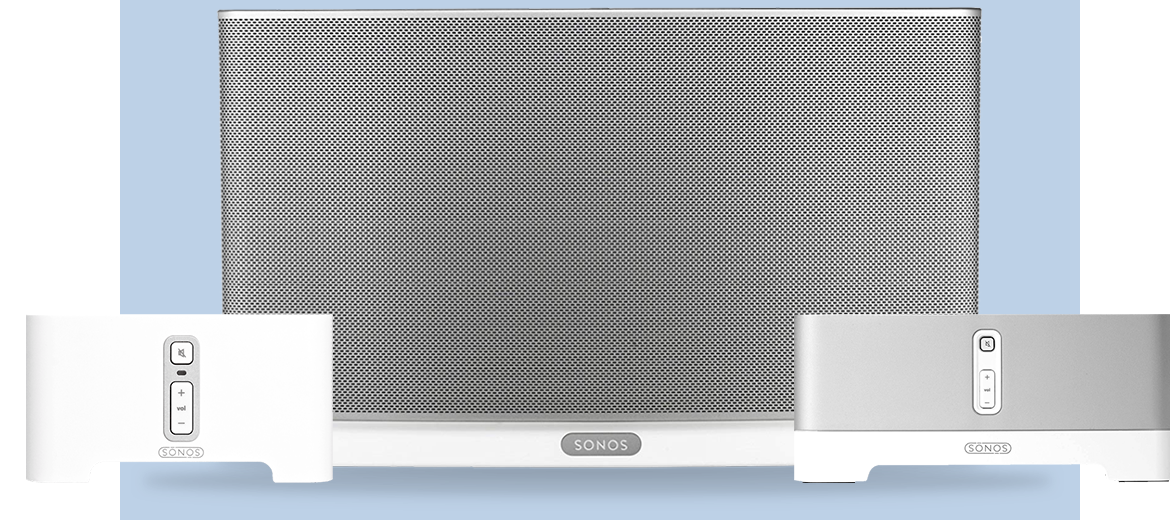
This coming May, these legacy products—our original Zone Players, Connect, and Connect:Amp (launched in 2006; includes versions sold until 2015), first-generation Play:5 (launched 2009), CR200 (launched 2009), and Bridge (launched 2007)—will no longer receive software updates or new features. 

 Today the Sonos experience relies on an interconnected ecosystem, giving you access to more than 100 streaming services, voice assistants, and control options like Apple AirPlay 2. Without new software updates, access to services and overall functionality of your sound system will eventually be disrupted, particularly as partners evolve their technology. 

To help you through this transition, we’re providing two options:

Option 1: Continue using these legacy products, recognizing that your system will no longer receive software updates and new features.  

Option 2: Trade up to a new Sonos product with a 30% credit for each legacy product you replace.

If you’re not sure if your products are affected, you can check in the System tab in your sonos.com-account

If you choose to participate in the trade up program, your legacy products will be put in Recycle Mode, a state that deletes personally identifiable information and prepares these products for e-recycling. Recycle Mode also protects unsuspecting people from buying legacy products that are approaching the end of their useful life and won’t provide the Sonos experience customers expect today. Recycle Mode will only apply to the legacy products listed above.


We ask that you take your legacy products to a nearby certified e-recycling facility. This is the most environmentally friendly way to recycle. That said, if there isn’t a facility in your area, we are happy to pay for you to ship your products back to Sonos for responsible recycling.    


Ideally all our products would last forever, but for now we’re limited by the existing technology. Our responsibility here is threefold: build products that last a long time; continually look for ways to make our products more environmentally friendly through materials, packaging, and our supply chain and take responsibility for helping you through the transition once products near the end of their useful life.  


We’ve always believed in freedom of choice, whether that means choosing a certain streaming service or way to control your listening experience. We hope the choices provided here—continuing to use these products without new software updates or trading up to our modern products—enable you to make the choice that’s right for you. 


We are honored to have a place in your home and want to make sure that we help continue to bring the best experience we can, even when products reach the end of their useful life. 


More information.


Please let us know if you have any questions.

    This topic has been closed for further comments. You can use the search bar to find a similar topic, or create a new one by clicking Create Topic at the top of the page.

    1377 replies

    Lyricist I
    January 21, 2020

    “ over time functionality of features and services will be impacted “

    This better not make the equipment I have purchased unusable whether it be in 6 months or 10 years.  I also paid for the hardware! Hey Sonos, DO NOT take the money and run!

    GRRRRR

    Translate
    Lyricist III
    January 21, 2020

    I will ask again. 


    If you have legacy products in your system, then buy a new product after May, with a later firmware, will you be able to even add it? 


    Luckily for you, Sonos has incentivized you to never buy another product from them, so you won’t have to find out 

    Translate
    Enthusiast II
    January 21, 2020

    The *absolute* bare minimum you should be considering is for EOL’d speakers to lose their ability to be the master unit of a group of speakers.
     

    They should still be able to function when grouped with more recent units, since every speaker you’ve ever sold has the ability to do this and there’s no reason why the processing required to do play a synchronised sound stream will ever increase. 

    Translate
    Lyricist III
    January 21, 2020

    In some respects I do not care, on the whole I’ve found the updates to the apps irritating.  I have no use for streaming services such as Spotify, but I will be annoyed if in the future the radio apps break.

    I have a Connect - not a Connect:Amp, and from what I can see the upgrade product is to the new Amp - not the Port.  So even with the discount an Amp is still more than a Port.

    poor show Sonos.  Very poor show.


    No, the upgrade for the Connect is the Port.  

    I think the Port from a Connect is a downgrade. What genius designer removed the optical out to save a £ or $. Ridiculous, upgrade to this…….oh it doesn’t plug in. Clowns.

    Translate
    Lyricist I
    January 21, 2020

    6 legacy products and only 2 “modern” products (I was an early adopter and have built my system over many years)

    A replacement bill of over about £2000 after the discount.  

    I just dont have the funds to do that to keep software updates.  

    Very disappointed and I can’t help but suspect that functionality of legacy systems will be reduced from it current state which does everything I need.

    Similar situation with my system. The components that are considered “legacy” meet all my listening requirements at the moment with great usability and sound quality. I see no need to follow the upgrade path from my perspective. However when this eventually becomes necessary I do not expect to replace like-for-like. My Sonos system will probably shrink with just a few components replaced or I will move to an alternative provider. I imaging Sonos’ competitors are busy creating strategies on how they will win over former Sonos customers. Gonna be an interesting time...

    Translate
    Avid Contributor III
    January 21, 2020

    I haven’t read the entire thread, but just to +1 to the general dissatisfaction on the thread. 

    For the Sonos techs, I’m assuming with this announcement you’ll stop ramming software updates onto users, and actively support setups where users have decided not to update controller or software? 


    From a company that has so aggressively pushed new and entirely unnecessary software updates (I have no voice-enabled Sonos, I do not want any, I do not need it in the software), this move smacks of forced obselescence, and with Amazon and Google improving their speaker setups, you want to be careful about alienating Sonos users… 

    Translate
    renowden
    Avid Contributor I
    January 21, 2020

    I have read most of the comments here and I think it comes down to these questions.

    What about controller apps (phones/tablets/Windows/Mac)? Will updates to that still be able to drive the legacy system? If not then will the “legacy” apps remain available in case of new purchase or reset of devices requiring re-install?

    Does legacy equipment have to be actually connected to prevent the update. Or registered or either?

    Can new equipment be downgraded to this level to enable it to be connected to this legacy network. Scenario - I may want to upgrade my equipment piecemeal but keep the rest running - even in legacy mode.

    What happens if a component (either legacy or modern) is factory reset or disconnected for reconnection later to the same or a different network.

    If streaming services change their protocols (API), will retro-fit updates be available for legacy systems? Probably not. The greatest risk to me here is Tune-In radio.


    Translate
    Lyricist I
    January 21, 2020

    Yes I just got this email, 2 of my speakers are supposed to be unsupported, a PLAY 5 that was pretty expensive- I invested a lot in Sonos over the years but if this is the deal, its a 5 yr speaker and they force you to buy a new model, Im out. Too many new options out there and I don't want the 30% discount to be forced to buy new speakers, I like the speakers I have- absurd that they are to be bricked after 5 short years???  I have 25 year old BOSE speakers that work great. What a crap model, going bak to wired speakers that I OWN and control.

    Translate
    Lyricist I
    January 21, 2020

    This really aggravates me.

    Support is being dropped for products being produced as recently as 2015.  There are probably quite a few people with less than 4 years on those products.

    Audio gear historically had very solid longevity.  How often do you need to replace an audio amplifier?

    If Sonos is turning away from the audio market and towards the disposable digital device market I’ll be turning away from their products.  Sonos works best when paired with many devices and groups around the home which means a significant monetary investment.  And it was worth it - if that’s a one time investment.  While I’m sure Sonos would love everyone to keep replacing all of those devices every 3-4 years it’s just not going to happen.

    The vast majority of people that regularly shop at Best Buy will not invest heavily in a system that has such a short lifespan for a small improvement in sound quality.  Good luck competing with the endless Bluetooth speaker hoards priced at $40.

    [ Incidentally, I have Bluetooth speakers considerably older than 4 years that’s still compatible with all of the latest streaming services and as long as Bluetooth is supported as a standard - it will continue to work well in the future. ]


    Translate
    Lyricist I
    January 21, 2020

    We have some important news regarding our oldest Sonos devices shared on the Sonos Blog today. The text of that blog post is being included here for your convenience:


    Starting in May 2020, some of our oldest products will no longer receive software updates or new features. We want to explain why and your options. 

    When we first set out almost 20 years ago to invent the technology to easily listen to any song in any room, most of the ways we listen to music today did not exist. In fact, the first Sonos products were introduced before the first iPhone was announced and when Myspace still ruled social media. 


    In order to invent multi-room music and smart speakers, we combined the worlds of high-fidelity audio and computing. Every Sonos product has a microprocessor, flash memory, and other hardware components typically found in computers and smartphones.  


    Since launching our first products, technology has advanced at an exponential rate; from streaming services and voice assistants to wireless networking and Bluetooth capabilities.  Through all of this transformation, we have continued delivering new features via software updates. We’re extremely proud of the fact that we build products that last a long time, and that listeners continue to enjoy them. In fact, 92% of the products we’ve ever shipped are still in use today. That is unheard of in the world of consumer electronics. However, we’ve now come to a point where some of the oldest products have been stretched to their technical limits in terms of memory and processing power.  

    This coming May, these legacy products—our original Zone Players, Connect, and Connect:Amp (launched in 2006; includes versions sold until 2015), first-generation Play:5 (launched 2009), CR200 (launched 2009), and Bridge (launched 2007)—will no longer receive software updates or new features. 

     Today the Sonos experience relies on an interconnected ecosystem, giving you access to more than 100 streaming services, voice assistants, and control options like Apple AirPlay 2. Without new software updates, access to services and overall functionality of your sound system will eventually be disrupted, particularly as partners evolve their technology. 

    To help you through this transition, we’re providing two options:

    Option 1: Continue using these legacy products, recognizing that your system will no longer receive software updates and new features.  

    Option 2: Trade up to a new Sonos product with a 30% credit for each legacy product you replace.

    If you’re not sure if your products are affected, you can check in the System tab in your sonos.com-account

    If you choose to participate in the trade up program, your legacy products will be put in Recycle Mode, a state that deletes personally identifiable information and prepares these products for e-recycling. Recycle Mode also protects unsuspecting people from buying legacy products that are approaching the end of their useful life and won’t provide the Sonos experience customers expect today. Recycle Mode will only apply to the legacy products listed above.


    We ask that you take your legacy products to a nearby certified e-recycling facility. This is the most environmentally friendly way to recycle. That said, if there isn’t a facility in your area, we are happy to pay for you to ship your products back to Sonos for responsible recycling.    


    Ideally all our products would last forever, but for now we’re limited by the existing technology. Our responsibility here is threefold: build products that last a long time; continually look for ways to make our products more environmentally friendly through materials, packaging, and our supply chain and take responsibility for helping you through the transition once products near the end of their useful life.  


    We’ve always believed in freedom of choice, whether that means choosing a certain streaming service or way to control your listening experience. We hope the choices provided here—continuing to use these products without new software updates or trading up to our modern products—enable you to make the choice that’s right for you. 


    We are honored to have a place in your home and want to make sure that we help continue to bring the best experience we can, even when products reach the end of their useful life. 


    More information.


    Please let us know if you have any questions.

    So the writings on the wall.

    Play 5 this year, Play 3 next year, or maybe my Play 1, Playbar or my Sub?

    It’s  clear that this is part of the strategy to keep the money flowing in and turn Sonos into an Apple clone.

    Maybe it will work, and I understand things move forward, but it seems the upgrade path is being driven not by features but by a need to drive revenues. It’s a dangerous game and it’s got me looking at the Sonos Competitors for future purchases rather than signing up to a relentless upgrade path.  
    if it’s broken I would have replaced it with Sonos. Not so sure now....

    I only bought my Sonos system 4 years ago from a high end sound system retail outlet, so over £1000 worth of speakers useless. I loved my Sonos and couldn’t praise them enough and about to buy the move NOT NOW!!! Sonos have lost what was a loyal customer never again and I look to replace the whole system of 12 elsewhere. What a let down 

    Translate