
F.A.Q.

Before You Blame the Speaker: Check Your Charger First

  • March 25, 2026
  • 36 replies
  • 580 views
Liz P.
Forum|alt.badge.img

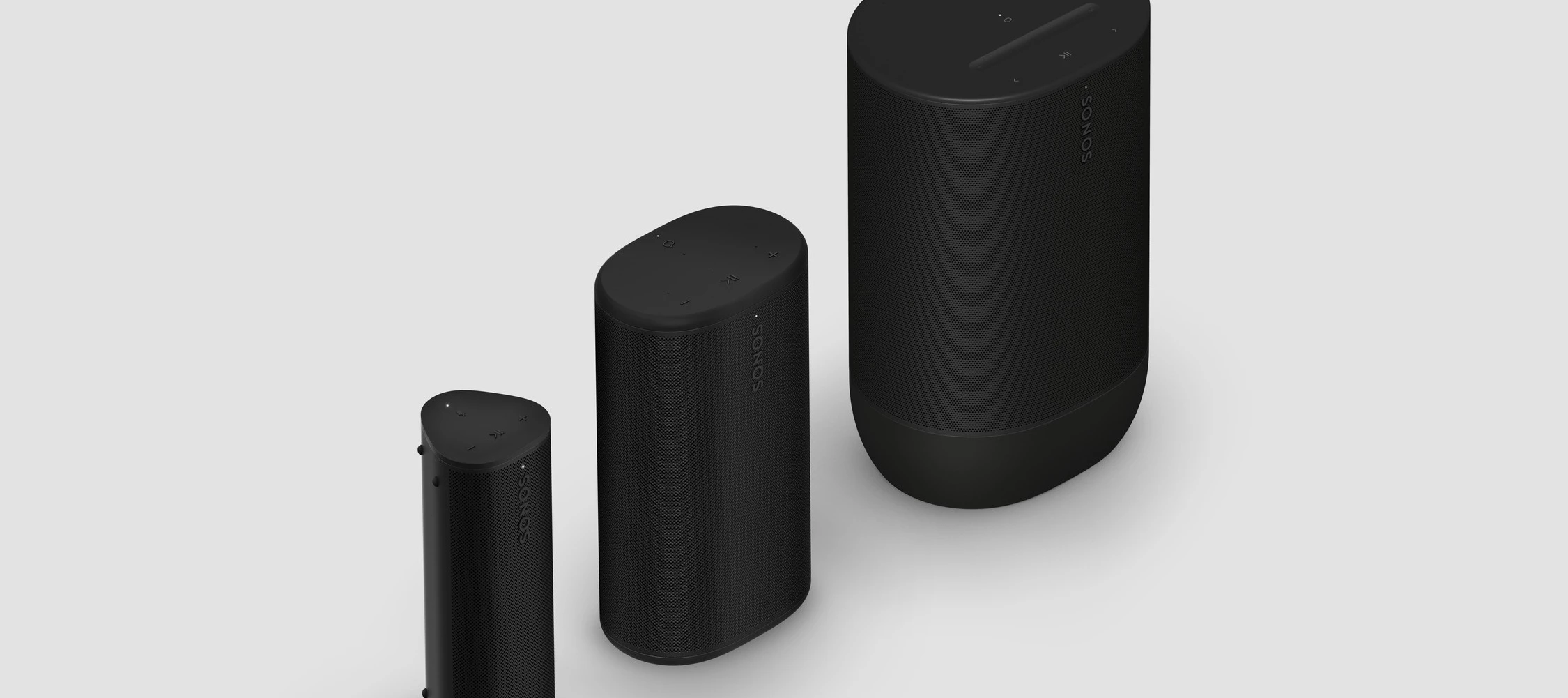
Hey all! With Sonos Play being added as the newcomer to the lineup next week I thought it would be a good time to cover some charging and power requirements, as we have quite a few devices that have these now.

Your speaker needs a power adapter and cable that is powerful enough to charge it effectively. If your device is charging slowly, it's typically because the cable or adapter is too low-power.


For smooth charging, make sure your adapter and cable meeting the following:

Product

Minimum Power/Current

Recommended Power/Current

Roam/Roam 2

5V/1.5A (7.5W)

5V/2A (10W)

Ace

5V/0.5A (2.5W)

5V/3A (15W)

Move

12V/3A OR 15V/2.4A (36W)

20V/2.25A OR 15V/3A (45W)

Move 2

20V/2.25A OR 15V/3A (45W)

20V/2.25A OR 15V/3A (45W)

Play

9V/2A (18W)

20V/2.25A OR 15V/3A (45W)


Quick Tips:

  • Check your adapter: You can usually find the voltage/amperage (V/A) or wattage (W) printed on the back of the power adapter itself or on the website where you purchased it.
  • Cables Matter: If you’re using the Sonos USB-C Power Delivery (PD) cable that came with your device, you're good to go. For third-party cables, make sure they are PD-capable and meet the charging requirements. For devices that are not Roam and Roam two we recommend a USB-C cable.
  • Ditch your old phone power adapters. Tablet power adapters are probably good enough (depending on how old your tablet is) but phone power adapters usually won’t be enough. As always, check the info on it if you can! 

How do I know my device is charging?

When your device starts charging the light will turn solid orange. If the speaker is blinking orange it means the battery has a low charge. For information on what other light colors mean, check here.

What if I’m using a multiport charging adapter? 

If you’re using a multiport changing adapter the wattage provided per device will depend on how the manufacturer distributes the wattage. For example, if you have a 45W adapter and plug in your phone, tablet, and Play it will default to provide 15W to each device. For how the wattage is distributed we recommend checking with the manufacturer. 

What if I want to fast charge my device?

To fast charge most of these devices you need a PD capable power adapter as well as a USB-C cable that is capable of fast charging.

Note: Sonos Roam and Roam 2 do not support fast charging.


What chargers do you use that work well? Share your recommendations below.

 

36 replies

AjTrek1
  • March 25, 2026

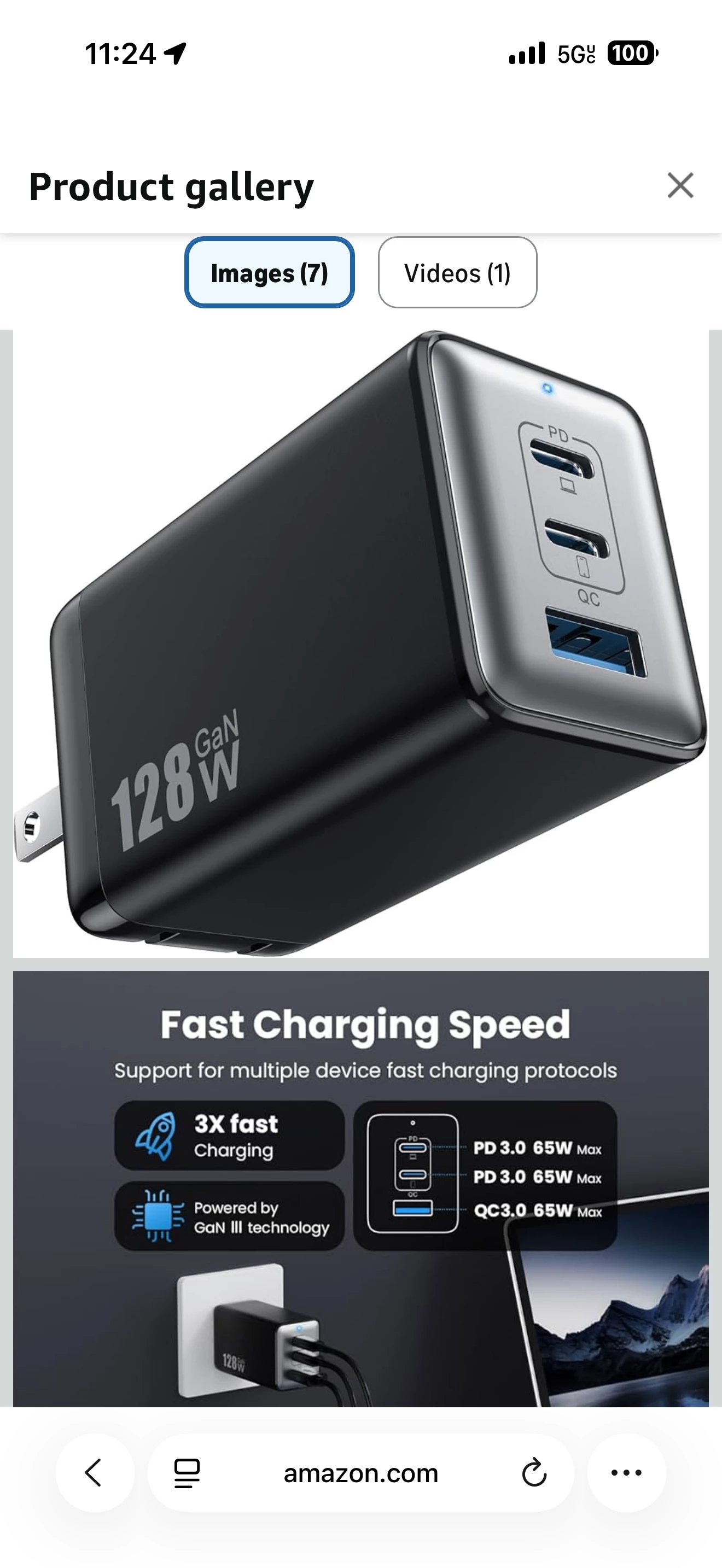
I use this model by Pxwaxpy for my Ace and Roam2. Although not the smallest in size compared to some but; the prongs fold in for compactness. $25-USD on Amazon.


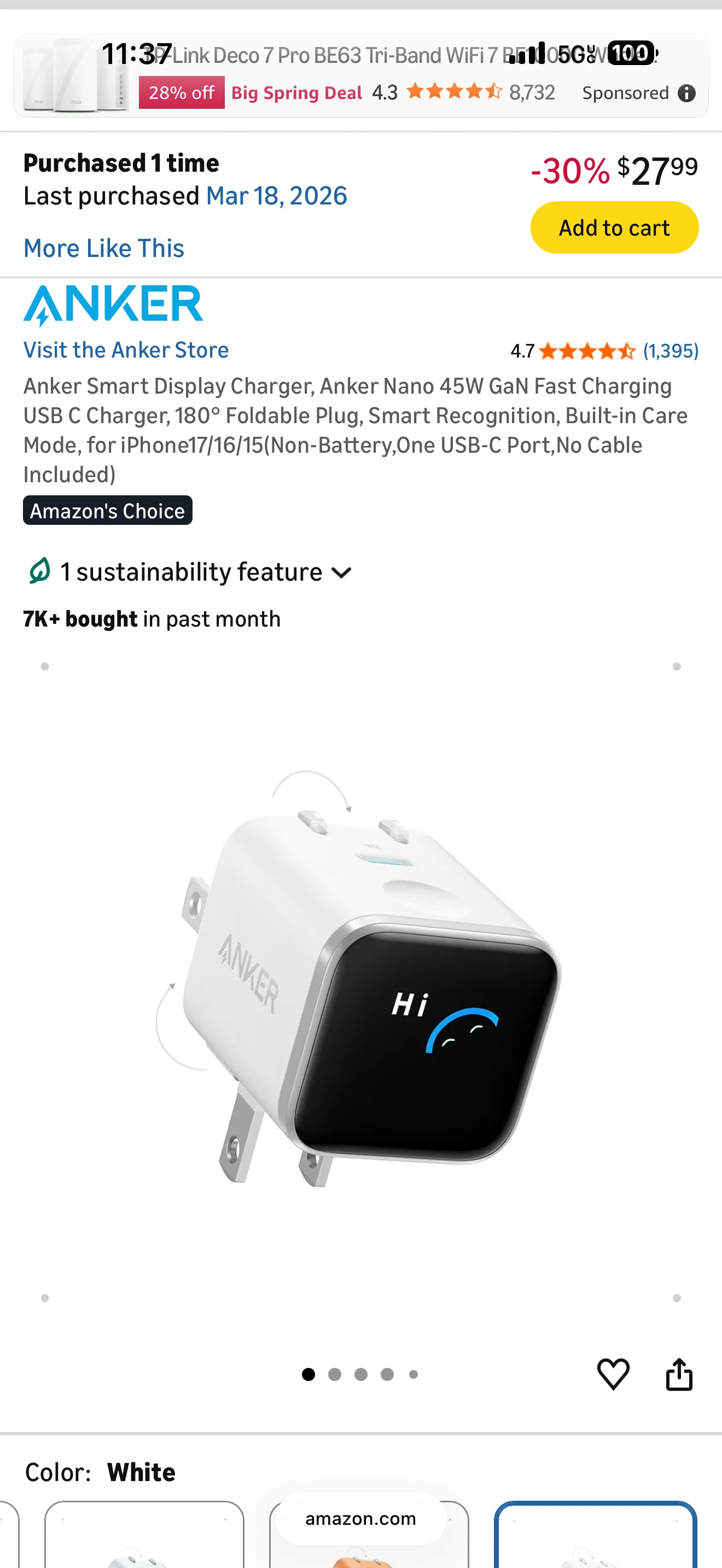
I also have this model by Anker that I’m using. Charges any device not just iOS.


Stanley_4
  • Grand Maestro
  • March 25, 2026

Edited to add some notes:

Good luck with these chargers for several devices, haven't tried with Sonos yet.


45 Watts, full PD support. Max 25 Watts per port if both used.

https://www.amazon.com/dp/B0791W8D74?ref_=ppx_hzsearch_conn_dt_b_fed_asin_title_4


35 Watts, full PD support. Max 20 Watts if both ports used.

https://www.amazon.com/dp/B08YM1JFZ7?ref_=ppx_hzsearch_conn_dt_b_fed_asin_title_5


65 Watts, doesn't mention PD support. Max 35 Watts if other pors used.

https://www.amazon.com/dp/B09MV3M4GL?ref_=ppx_hzsearch_conn_dt_b_fed_asin_title_6


Cables

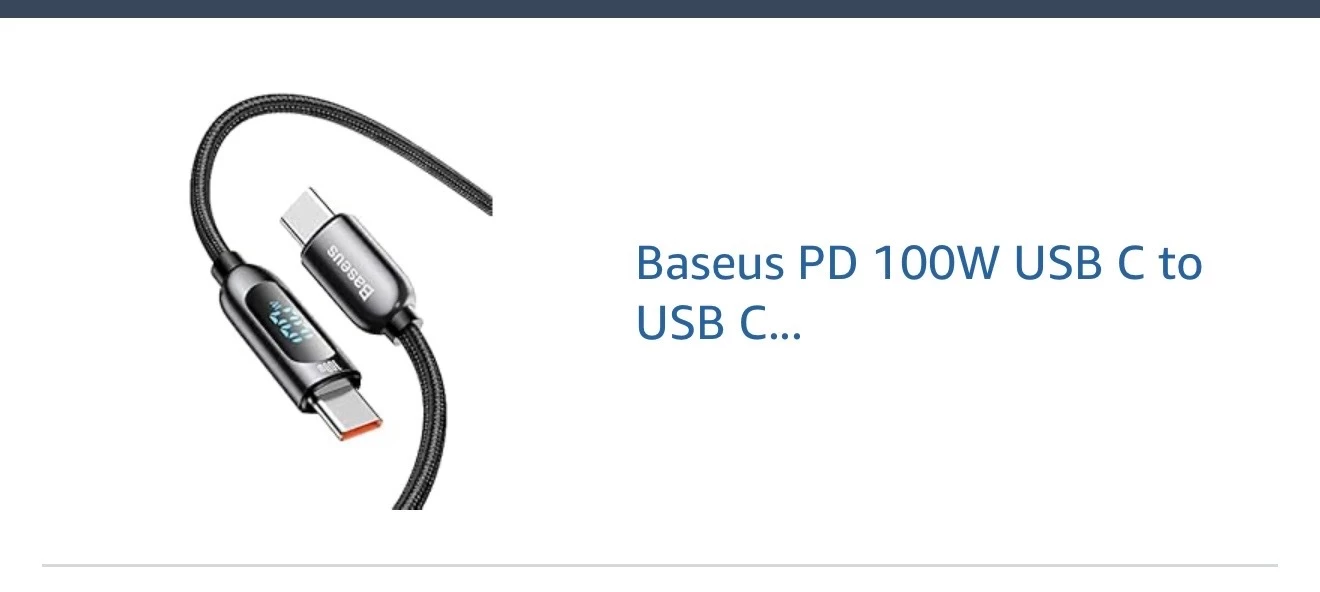
https://www.amazon.com/dp/B09LCMVB3F?ref_=ppx_hzsearch_conn_dt_b_fed_asin_title_6&th=1


SarahN
Forum|alt.badge.img+14
  • Headliner I
  • March 26, 2026

I mainly use Sonos chargers for my portable speakers. I surprisingly got my new 45W Sonos charger (newly listed for sale and dispatch at the same time as the Play speaker), ready for my new Play due to be delivered next week. This arrived yesterday, so at least I now have it ready for when the new speaker arrives 😀


melvimbe
  • March 26, 2026

Is there a USB-C charging spec readily available that could potential damage any of these speakers?  For example if you use a 15V/3A (45W) charger with a Roam?


AjTrek1
  • March 26, 2026

It’s been my research (if I understand your question correctly) the charger could have a 15V/3A (200W)  capacity the device being charged would decide how much of that 200W it will accept.  For instance I have a cable that displays the rate of charge a device accepts regardless of the charging block fcapacity. I’ve seen as low as 2W and highs as 15W depending upon the device.


Airgetlam
  • March 26, 2026

Without looking up the specs for USB C charging, I’ve always thought it was controlled by the device being charged as well, so there was no opportunity to ‘over power’ a charging session. 

Not overly excited by looking up the specs at this point. 


AjTrek1
  • March 26, 2026

Just FYI, here’s a picture of the cable I mentioned in my previous post. Bought it on Amazon.


Airgetlam
  • March 26, 2026

Ok, Danny, you forced my hand (somewhat). Read the https://en.wikipedia.org/wiki/USB_hardware page, particularly the USB-C section where they talk about https://en.wikipedia.org/wiki/USB_hardware#USB_Power_Delivery


Granted, Wikipedia isn’t a sacrosanct source of truth, but in this case…


melvimbe
  • March 26, 2026

I asked Gemini:


Yes, USB charging can destroy a device, but it is highly unlikely when using high-quality, certified equipment. While modern devices are designed with protection circuits to prevent overcharging and damage, the risk arises from low-quality accessories, damaged cables, or, in rare cases, malicious hardware. 


Here is a breakdown of how USB charging can damage a device:

1. Poor Quality or Damaged Chargers 

  • Lack of Insulation: Cheap, uncertified "knock-off" chargers often skimp on safety components, potentially allowing high-voltage alternating current (AC) to pass through to the low-voltage direct current (DC) side, which can fry the phone's electronics.
  • Overheating: Substandard chargers can fail to regulate voltage, resulting in extreme heat that can damage the device’s charging port or battery.
  • Unstable Output: Poor-quality chargers may provide unstable current, causing long-term damage or immediate failure. 

2. Defective or Wrong Cables

  • Short Circuits: Poorly constructed USB-C cables might lack necessary resistors, which can cause them to short circuit, melting the port and destroying the device’s internal charging components.
  • Wet/Damaged Connectors: Using a cable with a wet or corroded connector can cause excessive heat and melt the plastic around the port. 


3. "BadPower" Malware (Rare)

Researchers have demonstrated that "BadPower" hacks can reprogram the firmware inside a fast charger, causing it to send too much voltage to the device, potentially making it unusable or setting it on fire. This is most common with chargers bought from unknown, non-reputable sources. 


4. Physical Damage (Port Wear)

Frequent, rough, or angled insertion of USB cables over several years can wear down or damage the USB port itself, leading to loose connections, inability to charge, or, in some cases, damage to the motherboard. 

How to Protect Your Devices

  • Use Original or Certified Chargers: Only use chargers and cables from reputable brands or the original device manufacturer (e.g., Apple, Samsung, Anker).
  • Avoid Unknown Public Ports: Be cautious using public USB charging stations. If you must, consider a "USB data blocker".
  • Check for Physical Damage: Regularly inspect your cables and charger ports for rust, lint, or bent pins.
  • Look for Certification: For USB-C, ensure cables are certified by the USB-IF (USB Implementers Forum). 


Note: Generally, plugging a phone into a high-wattage charger (e.g., a 65W laptop charger for a 20W phone) is safe because the device only takes what it needs. 


AjTrek1
  • March 26, 2026

@melvimbe 

So per the footnote the likelihood of damaging devices currently made with the USB-C standard is remote. As the device only pulls what it needs.


melvimbe
  • March 26, 2026

@melvimbe 

So per the footnote the likelihood of damaging devices currently made with the USB-C standard is remote. As the device only pulls what it needs.

Agreed.  I also thought this was in line with what Liz stated in her quick tips


Forum|alt.badge.img+16
  • Local Superstar
  • March 26, 2026

It’s been my research (if I understand your question correctly) the charger could have a 15V/3A (200W)  capacity...


Besides the fact that there are standards to prevent damage (that Sonos complies with), James Watt must be turning in his grave now at those maths. Power is voltage multiplied by current. 3 x 15 is 45W, nowhere near 200W. 😔  A 15 x 3 is a 45W capacity.  Although a quality 200W charger should have the ability to charge at 45W though. 

If you're only seeing highs of 15W being drawn from a higher powered device, something is wrong there too. 


AjTrek1
  • March 26, 2026

It’s been my research (if I understand your question correctly) the charger could have a 15V/3A (200W)  capacity...


Besides the fact that there are standards to prevent damage (that Sonos complies with), James Watt must be turning in his grave now at those maths. Power is voltage multiplied by current. 3 x 15 is 45W, nowhere near 200W. 😔  A 15 x 3 is a 45W capacity.  Although a quality 200W charger should have the ability to charge at 45W though. 

If you're only seeing highs of 15W being drawn from a higher powered device, something is wrong there too. 

You took that wayyy toooo literally. It was only mentioned for effect as being over the top. It has been agreed that regardless the capacity of the power adapter the device being charged only takes what it needs. 


Forum|alt.badge.img+16
  • Local Superstar
  • March 26, 2026

So ‘ability’, not ‘capacity’?

A high of 15W still seems very strange though.


Stanley_4
  • Grand Maestro
  • March 26, 2026

15 Watts, no problem, how about 240 Watts?

https://www.usb.org/usb-charger-pd

Announced in 2021, the USB PD Revision 3.1 specification is a major update to enable delivering up to 240W of power over full featured USB Type-C® cable and connector. 

New 28V, 36V, and 48V fixed voltages enable up to 140W, 180W and 240W power levels, respectively.

The PD spec lays out the handshaking a device must use to request more than the minimum power delivery voltage and amperage.


Forum|alt.badge.img+18
  • Local Superstar
  • March 27, 2026

@Liz P. , as this is FAQ, I would like to see an official answer to the following, as I can’t see it documented anywhere:


Can I leave my portable Sonos device permanently connected to a charger, either wireless or USB-C?

It would be useful to know if the devices charging circuitry will not affect the battery life if the device spends the vast majority of its life sitting on a charger, either being used, or silent, and occasionally removed from charger. I’m assuming the answer may be different for different devices, eg original Roam vs the new Play?


AjTrek1
  • March 27, 2026

@Liz P. , as this is FAQ, I would like to see an official answer to the following, as I can’t see it documented anywhere:


Can I leave my portable Sonos device permanently connected to a charger, either wireless or USB-C?

It would be useful to know if the devices charging circuitry will not affect the battery life if the device spends the vast majority of its life sitting on a charger, either being used, or silent, and occasionally removed from charger. I’m assuming the answer may be different for different devices, eg original Roam vs the new Play?

Find the answer in the link. Scroll down to almost the end. However the short answer is “no”.
 

https://support.sonos.com/en-us/article/charging-sonos-play


Forum|alt.badge.img+18
  • Local Superstar
  • March 27, 2026

Find the answer in the link. Scroll down to almost the end. However the short answer is “no”.
 

https://support.sonos.com/en-us/article/charging-sonos-play

I don’t have a Play. The link suggests its OK for a Play to be left on charge:

Leaving Play on the charging base long-term will not reduce the battery’s lifespan.

It would be useful for users of other portable Sonos products to have this question answered. I suspect the charging circuit in the original Roam is not as intelligent as the new Play device, so whilst is OK to leave a Play on charge, it may not be OK to leave a Roam on its wireless charger. Would be nice to have an official answer from Sonos.


AjTrek1
  • March 27, 2026

Find the answer in the link. Scroll down to almost the end. However the short answer is “no”.
 

https://support.sonos.com/en-us/article/charging-sonos-play

I don’t have a Play. The link suggests its OK for a Play to be left on charge:

Leaving Play on the charging base long-term will not reduce the battery’s lifespan.

It would be useful for users of other portable Sonos products to have this question answered. I suspect the charging circuit in the original Roam is not as intelligent as the new Play device, so whilst is OK to leave a Play on charge, it may not be OK to leave a Roam on its wireless charger. Would be nice to have an official answer from Sonos.

The link below gives information on Move and Move 2 leaving on Charger. Again the short answer is “no”. You’ll have to scroll and also tap on “More”.

Can’t find any information for Roam products regarding your question.

https://support.sonos.com/en-us/search?q=Wireless+charging+


buzz
  • March 27, 2026

In general lithium batteries love to be kept on their charger. Older NiCd technology usually did not like to be kept on the charger, depending on the charger design. With respect to ROAM, I notice that the battery is kept warm if the unit always on the wireless charger. This will decrease battery life somewhat, but allowing regular full discharge is worse.


  • Lyricist III
  • March 27, 2026

Consider purchasing a power supply certified to your local electrical safety standards, such as UL/cUL listing for USA and Canada. A lot of Amazon power bricks are uncertified (I haven’t verified each one obviously) however there are online retailers that have UL listed usb power supplies for 10-$20 so cheap options do exist. 
 

Another tip: if your speaker is always warm (ie the battery) when plugged in 24/7, don’t leave it plugged in 24/7 as however unlikely this could happen 

https://www.reddit.com/r/sonos/comments/1mdz171/my_sonos_roam_set_itself_on_fire/


melvimbe
  • March 27, 2026

I just wanted add that this thread has cause me to move up ‘clean up/out the electronics supply closet’ on my Spring cleaning chores list.  Going to be throwing out a lot of old cables and charging blocks.


AlwaysJammin
Forum|alt.badge.img+2
  • Enthusiast I
  • March 28, 2026

Just spit balling but I would imagine the "correct" chicom charger would add what,  a buck to the cost of a premium piece of hardware?  Wonder how much it costs to pick up the phone in the support department?


 Being in the technical world I can say the percentage of people that understand charger wattage is smaller that the ones that call the cable "the charger".


AjTrek1
  • March 29, 2026

Just spit balling but I would imagine the "correct" chicom charger would add what,  a buck to the cost of a premium piece of hardware?  Wonder how much it costs to pick up the phone in the support department?


 Being in the technical world I can say the percentage of people that understand charger wattage is smaller that the ones that call the cable "the charger".

Apple started eliminating chargers from its iPhones 2-3 years ago especially since all iPhones can charge wirelessly. In Apple’s case wireless charging creates another revenue stream for such a device either direct or via 3rd party.

In the case of Sonos it can also be another revenue stream. Sonos also can state it as a “Green” initiative to cut down on packaging material that can increase overall manufacturing cost per 1000 units as an example.

I’m sure they have a reason although it may not be one that we agree with.


Stanley_4
  • Grand Maestro
  • March 29, 2026

I have so many chargers, at every spot I'd want to charge something I rarely even unpack a new charger. Also I have good quality, efficient chargers where many included with new gear are inefficient and of iffy quality. I really need to go through my Rubbermaid tub out in the garage and donate a bag of the worst.