
Ryan S
Retired Sonos Staff
Jan 22, 2020 3:20 PM UTC

End of Software Support - Clarifications
  • Dec 8, 2022 11:29 AM UTC
  • 4256 replies
  • 270541 views
  • Translate All
End of Software Support - Clarifications

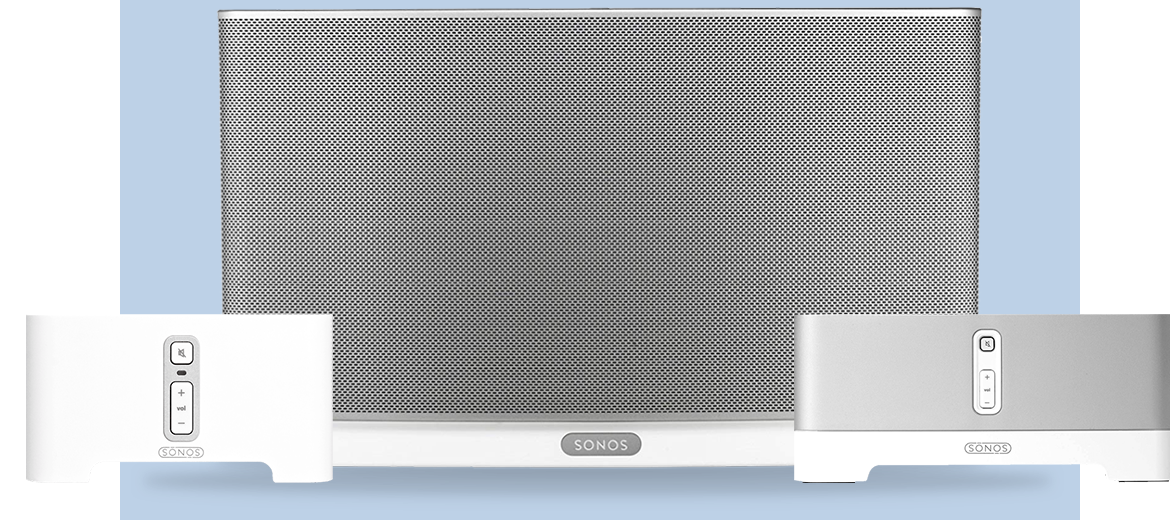
We announced yesterday that some of our oldest Sonos products will be moving into a legacy mode in May of 2020. Our commitment is to support products with regular software updates for a minimum of five years after we stop selling them, and we have a track record of supporting products far longer. 

Here is some public information we’ve shared, gathered into one place to respond to some of your questions in one easy thread, so that people can find the correct information easily.

Beginning in May, software updates and new features from Sonos will only be delivered to systems with only modern products.

After May, systems that include legacy products will continue to work as before - but they will no longer receive software updates or new features. 

Sonos will work to maintain the existing experience and conduct bug fixes, but our efforts will ultimately be limited by the lack of memory and processing power of these legacy products.

We don’t expect any immediate impact to your experience, but access to services and overall functionality will eventually be disrupted, particularly as partners evolve their own services and features. 


Customers with both legacy and modern products have time to decide what option is best for them. You can continue to use your whole system in legacy mode - in this case, it will stop receiving updates and new features. 

You will also be able to separate your legacy products from your modern products, so that the modern products can still receive updates and new features, and legacy products can still be used separately. We’ll have more information on how to do this in May when you can take that action.

Another option available to all customers with legacy products is to take advantage of the Trade Up program, which allows you to upgrade older Sonos products to modern ones with a 30% discount. Trade Up will be open to customers at any time should they decide to upgrade. 

We recognize this is new for Sonos owners, just as it is for Sonos. We are committed to help you by making options available to you to support the best decision for your home.
 

If you have any further questions, please don’t hesitate with asking.

Update 2/22: A message from our CEO

We heard you. We did not get this right from the start. My apologies for that and I wanted to personally assure you of the path forward:

First, rest assured that come May, when we end new software updates for our legacy products, they will continue to work as they do today. We are not bricking them, we are not forcing them into obsolescence, and we are not taking anything away. Many of you have invested heavily in your Sonos systems, and we intend to honor that investment for as long as possible. While legacy Sonos products won’t get new software features, we pledge to keep them updated with bug fixes and security patches for as long as possible. If we run into something core to the experience that can’t be addressed, we’ll work to offer an alternative solution and let you know about any changes you’ll see in your experience.

Secondly, we heard you on the issue of legacy products and modern products not being able to coexist in your home. We are working on a way to split your system so that modern products work together and get the latest features, while legacy products work together and remain in their current state. We’re finalizing details on this plan and will share more in the coming weeks.

While we have a lot of great products and features in the pipeline, we want our customers to upgrade to our latest and greatest products when they’re excited by what the new products offer, not because they feel forced to do so. That’s the intent of the trade up program we launched for our loyal customers.

Thank you for being a Sonos customer. Thank you for taking the time to give us your feedback. I hope that you’ll forgive our misstep, and let us earn back your trust. Without you, Sonos wouldn’t exist and we’ll work harder than ever to earn your loyalty every single day.

If you have any further questions please don’t hesitate to contact us.


Patrick Spence
CEO, Sonos

This topic has been closed for further comments. You can use the search bar to find a similar topic, or create a new one by clicking Create Topic at the top of the page.

4256 replies

Enthusiast II
Feb 19, 2020 5:11 PM UTC

I noticed that my Connect:Amp (circa 2016) is not eligible for upgrade.  I did not realize that Connect and Connect:Amp devices manufactured after 2015 are not affected.  That makes a big difference in my opinion.  I was under the impression that all Connects, including those that were still for sale last year, would be impacted, which would really suck if you had just bought one.  But if all "legacy” devices have been off the market for 5+ years, I think ending support for those devices is not unreasonable.  It seems to me that Sonos just really botched the communication of what was happening.

Actually I think it’s more than simply botched communication. For years Sonos has sold what appeared to all consumers as the same product without informing anybody that the internals were changing in a way that could make the earlier revisions obsolete. I suspect that this is one of the reasons some people have stated that they purchased legacy components in recent years, no way or reasona to identify old stock. Changing the mute button for a play/pause button doesn’t lead one to the natural conclusion that the product is significantly different. 

Furthermore, as I’ve stated before on this thread, their corporate messaging remains missleading to this day. For example their website still says “Hook up your turntable to Play:5 or Amp to stream vinyl all around your home.” I have 2 Play:5s (Gen 1) that are now legacy and will likely not be able to stream to modern devices come May (unless I freeze all updates to all devices). 

Now you may say that they mean only the Gen 2 Play:5 so how about this one:

All Sonos speakers and components connect over WiFi so you can build the system you want. Put on a podcast in the bedroom while someone else watches TV in the living room, or group all your speakers to play music in sync.

Can someone tell me how this is not missleading? yes it may still be true at this very moment but they have announced their intention to break this functionality.

In my mind this goes beyond botched communications and rather goes to a fundamental change to what the company offers (offered): a single integrated multi-room audio systems that can grow over time. 


Translate
Avid Contributor I
Feb 19, 2020 5:31 PM UTC

I just find it crazy that my perfectly performing system is now going to be compromised because it contains a Play 5 (gen 1).  The play 5 works perfectly and it in showroom condition.  My expectation when purchasing was that it would work until there was a component failure and not stop working because of software limitations.  This was not made clear when I purchased.  I purchased a speaker that would play music over wifi and I viewed that as limitless.  They really must start selling their kit with expiry dates so that customers know the lifespan of the now disposable kit.  The environmental impact is even more infuriating.  

Translate
Prominent Collaborator I
Feb 19, 2020 7:45 PM UTC


Actually I think it’s more than simply botched communication. For years Sonos has sold what appeared to all consumers as the same product without informing anybody that the internals were changing in a way that could make the earlier revisions obsolete. I suspect that this is one of the reasons some people have stated that they purchased legacy components in recent years, no way or reasona to identify old stock. Changing the mute button for a play/pause button doesn’t lead one to the natural conclusion that the product is significantly different. 

Furthermore, as I’ve stated before on this thread, their corporate messaging remains missleading to this day. For example their website still says “Hook up your turntable to Play:5 or Amp to stream vinyl all around your home.” I have 2 Play:5s (Gen 1) that are now legacy and will likely not be able to stream to modern devices come May (unless I freeze all updates to all devices). 

Now you may say that they mean only the Gen 2 Play:5 so how about this one:

All Sonos speakers and components connect over WiFi so you can build the system you want. Put on a podcast in the bedroom while someone else watches TV in the living room, or group all your speakers to play music in sync.

Can someone tell me how this is not missleading? yes it may still be true at this very moment but they have announced their intention to break this functionality.

In my mind this goes beyond botched communications and rather goes to a fundamental change to what the company offers (offered): a single integrated multi-room audio systems that can grow over time. 


I don’t think you can really say that your Play 5s will stop stop working that way.  We’ll find out in May, but my understanding is that updates to legacy devices stop in May.  That doesn’t mean they’ll stop working or your system will be crippled in May.  Everything should continue to work as normal,  Sometime down the road, you may run into problems with your legacy devices, but it shouldn’t be as early as May.

Translate
106rallye
Feb 19, 2020 9:53 PM UTC

Systems containing legacy devices will as I understand stil it be able to group with modern devices as long as they are kept on “legacy grade” software. So you will get safety upgrades.

Possible disadvantages: over time some new features will not be available to you. More importantly current features may degrade and newly bought devices may not be able to be grouped with your current devices because the new device will possibly be on the newest software. We will know more about this from may.

Translate
Enthusiast II
Feb 20, 2020 1:15 AM UTC


Actually I think it’s more than simply botched communication. For years Sonos has sold what appeared to all consumers as the same product without informing anybody that the internals were changing in a way that could make the earlier revisions obsolete. I suspect that this is one of the reasons some people have stated that they purchased legacy components in recent years, no way or reasona to identify old stock. Changing the mute button for a play/pause button doesn’t lead one to the natural conclusion that the product is significantly different. 

Furthermore, as I’ve stated before on this thread, their corporate messaging remains missleading to this day. For example their website still says “Hook up your turntable to Play:5 or Amp to stream vinyl all around your home.” I have 2 Play:5s (Gen 1) that are now legacy and will likely not be able to stream to modern devices come May (unless I freeze all updates to all devices). 

Now you may say that they mean only the Gen 2 Play:5 so how about this one:

All Sonos speakers and components connect over WiFi so you can build the system you want. Put on a podcast in the bedroom while someone else watches TV in the living room, or group all your speakers to play music in sync.

Can someone tell me how this is not missleading? yes it may still be true at this very moment but they have announced their intention to break this functionality.

In my mind this goes beyond botched communications and rather goes to a fundamental change to what the company offers (offered): a single integrated multi-room audio systems that can grow over time. 


I don’t think you can really say that your Play 5s will stop stop working that way.  We’ll find out in May, but my understanding is that updates to legacy devices stop in May.  That doesn’t mean they’ll stop working or your system will be crippled in May.  Everything should continue to work as normal,  Sometime down the road, you may run into problems with your legacy devices, but it shouldn’t be as early as May.

The latest email says that following:

“Secondly, we heard you on the issue of legacy products and modern products not being able to coexist in your home. We are working on a way to split your system so that modern products work together and get the latest features, while legacy products work together and remain in their current state. We’re finalizing details on this plan and will share more in the coming weeks.”

When the CEO says that they “are working on a way to split your system” I don’t know why I wouldn’t believe his words. Splitting the system is not the same as having a single integrated multi-room audio system. Also saying that the products will coexist is a far cry from their existing language of grouping all the speakers to play music in sync. I can only believe that if they are using different words they are meant to have a different meaning. 

I hope to be proven wrong and that you are right but the choice of words leads me to believe that I won’t be.

Translate
Lyricist II
Feb 20, 2020 8:21 PM UTC

Hey all, this is certainly a very sensitive issue and I have struggled about what to do with a system taht has served me well for all these years. I weighed out the options with trading in for newer Sonos units,  moving to Denon Heos or Bluesound. 

If it werent for the decision of Sonos to discontinue support for the “legacy units” I would of kept this sonos system going for another 10 years and probably added a couple of units in the spring to my 4 unit system and never even considered replacing my current units, if I am going to spend new money on gear I cant in good conscience give my money to the company that is making me spend it in the first place. 

So I have already purchased 6 new units form Bluesound and will sell my current Sonos sytem for whatever I can to try and recover atleast some of the cost of the new system. 

I can only say I am sorry to leave the Sonos comunity that I enjoyed for 9 years, But when a company decides to make decisions that favor there share holders as oppsed to the people who pay for the products it time to jump ship. 

Good luck to all. 

Translate
jgatie
Feb 20, 2020 8:47 PM UTC

Hey all, this is certainly a very sensitive issue and I have struggled about what to do with a system taht has served me well for all these years. I weighed out the options with trading in for newer Sonos units,  moving to Denon Heos or Bluesound. 

If it werent for the decision of Sonos to discontinue support for the “legacy units” I would of kept this sonos system going for another 10 years and probably added a couple of units in the spring to my 4 unit system and never even considered replacing my current units, if I am going to spend new money on gear I cant in good conscience give my money to the company that is making me spend it in the first place. 

So I have already purchased 6 new units form Bluesound and will sell my current Sonos sytem for whatever I can to try and recover atleast some of the cost of the new system. 

I can only say I am sorry to leave the Sonos comunity that I enjoyed for 9 years, But when a company decides to make decisions that favor there share holders as oppsed to the people who pay for the products it time to jump ship. 

Good luck to all. 


You do realize Bluesound is vulnerable to the same future compatibility issues, as are all processor/RAM/storage based streaming devices?  Sonos is just the first to face these issues because they were first to market (though Bose did just discontinue their entire SoundTouch lineup because they couldn’t make them compatible with Alexa).

Translate
Lyricist II
Feb 21, 2020 12:36 AM UTC

jgatie, I did consider this and came to the conclusion that Bluesound is on there third generation, there current generation the i series is running the same cortex A9 processor that the current generation is running, I also know that there first generation devices are also still supported.


On the bluesound forums this issue was raised by fellow Sonos converts, Bluesond's response was that they have no intention of making any of there devices "legacy" and point to the fact that there older first gen  hardware is still supported, but you are right that I do take a chance that the same thing could potentially happen down the line. 

I do also get the sense that Sonos will do this much more often than any one else in the future.

Bluesound is affiliated with NAD who make high end audio components that are upgradeable by replacing modules not whole units, you pay more for NAD/Bluesound but people keep them for much longer.


I have no ill will towards Sonos, my decision was based on Sonos forcing my hand if bluesound does the same thing down the line I will kick them to the curb as well.

Translate
Enthusiast II
Feb 21, 2020 2:12 PM UTC

God I’ve lost the will to live, I not been here few a couple of weeks and it seems the thread is descending into a slanging match. Remember where our anger should be directed, I seen many comments about support periods. I brought a system that made no mention of support periods and the goal posts were moved later. If I buy a product with support, a time period is specified at the time of purchase not after the event of purchase.

Translate
jgatie
Feb 21, 2020 2:19 PM UTC

God I’ve lost the will to live, I not been here few a couple of weeks and it seems the thread is descending into a slanging match. Remember where our anger should be directed, I seen many comments about support periods. I brought a system that made no mention of support periods and the goal posts were moved later. If I buy a product with support, a time period is specified at the time of purchase not after the event of purchase.


Where did you get the idea that support is ending for any Sonos products? 

Translate