
Ryan S
Retired Sonos Staff
Jan 22, 2020 3:20 PM UTC

End of Software Support - Clarifications
  • Dec 8, 2022 11:29 AM UTC
  • 4256 replies
  • 270401 views
  • Translate All
End of Software Support - Clarifications

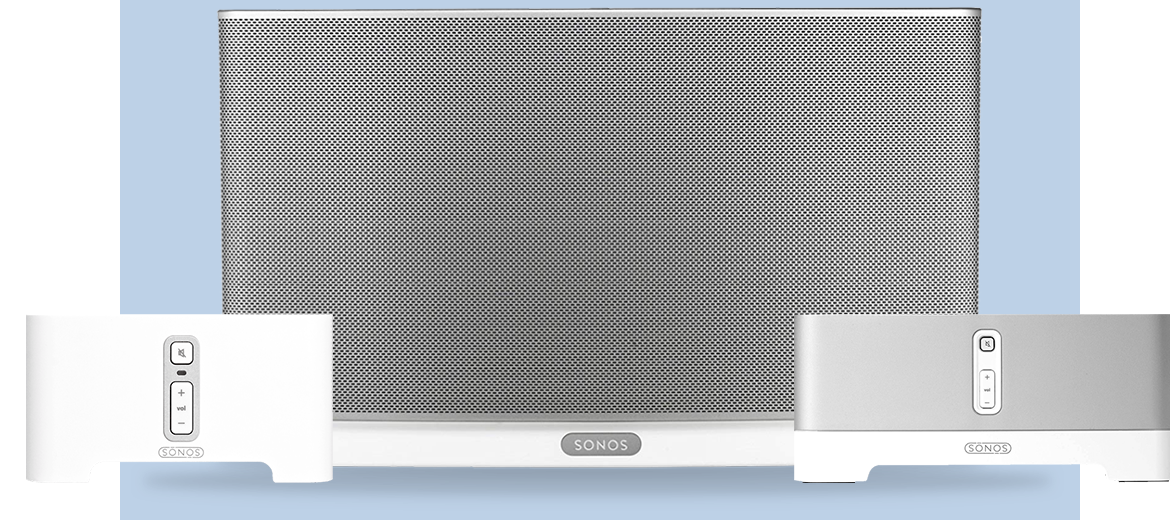
We announced yesterday that some of our oldest Sonos products will be moving into a legacy mode in May of 2020. Our commitment is to support products with regular software updates for a minimum of five years after we stop selling them, and we have a track record of supporting products far longer. 

Here is some public information we’ve shared, gathered into one place to respond to some of your questions in one easy thread, so that people can find the correct information easily.

Beginning in May, software updates and new features from Sonos will only be delivered to systems with only modern products.

After May, systems that include legacy products will continue to work as before - but they will no longer receive software updates or new features. 

Sonos will work to maintain the existing experience and conduct bug fixes, but our efforts will ultimately be limited by the lack of memory and processing power of these legacy products.

We don’t expect any immediate impact to your experience, but access to services and overall functionality will eventually be disrupted, particularly as partners evolve their own services and features. 


Customers with both legacy and modern products have time to decide what option is best for them. You can continue to use your whole system in legacy mode - in this case, it will stop receiving updates and new features. 

You will also be able to separate your legacy products from your modern products, so that the modern products can still receive updates and new features, and legacy products can still be used separately. We’ll have more information on how to do this in May when you can take that action.

Another option available to all customers with legacy products is to take advantage of the Trade Up program, which allows you to upgrade older Sonos products to modern ones with a 30% discount. Trade Up will be open to customers at any time should they decide to upgrade. 

We recognize this is new for Sonos owners, just as it is for Sonos. We are committed to help you by making options available to you to support the best decision for your home.
 

If you have any further questions, please don’t hesitate with asking.

Update 2/22: A message from our CEO

We heard you. We did not get this right from the start. My apologies for that and I wanted to personally assure you of the path forward:

First, rest assured that come May, when we end new software updates for our legacy products, they will continue to work as they do today. We are not bricking them, we are not forcing them into obsolescence, and we are not taking anything away. Many of you have invested heavily in your Sonos systems, and we intend to honor that investment for as long as possible. While legacy Sonos products won’t get new software features, we pledge to keep them updated with bug fixes and security patches for as long as possible. If we run into something core to the experience that can’t be addressed, we’ll work to offer an alternative solution and let you know about any changes you’ll see in your experience.

Secondly, we heard you on the issue of legacy products and modern products not being able to coexist in your home. We are working on a way to split your system so that modern products work together and get the latest features, while legacy products work together and remain in their current state. We’re finalizing details on this plan and will share more in the coming weeks.

While we have a lot of great products and features in the pipeline, we want our customers to upgrade to our latest and greatest products when they’re excited by what the new products offer, not because they feel forced to do so. That’s the intent of the trade up program we launched for our loyal customers.

Thank you for being a Sonos customer. Thank you for taking the time to give us your feedback. I hope that you’ll forgive our misstep, and let us earn back your trust. Without you, Sonos wouldn’t exist and we’ll work harder than ever to earn your loyalty every single day.

If you have any further questions please don’t hesitate to contact us.


Patrick Spence
CEO, Sonos

This topic has been closed for further comments. You can use the search bar to find a similar topic, or create a new one by clicking Create Topic at the top of the page.

4256 replies

Enthusiast I
Jan 24, 2020 5:23 PM UTC

Yes, my Connect:Amp has a play/pause button on the front. Until now, I’ve not been aware there are different models/versions of Connect:Amp.

I’m not sure anyone was. They updated the internals while keeping the name and design the same, with the button being the only difference. It’s confusing everyone. 

You can also look at the status of all of your components by logging into your account and looking at the System section - next to each component it will say either Legacy or Modern

There were other differences too (I compared a bunch last night).  They changed the Sonos logo during the gen 1 era and the casing has different markings.  But I agree it wasn’t widely known that they added more memory in gen 2.  They got better about advertising that with the Sonos One. 


For some reason, I thought I had a Connect and Amp… just realised that I actually have the original ZP100, ZP80 and CR(100) which of course no longer works.

Might have to keep them as museum pieces 😂

Translate
Lyricist II
Jan 24, 2020 5:23 PM UTC

Was saving up for a pair of Play 5’s but very worried that as they have now been out for ten years they will soon be no longer supported.  Am now thinking that I shall have to go elsewhere unless Sonos can reassure me that they will continue to be fully supported.

Translate
Enthusiast II
Jan 24, 2020 5:24 PM UTC

Here’s an extract from today’s Evening Standard:


Spence said the company is working on a way for customers to split these systems so the speakers still work together but receive the appropriate updates for each device. 


This reiterates my earlier speculation from a BBC article that its the legacy units’ inability to handle greater memory requirement updates which necessitates creating two populations of Sonos units - legacy and modern.  The ES article goes further by saying that the speakers still work together but receive the appropriate updates for each device. 


If the storm (hopefully in a train cup) is ONLY about handling software updates and they can indeed work together after having been updated, I’m HAPPY again.

The speakers WILL NOT work together if you choose to update. See reply that I got via Twitter today. 


Confirmation of what we’ve been saying all along.

If you have old and new speakers you cannot group them anymore - so lose the key function of the sonos system.

Only if you are interested in continuing down the path of future updates. I for one am going to embrace “Legacy” network, and purchase any additional expansion unit for my environment from a drastically (enormously so compared to valuation of old units in the past) 2nd-hand used market. It isn’t ideal, but I’m personally not much interested in future voice integrations and the like which are clearly driving what’s coming for future “modern” software iterations. After considering all of this for several days now, this will make the future far more affordable (and perhaps more stable) for legacy users.


Fair enough, and genuinely good luck to you - I hope no API’s (that you use) break for you I really do.

But I wasn’t sold Sonos on the basis that I cannot get updates if I want to use my old and new speakers in a group. For me having a mixture of old and new is where I am, and I was never warned or told this could or would happen. I will never buy another Sonos item again if this comes to pass, and I will actively dissuade my friends by explaining what happened to me. These are simple systems, not laptops or mobile phones all they do is stream audio - they should last longer than this, and the environmental impact of bricking them and putting them in landfill in return for a 30% discount is beyond appalling.

Yup. I’m resigned that potentially ALL the APIs I use could break, but the least likely would be local media streaming and even less so, simple speaker grouping and connectivity. It will all potentially become not much more than a wireless speaker network, but it can be fed via line-in from another streaming source (I do this already sometimes) that is not a Sonos device. One can also still currently direct-cast from certain applications to a given Sonos speaker singly, so at least there’s that. NONE of this is ideal, but I’ll not be “moving forward” under conditions as they now seem to be. I’ll make it work until I can no longer. 


Understand where you are coming from, this whole situation is so unnecessary though - so sad

Translate
chickentender
Jan 24, 2020 5:28 PM UTC

Here’s an extract from today’s Evening Standard:


Spence said the company is working on a way for customers to split these systems so the speakers still work together but receive the appropriate updates for each device. 


This reiterates my earlier speculation from a BBC article that its the legacy units’ inability to handle greater memory requirement updates which necessitates creating two populations of Sonos units - legacy and modern.  The ES article goes further by saying that the speakers still work together but receive the appropriate updates for each device. 


If the storm (hopefully in a train cup) is ONLY about handling software updates and they can indeed work together after having been updated, I’m HAPPY again.

The speakers WILL NOT work together if you choose to update. See reply that I got via Twitter today. 


Confirmation of what we’ve been saying all along.

If you have old and new speakers you cannot group them anymore - so lose the key function of the sonos system.

Only if you are interested in continuing down the path of future updates. I for one am going to embrace “Legacy” network, and purchase any additional expansion unit for my environment from a drastically (enormously so compared to valuation of old units in the past) 2nd-hand used market. It isn’t ideal, but I’m personally not much interested in future voice integrations and the like which are clearly driving what’s coming for future “modern” software iterations. After considering all of this for several days now, this will make the future far more affordable (and perhaps more stable) for legacy users.


Fair enough, and genuinely good luck to you - I hope no API’s (that you use) break for you I really do.

But I wasn’t sold Sonos on the basis that I cannot get updates if I want to use my old and new speakers in a group. For me having a mixture of old and new is where I am, and I was never warned or told this could or would happen. I will never buy another Sonos item again if this comes to pass, and I will actively dissuade my friends by explaining what happened to me. These are simple systems, not laptops or mobile phones all they do is stream audio - they should last longer than this, and the environmental impact of bricking them and putting them in landfill in return for a 30% discount is beyond appalling.

Yup. I’m resigned that potentially ALL the APIs I use could break, but the least likely would be local media streaming and even less so, simple speaker grouping and connectivity. It will all potentially become not much more than a wireless speaker network, but it can be fed via line-in from another streaming source (I do this already sometimes) that is not a Sonos device. One can also still currently direct-cast from certain applications to a given Sonos speaker singly, so at least there’s that. NONE of this is ideal, but I’ll not be “moving forward” under conditions as they now seem to be. I’ll make it work until I can no longer. 


Understand where you are coming from, this whole situation is so unnecessary though - so sad

Fact.

Translate
Lyricist III
Jan 24, 2020 5:29 PM UTC

Since this announcement a few days ago the share price has dropped 6.5%.

Thats a billion dollars wiped off the company value.  A fair few “trade ups” would need to be sold to recover that.

Hows about just going back to plan A and not treating your existing customer base like a cash cow adn expecting them to just suck it up that their home sound system which has been added to over the years is about to get ripped apart.


Good thing Nicholas Millington, Chief Product Officer, sold 30% of his shares on January 2nd for $500,000.00 before the share price started going down.  Shrewd trader that Nicholas :wink: .

http://d18rn0p25nwr6d.cloudfront.net/CIK-0001314727/5e4c0a01-abfa-4ea8-bf30-6a97f31fb24d.pdf

Translate
Contributor I
Jan 24, 2020 5:31 PM UTC

As was said in a previous post, this decision will be used as a future case study.  Who would have thought that Sonos would become the modern day Ratner?

Sonos’s success has been its ability prise people away from their hifi through its convenience and simplicity of use.  It’s expandability has meant that people can simply keep adding to their system, willingly spending £££ on speakers to replace old radios in their kitchens, put in their kids bedrooms and rooms that they would never think of putting hifi in.

Sonos is (was) also ‘reassuringly expensive’.

But this is a two way street.  There has been an unwritten contract between Sonos and us customers; that we willingly pay over the odds and a premium price, but we at least expect the system to keep working in return.  We TRUST the system to keep working.

The moment the system loses the core values of convenience and simplicity of use, that originally drew us to it and most importantly once the brand loses the TRUST of its customers, that unwritten contract is broken.

Who in their right mind is going to buy a new Sonos product after this announcement?  What possible TRUST can customers have that this won’t simply be repeated again in the future?

At least with Ratners you could sell the gold.  Sonos’s ‘Legacy’ will be bricked plastic boxes polluting the planet.

Translate
robinm0
Enthusiast I
Jan 24, 2020 5:34 PM UTC

Re this comment:

It will all potentially become not much more than a wireless speaker network, but it can be fed via line-in from another streaming source (I do this already sometimes) that is not a Sonos device.

It’s a pity Google stopped producing the Chromecast audio. Ideal, I would have thought. You can still pick them up on eBay, but how long they’ll be supported is anyone’s guess. 

Translate
Enthusiast II
Jan 24, 2020 5:36 PM UTC

My response to Patrick Spence 


Hello again,


Your email actually does not address the issue we all have.  That is the co-existing of devices on the same network, and working in the way they always have.   The benefit of Sonos was multi-zone music delivery without sync issues.  If I run two systems , then I am guessing I cannot sync devices between systems.  That defeats the purpose of $10,000+ of equipment, no?


The question I have been trying to get an answer to is: Is your suggestion to me that I update 16 of my 26 devices at a cost of $5,500?  You cannot explain what upsides I will get see in terms of new features, but you will say I must separate into multiple systems fail to get full advantage out of my more modern devices.  


After raising your prices 20% you then offer us a 30% discount to upgrade.   Back in the day I paid about $300 per connect, and now they run $449.  I have loads of these.  What do I get for the increase in spend?  What’s my ROI?


For now my investments in Sonos have ceased.  I have turned many, many people onto the platform... no longer.  I am active on Social Media and on the product review forums.  I will continue being as strong as messenger against Sonos as I was a proponent.


Perhaps the day you offer upgrades AT YOUR COST, and not try to profit again off my back, we’ll talk again.


Regards,

Translate
Lyricist I
Jan 24, 2020 5:37 PM UTC

Since this announcement a few days ago the share price has dropped 6.5%.

Thats a billion dollars wiped off the company value.  A fair few “trade ups” would need to be sold to recover that.

Hows about just going back to plan A and not treating your existing customer base like a cash cow adn expecting them to just suck it up that their home sound system which has been added to over the years is about to get ripped apart.

Maybe this is intentional. I mean that someone related in the Sonos company chain of command might intend to decrease the value of the company, because he has a spurious interest to do so and, therefore, facilitate the purchase by some other company for a lower value.
If I am right, the new owner will quickly annul the whole obsolescence issue, and will regain the trust of his clients, of course that can only be done by a NEW AND PRESTIGIOUS OWNER.
I'm not sure, but I won't rule out the possibility

Translate
melvimbe
Jan 24, 2020 5:37 PM UTC

This is too funny.  From the November 20, 2019 letter to shareholders:

https://s22.q4cdn.com/672173472/files/doc_financials/2019/q4/FINAL-SONO-Q4-and-FY2019-Shareholder-Letter-11.20.19.pdf

...one of the things that sets us apart from any company we can think of - is that our existing households accounted for 37% of our new product registrations. That means 37% of the products registered in the year were from customers who were adding an additional Sonos product to their home. We also increased the average number of registered products per household from 2.8 to 2.9 in fiscal 2019. Together, this illustrates our continued ability to 1) acquire new Sonos customers and 2) convince our existing customers to continue to add to their system.

Who are the idiots running this company and why do they still have jobs?  Turning your back on 37% of your market is extraordinarily stupid.  I am seriously wondering how long it will take this brain trust to run this company into bankruptcy.  Google and Amazon are going to have a field day with these rubes.


The document does not say that 37% of households have legacy products.  Some of those household have bought their first product any time since 2015 (all non-legacy products) Or bought a play:1, play:3, playbar etc (non-legacy).  That would imply that the number of households with legacy products is somewhere south of 37%.  And this is ‘new product registrations’, which could mean a household bought a used legacy product and is registering it.  That would likely adjust the number of households up.  We also don’t know how many people have already used the trade in program...adjusting the number down.  


This is also only the percentage for 2019, not reflective of sales from previous years.  Obviously, there can be households with legacy products who did not buy anything fiscal 2019.

Translate
Danny