Answered

Unable to AirPlay to Era 100/300 in separate VLANs

  • March 27, 2025
  • 48 replies
  • 1289 views

Show first post

48 replies

Forum|alt.badge.img+17
  • Local Superstar
  • July 7, 2025

And for people asking why you would want to segregate your network please consider something like this: you could have a Trusted network for personal devices (phone/Macbook/etc) 

When you take your personal devices away from your home network, do you create a separate ‘trusted’ VLAN for them to connect to, or do they connect directly to an untrusted public network?


Forum|alt.badge.img
  • Author
  • Trending Lyricist I
  • July 7, 2025

And for people asking why you would want to segregate your network please consider something like this: you could have a Trusted network for personal devices (phone/Macbook/etc) 

When you take your personal devices away from your home network, do you create a separate ‘trusted’ VLAN for them to connect to, or do they connect directly to an untrusted public network?


NOT AT ALL…. 
with unlimited data, “always on VPN” connected back home…. 


Forum|alt.badge.img
  • Author
  • Trending Lyricist I
  • July 30, 2025

Another finding, while I was doing some other troubleshooting… 

SAME network, but a DIFFERENT SSID… AIRPLAY will not work?!!! 

So just let check the facts here… it is the SAME /24 network… same GW… but a DIFFERENT SSID working on the same Network… it still isn't possible to STREAM over AIRPLAY?? 

So it looks to be more than only a VLAN/NETWORK seperation, there is also a bonding on the SSID which is being used on the client and the SONOS speakers???


Airgetlam
  • July 30, 2025

As far as I’m aware, both the Sonos, as well as the device sending data to them, are still required to be on the same subnet. The stack that Sonos uses for access requires this. 


Forum|alt.badge.img
  • Author
  • Trending Lyricist I
  • October 11, 2025

https://www.reddit.com/r/sonos/comments/1l6bzez/sonos_airplay_still_broken_across_vlans/

based on this story, there is some hope? 
SONOS ? can anyone check how it is still possible, when using the same netmask for the subnets it starts to work with ARP-proxy etc?

Can we not stick to the original ONE/BEAM technology? 


Stanley_4
  • Grand Maestro
  • October 11, 2025

Probably best asked on reddit where Sonos has people dealing with that sort of thing.


I know this is an old thread, just saw it after I purchased an Era 100. This doesn’t make sense to me at all. I have 4 other Sonos products that all still work across vlans two Sonos ones, an Arc and a Beam. I was about to get an other era 300, a roam and an amp to add outdoor speakers. This is truly disappointing in 2026 that there isn’t the ability to have the newer products work across vlans. Time to look for new products sadly.


  • Lyricist II
  • February 6, 2026

Following this week’s update, I am now able to Airplay to my ERA100’s across VLANs once again! Hope this is fixed generally for everyone now!


Forum|alt.badge.img
  • Author
  • Trending Lyricist I
  • February 6, 2026

Following this week’s update, I am now able to Airplay to my ERA100’s across VLANs once again! Hope this is fixed generally for everyone now!

Seriously? How to update?


UPDATE: wow!!!! It works!!! At last!!!! 
someone from Sonos; can you please enlighten us what happened? How it is fixed? 


Smilja
  • February 6, 2026

FYI, in general, the following applies:


Sonos products are compatible with most managed switches with some important considerations:

  • Sonos products must be on the same VLAN as all devices running the Sonos app. Devices on separate VLANs will not be able to connect to Sonos products.

https://support.sonos.com/en-us/article/using-sonos-with-a-managed-switch


Forum|alt.badge.img
  • Author
  • Trending Lyricist I
  • Answer
  • February 8, 2026

@FedUpCustomer ​@tim_p ​@controlav ​@Zappp ​@UltraPhonic ​@Charlew 


not sure if you have seen the message, but at last it is fixed!!!!!


Forum|alt.badge.img+3
  • Enthusiast II
  • February 9, 2026

I’ve been keeping my Sonos app and speaker firmware up to date over the last few months and since a recent update, have been struggling to use Airplay from my phones/tablets on one VLAN/SSID to the speakers on another VLAN/SSID. I have mDNS correctly configured on my UniFi network and this has been working well for months. My speakers are on firmware 93.1-73190 which is still listed as the latest at https://support.sonos.com/en-gb/article/release-notes-sonos-system-updates

Airplay has been pretty much unusable for the last couple of weeks. I ran a check in the iPhone app for system updates and it seems that there’s a later version available (93.1-73290) which isn’t even listed at the updates page. 
The complete lack of any detail in the release notes has always been irritating in the extreme. Vanilla platitudes along the lines of “This release includes multiple fixes to improve overall player stability and reliability” are meaningless. Please keep the release notes more up to date and provide a bit more detail about what’s new/changed/removed in each release. 


Smilja
  • February 9, 2026

@Arcticpollen, Did you also ran a check for iOS bug fixes?


Forum|alt.badge.img+3
  • Enthusiast II
  • February 9, 2026

@Arcticpollen, Did you also ran a check for iOS bug fixes?

I updated the Play 5s to  93.1-73290  this morning and Airplay is still unusable to Sonos devices.

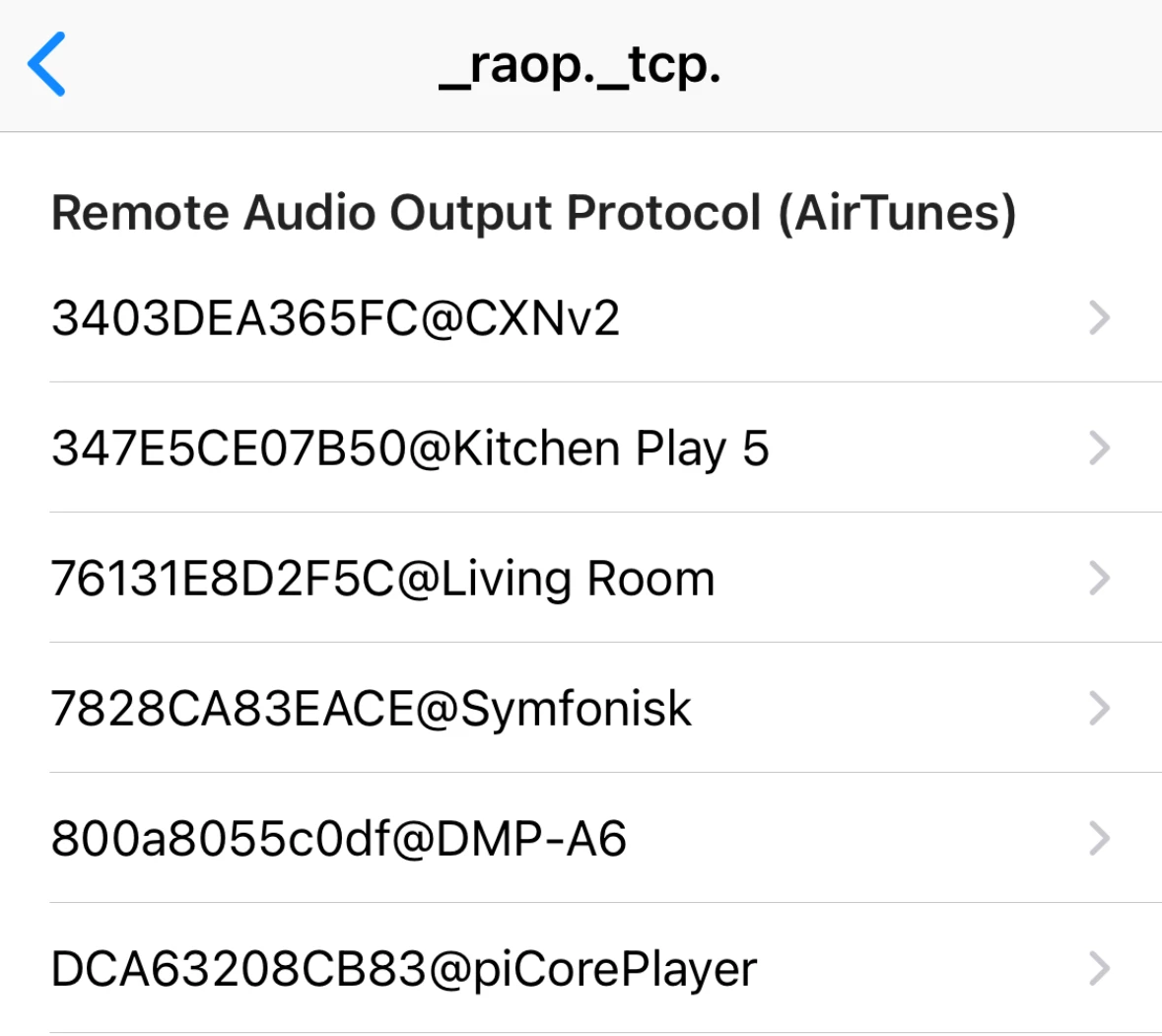
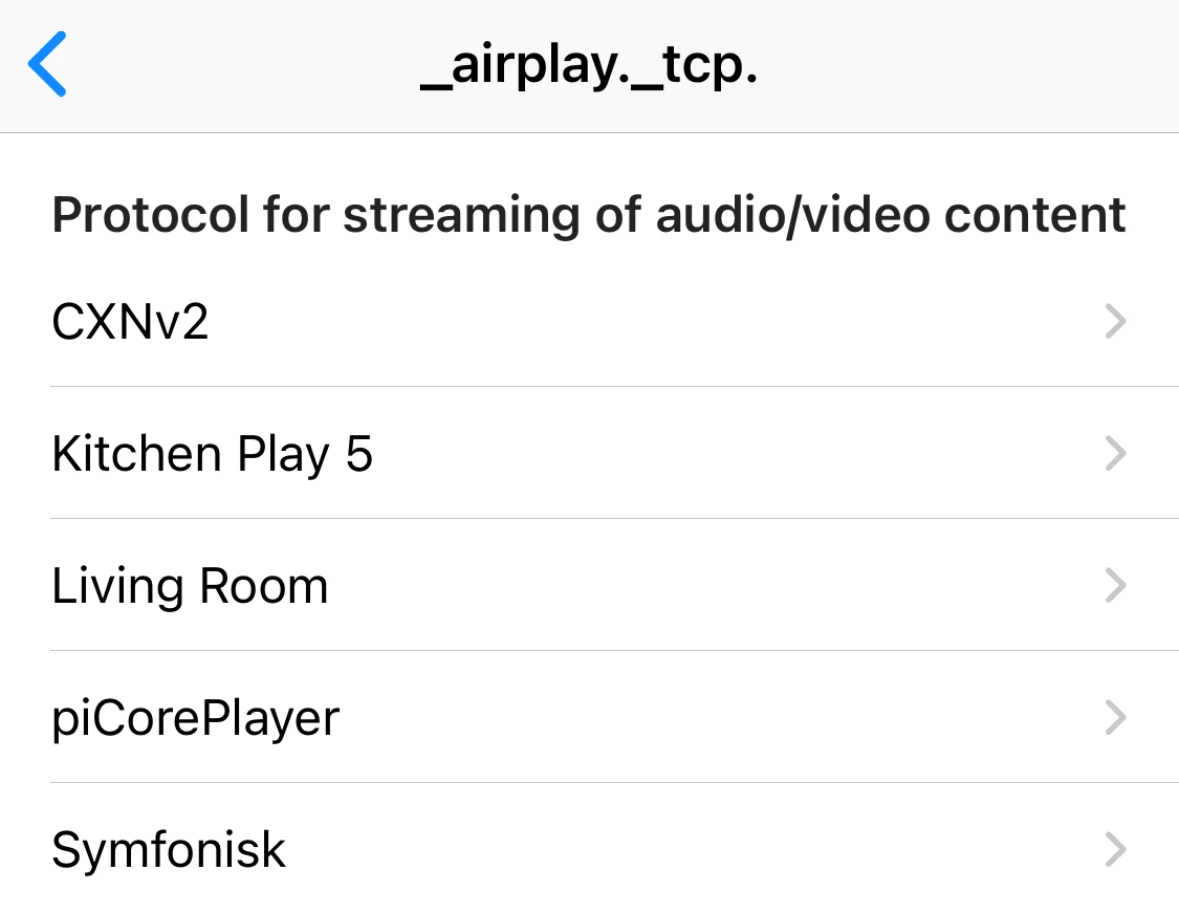
It’s only using Airplay to Sonos devices that are affected.  The stream starts and then fails a few seconds later.  Other Airplay targets work fine, for instance, I’m using my phone for an Airplay stream to an Eversolo DMP-A6 currently in my home office.  Airplay to other devices is also fine including a Cambridge Audio streamer and a Raspberry Pi based PiCorePlayer.

All the Airplay targets are on a different VLAN/SSID from my iPhone and iPad but show up happily in the iOS Discovery app.  Other services relying on functioning mDNS are all OK tto - Philips Hue etc.

Airplay version 1 devices: -

And Airplay version 2 devices: -


Forum|alt.badge.img
  • Lyricist II
  • February 9, 2026

@kingebeng thanks for the heads-up, I’d given up all hope of this ever being fixed! It is absolutely wonderful to get that (expected from what seems most of us) functionality back again! It would truly be wonderful of Sonos would care to share some details on this fix – or if we should consider it a happy accident that may be gone again by next  update. 


Forum|alt.badge.img+3
  • Enthusiast II
  • February 23, 2026

After some Wireshark packet capture and syslog monitoring, I worked out the differences between the way in which Sonos have implemented their Airplay integration compared with other manufacturers that were working on my network.

  • My Sonos speakers are on an isolated SSID and VLAN along with my other IoT kit.
  • My i-devices used to control Sonos and other Airplay devices on are another SSID and VLAN.
  • I have allow all type rules between the i-devices VLAN and the IoT VLAN that allows all traffic AND associated replies from the IoT VLAN.
  • Airplay and use of the Sonos iOS app from one VLAN to the other has been working fine until a Sonos update around Christmas time.  Airplay stopped working on Sonos.
  • I have other Airplay devices that carried on working from one VLAN to another so the problem was specific to Sonos.

Airplay from an i-device to an Airplay target seems to want to establish some timing calibration, usually on UDP port 319.  My other (functioning) Airplay devices (Cambridge Audio and Eversolo) were happy to let the i-device initiating the stream start the timing configuration if they could not start the conversation on UDP port 319 which would be blocked by my FW rules from the IoT → secured network.

The Sonos speakers would just drop the stream after a second or so.  Sonos seem to have made the ability to start the stream contingent on the Sonos speakers being able to initiate the timing conversation.

I set up a FW rule allowing UDP port 319 from my Sonos speakers to my secure VLAN and Airplay has been fine since.

Hope this helps someone with similar issues.  Not sure why Sonos have coded their Airplay integration in this way.


Corry P
Forum|alt.badge.img+19
  • Sonos Staff
  • February 23, 2026

Hi ​@Arcticpollen 

To be very clear, I do not know for sure, but my assumption would be that we insist (if indeed we do - I’m going solely by what you have said here) on being in charge of the AirPlay timing to facilitate the grouping-in of other Sonos players. Just a guess on my part, but it seems likely.

I hope this helps.


Forum|alt.badge.img+3
  • Enthusiast II
  • February 23, 2026

Hi ​@Corry P - I did packet captures and syslog monitoring for Airplay streams to both Sonos speakers and other Airplay targets.

The non Sonos targets were able to stream without being able to establish the timing conversation directly themselves and were happy to rely on subsequent UDP timing data from the client device which was allowed directly by my FW rules from secure VLAN → IoT VLAN.

My Sonos 5s and Symfonisk lamp refused to follow the same chain of traffic and would stop playing the stream after a second or so without the FW rule allowing the 319-UDP traffic stream explicitly. I could see the UDP 319 traffic being blocked and the stream would stop immediately afterwards.

Apple’s Airplay standards are pretty opaque but it’s odd that other major manufacturers supporting Airplay have more relaxed standards than Sonos on the intitial timing data conversation.

The Sonos 5s are in a stereo pair but the Symfonisk is not.  I could see various UDP traffic in the range of ports 319-321 in the subsequent conversations between the i-devices and the Sonos speakers.  Once initiated by the i-device, the return traffic was allowed by my inter VLAN FW rules.


Corry P
Forum|alt.badge.img+19
  • Sonos Staff
  • February 23, 2026

It’s all past my pay-grade, ​@Arcticpollen, but we do recommend only Airplay-ing to one Sonos target and grouping within the Sonos app, rather than selecting multiple targets on the host device - I presume this is why.

No need to defend your findings - I was not disagreeing with them, only making sure that I did not accidentally confirm them (I really don’t know if you’re right or not, but it sounds plausible enough).

As mentioned, I don’t know the technicalities of it all, but I would assume the AirPlay method of syncing and the Sonos method are perhaps different in some way, and that if we were to use the AirPlay method, grouping to other Sonos targets would not be practical. Considering we promote the use of an AirPlay-capable speaker to get AirPlay content playing on non-AirPlay-compatible speakers, it seems prudent for us to keep things as they are. Again, all supposition on my part.


Forum|alt.badge.img+17
  • Local Superstar
  • February 24, 2026

Hope this helps someone with similar issues.  Not sure why Sonos have coded their Airplay integration in this way.

Apple’s Airplay standards are pretty opaque but it’s odd that other major manufacturers supporting Airplay have more relaxed standards than Sonos on the intitial timing data conversation.


This blog suggests PTP (UDP ports 319/230) are required for AirPlay from Apple devices to Apple devices, ie even if there are no Sonos devices, so not specific to Sonos. Possibly specific to AirPlay 2 that Sonos uses?

https://blogs.thismonkey.com/?p=30


Forum|alt.badge.img+3
  • Enthusiast II
  • February 26, 2026

@craigski - Thanks for the link, very interesting. My Eversolo streamer is only Airplay 1 compatable but the CA CXNv2 supports Airplay 2 and both are on the same IoT VLAN alongside the Sonos speakers.

I could use Airplay to either of these without the UDP 319 rule on the FW without the stream stopping after a second or two.  When streaming to either of those 2 devices, I could see my phone or iPad taking over the management of the precision time-keeping protocol conversations in the packet traces.

My Sonos Airplay capable speakers refused to maintain the stream if they could not initiate the precision time-keeping protocol conversation.

Have just tried to get as much information into these comments in case it helps someone else in the future.  Airplay to my Sonos speakers has always worked fine across the VLANs since I put my UniFi home network in around 10 years ago but stopped around Christmas time.


Forum|alt.badge.img+17
  • Local Superstar
  • February 26, 2026

@craigski - Thanks for the link, very interesting.

Yes, interesting (to some). Every day is school day. 😀

My point was PTP UDP 319/320 is required for Apple only devices, according to that blog, ie not specific to Sonos.

However, Apple do not list PTP in their AirPlay network requirements:

https://support.apple.com/en-gb/103229


Forum|alt.badge.img+17
  • Local Superstar
  • February 27, 2026

If anyone is thinking about separate VLANs for Sonos (or AirPlay/Matter/etc) devices and controllers, and needs convincing why you shouldn’t do it, read the blog below.

Its not specific to Sonos, but explains in detail why it is not a good idea. If you are short of time, just read the mDNS section:

https://www.derekseaman.com/2023/10/part-3-smart-home-matter-and-thread-deep-dive.html

In addition, if you do any network segmentation, always, always, place all your Matter devices, smart home hubs and Home Assistant in the SAME VLAN. DO NOT segment your IoT devices in a different VLAN from the control plane