
Ryan S
Retired Sonos Staff
Jan 22, 2020 3:20 PM UTC

End of Software Support - Clarifications
  • Dec 8, 2022 11:29 AM UTC
  • 4256 replies
  • 270542 views
  • Translate All
End of Software Support - Clarifications

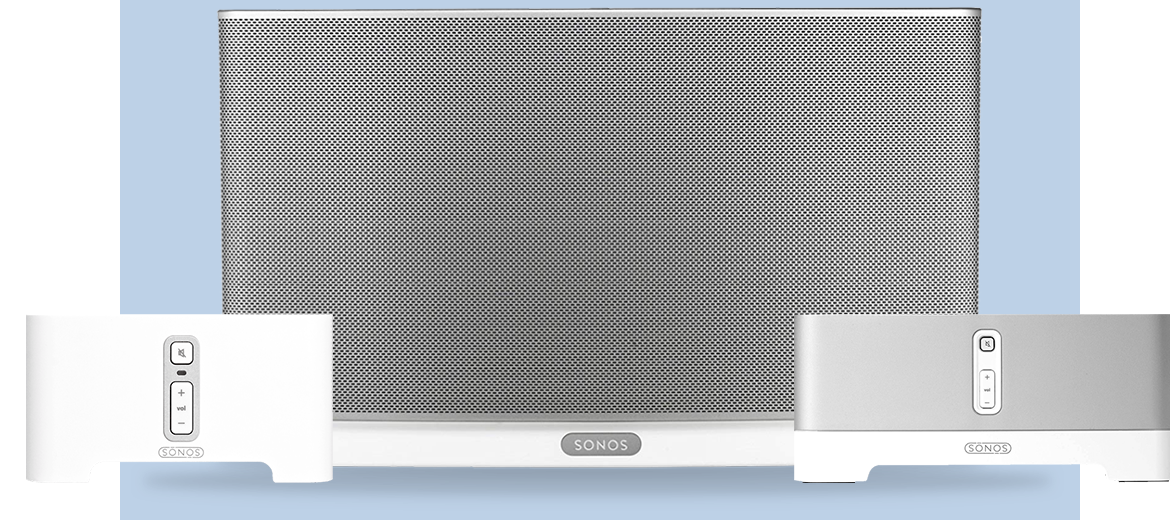
We announced yesterday that some of our oldest Sonos products will be moving into a legacy mode in May of 2020. Our commitment is to support products with regular software updates for a minimum of five years after we stop selling them, and we have a track record of supporting products far longer. 

Here is some public information we’ve shared, gathered into one place to respond to some of your questions in one easy thread, so that people can find the correct information easily.

Beginning in May, software updates and new features from Sonos will only be delivered to systems with only modern products.

After May, systems that include legacy products will continue to work as before - but they will no longer receive software updates or new features. 

Sonos will work to maintain the existing experience and conduct bug fixes, but our efforts will ultimately be limited by the lack of memory and processing power of these legacy products.

We don’t expect any immediate impact to your experience, but access to services and overall functionality will eventually be disrupted, particularly as partners evolve their own services and features. 


Customers with both legacy and modern products have time to decide what option is best for them. You can continue to use your whole system in legacy mode - in this case, it will stop receiving updates and new features. 

You will also be able to separate your legacy products from your modern products, so that the modern products can still receive updates and new features, and legacy products can still be used separately. We’ll have more information on how to do this in May when you can take that action.

Another option available to all customers with legacy products is to take advantage of the Trade Up program, which allows you to upgrade older Sonos products to modern ones with a 30% discount. Trade Up will be open to customers at any time should they decide to upgrade. 

We recognize this is new for Sonos owners, just as it is for Sonos. We are committed to help you by making options available to you to support the best decision for your home.
 

If you have any further questions, please don’t hesitate with asking.

Update 2/22: A message from our CEO

We heard you. We did not get this right from the start. My apologies for that and I wanted to personally assure you of the path forward:

First, rest assured that come May, when we end new software updates for our legacy products, they will continue to work as they do today. We are not bricking them, we are not forcing them into obsolescence, and we are not taking anything away. Many of you have invested heavily in your Sonos systems, and we intend to honor that investment for as long as possible. While legacy Sonos products won’t get new software features, we pledge to keep them updated with bug fixes and security patches for as long as possible. If we run into something core to the experience that can’t be addressed, we’ll work to offer an alternative solution and let you know about any changes you’ll see in your experience.

Secondly, we heard you on the issue of legacy products and modern products not being able to coexist in your home. We are working on a way to split your system so that modern products work together and get the latest features, while legacy products work together and remain in their current state. We’re finalizing details on this plan and will share more in the coming weeks.

While we have a lot of great products and features in the pipeline, we want our customers to upgrade to our latest and greatest products when they’re excited by what the new products offer, not because they feel forced to do so. That’s the intent of the trade up program we launched for our loyal customers.

Thank you for being a Sonos customer. Thank you for taking the time to give us your feedback. I hope that you’ll forgive our misstep, and let us earn back your trust. Without you, Sonos wouldn’t exist and we’ll work harder than ever to earn your loyalty every single day.

If you have any further questions please don’t hesitate to contact us.


Patrick Spence
CEO, Sonos

This topic has been closed for further comments. You can use the search bar to find a similar topic, or create a new one by clicking Create Topic at the top of the page.

4256 replies

melvimbe
Feb 24, 2020 3:11 PM UTC

@John B: I don’t know what percentage will opt for legacy mode but I would not assume that it will be tiny.


I would guess that it’s somewhere around 10%.  I’m not sure that it really matters though, as that percentage is only useful for customers who want claim this decision will be the end of Sonos, or by those that want to claim it’s not.  We will see how it unfolds in the next year or so.  Regardless, customers should do what they feel is best for them regardless of what everyone else is going to do.


If it was so tiny then Sonos could have offered better terms for upgrading legacy equipment as it would have been a small impact on their bottom line and they would have been praised instead of vilified.


Such decisions are not just about current financial impact though.  If the decision is technical in nature than it stands to reasons that some time in the future, there will be another batch of speakers marked as legacy, and they will want to be able to match the 30% discount at that time.


The fact is that they offered a relatively meager discount in exchange of components, that at least at this point in time, have less functionnality than the components they are meant to replace (e.g. Port doesn’t have optical line in which the Connect has).


The trade discount, is not limited to like products.  You can use the trade for anything in the Sonos store.  I get that a lot of people are going to trade “like for like”, but in many cases, people are going to trade in a Connect:amp for a pair of Sonos Ones, for example.


The fact is that anybody who doesn’t feel that the meager trade in offer is of value will have a legacy network (maybe all legacy or maybe mixed and limiting modern equipment). I suspect those will not be small numbers.


The trade in offer is not the only motivation for people to opt for a modern system though.  The other reasons are the potential new upgrade features and Sonos products that you won’t be able to use in a legacy system. It’s those reasons that people are upset about the legacy system to begin with.  


I have a mixed environment throughout my house which includes almost every class of component made by Sonos (Play:1, 3, 5 (gen 1), Connect, Connect:Amp, Playbar, Sub, CR200). I also support a friend’s system so I have over 15 components on my account that will be legacy. 

There is no way that I will be giving Sonos the amount of money they are expecting. I believe I am much better off giving it to other’s who provide more functionality (e.g. 5ghz wifi, bluetooth, airplay, chromecast) which will likely allow me to continue to use the equipment after they choose to stop supporting it.


5 GHz WiFi isn’t an advantage for audio, except in the case of home theatre setups, which Sonos uses.  Almost  all the products Sonos currently offers has airplay 2.  I don’t get the last part of your statement as Sonos does allow you to use your equipment after they choose to stop supporting it   If that were not the case, there would be no legacy system to talk about.

Translate
Danny
Feb 24, 2020 3:21 PM UTC

The Connect doesn't have an optical line in.

Translate
Enthusiast II
Feb 24, 2020 4:11 PM UTC


@John B: I don’t know what percentage will opt for legacy mode but I would not assume that it will be tiny.


I would guess that it’s somewhere around 10%.  I’m not sure that it really matters though, as that percentage is only useful for customers who want claim this decision will be the end of Sonos, or by those that want to claim it’s not.  We will see how it unfolds in the next year or so.  Regardless, customers should do what they feel is best for them regardless of what everyone else is going to do.


If it was so tiny then Sonos could have offered better terms for upgrading legacy equipment as it would have been a small impact on their bottom line and they would have been praised instead of vilified.


Such decisions are not just about current financial impact though.  If the decision is technical in nature than it stands to reasons that some time in the future, there will be another batch of speakers marked as legacy, and they will want to be able to match the 30% discount at that time.


The fact is that they offered a relatively meager discount in exchange of components, that at least at this point in time, have less functionnality than the components they are meant to replace (e.g. Port doesn’t have optical line in which the Connect has).


The trade discount, is not limited to like products.  You can use the trade for anything in the Sonos store.  I get that a lot of people are going to trade “like for like”, but in many cases, people are going to trade in a Connect:amp for a pair of Sonos Ones, for example.


The fact is that anybody who doesn’t feel that the meager trade in offer is of value will have a legacy network (maybe all legacy or maybe mixed and limiting modern equipment). I suspect those will not be small numbers.


The trade in offer is not the only motivation for people to opt for a modern system though.  The other reasons are the potential new upgrade features and Sonos products that you won’t be able to use in a legacy system. It’s those reasons that people are upset about the legacy system to begin with.  


I have a mixed environment throughout my house which includes almost every class of component made by Sonos (Play:1, 3, 5 (gen 1), Connect, Connect:Amp, Playbar, Sub, CR200). I also support a friend’s system so I have over 15 components on my account that will be legacy. 

There is no way that I will be giving Sonos the amount of money they are expecting. I believe I am much better off giving it to other’s who provide more functionality (e.g. 5ghz wifi, bluetooth, airplay, chromecast) which will likely allow me to continue to use the equipment after they choose to stop supporting it.


5 GHz WiFi isn’t an advantage for audio, except in the case of home theatre setups, which Sonos uses.  Almost  all the products Sonos currently offers has airplay 2.  I don’t get the last part of your statement as Sonos does allow you to use your equipment after they choose to stop supporting it   If that were not the case, there would be no legacy system to talk about.

I don’t agree that “that percentage is only useful for customers who want claim this decision will be the end of Sonos, or by those that want to claim it’s not.” I think it’s relevant in that Sonos has demonstrated that they are willing to sacrifice 10% of their user base with little notice and litte incentive to upgrade. Furthermore, assuming that your 10% number is correct, then these are certainly longer term customers and are likely more heavily invested in the ecosystem. I would love ot know what percentage of customers own legacy equipment and of those how many also own “modern” equipment and will be forced to either neuter their modern equipment, split their network, or get rid of the legacy components. 


The trade in offer is not the only motivation for people to opt for a modern system though.  The other reasons are the potential new upgrade features and Sonos products that you won’t be able to use in a legacy system. It’s those reasons that people are upset about the legacy system to begin with.  

The problem is that Sonos has yet to announce any of these “new upgrade features”. I have yet to see one I’m interested in. I never bought a Sonos One because I don’t want the additional features. They should have started by rolling out new features so that people actually want to upgrade vs trying to get people to upgrade just because they would like you to. 

This is why I say that they should have focused on finding a way to make the components interoperable and roll out new features to modern equipment without breaking their basic functionality of providing an integrated single multi-room system. Sonos has in the past been able to provide new functionality, such as airplay, only when components that support them are added so I have a hard time accepting that this is suddenly impossible. 

5 GHz WiFi isn’t an advantage for audio, except in the case of home theatre setups, which Sonos uses.  Almost  all the products Sonos currently offers has airplay 2.  I don’t get the last part of your statement as Sonos does allow you to use your equipment after they choose to stop supporting it   If that were not the case, there would be no legacy system to talk about.

My point is not audio benefit but rather more means to interact with the equipment and therefore greater likelyhood that the equipment will be usable over a longer period. 

Translate
Enthusiast II
Feb 24, 2020 4:13 PM UTC

The Connect doesn't have an optical line in.

you are correct, I meant to say optical line out. Still, supports my point, asking for more money and doesn’t  provide the same functionality as the “legacy” device it’s meant to replace.

Translate
Feb 24, 2020 5:04 PM UTC

The Connect doesn't have an optical line in.

you are correct, I meant to say optical line out. Still, supports my point, asking for more money and doesn’t  provide the same functionality as the “legacy” device it’s meant to replace.

Better DAC, Airplay 2, 12V trigger. 95% of users don't need optical out. The 5% that do can get a coaxial to optical converter for a tenner. If you think that proves your point then you are the one living in a post fact world. 

Translate
melvimbe
Feb 24, 2020 5:31 PM UTC

I don’t agree that “that percentage is only useful for customers who want claim this decision will be the end of Sonos, or by those that want to claim it’s not.” I think it’s relevant in that Sonos has demonstrated that they are willing to sacrifice 10% of their user base with little notice and litte incentive to upgrade. Furthermore, assuming that your 10% number is correct, then these are certainly longer term customers and are likely more heavily invested in the ecosystem. I would love ot know what percentage of customers own legacy equipment and of those how many also own “modern” equipment and will be forced to either neuter their modern equipment, split their network, or get rid of the legacy components. 


I think we are pretty much on the same page here. I said that the % is useful for  ‘will be the end of Sonos’ and you’re saying that it shows a ‘willing to sacrafice X percentage of user base.  The point being that there sees to see some magic percentage number that’s above which, Sonos is immoral, hurting too many customers, making a mistake, etc.   Below that percentage, whatever it is, it’s morally acceptable.  We don’t know what the actual numbers are, and probably don’t have a consensus on what’s morally acceptable, so I don’t know what the point is.  If you did know the numbers, I’d imagine you’d feel more comfortable (as would I ) of claiming the decision was right or wrong.Regardless of the number, and individual has to a right to take the decision whatever way they want to.


The trade in offer is not the only motivation for people to opt for a modern system though.  The other reasons are the potential new upgrade features and Sonos products that you won’t be able to use in a legacy system. It’s those reasons that people are upset about the legacy system to begin with.  

The problem is that Sonos has yet to announce any of these “new upgrade features”. I have yet to see one I’m interested in. I never bought a Sonos One because I don’t want the additional features. They should have started by rolling out new features so that people actually want to upgrade vs trying to get people to upgrade just because they would like you to. 


You just stated that the Sonos One has additional features, then said that customers don’t know what the new features of modern products are to determine whether it’s worth upgrading or not.  A little confusing.  I think though you’re referring to future features that will be in modern systems, but not legacy systems.  And that makes sense.  However, a customer does have the option to stay on in a legacy system until the point there is a feature they deem is worth upgrading to.  You can wait to make the decision till you know what the features are.


This is why I say that they should have focused on finding a way to make the components interoperable and roll out new features to modern equipment without breaking their basic functionality of providing an integrated single multi-room system. Sonos has in the past been able to provide new functionality, such as airplay, only when components that support them are added so I have a hard time accepting that this is suddenly impossible. 


The obvious guess then would be that whatever feature/change is coming has to do with how the speakers communicate with each other.  Not impossible at all.  Whether you or anyone else thinks the change, whatever it actually is or when it comes to be, is worth it is a different matter.   


5 GHz WiFi isn’t an advantage for audio, except in the case of home theatre setups, which Sonos uses.  Almost  all the products Sonos currently offers has airplay 2.  I don’t get the last part of your statement as Sonos does allow you to use your equipment after they choose to stop supporting it   If that were not the case, there would be no legacy system to talk about.

My point is not audio benefit but rather more means to interact with the equipment and therefore greater likelyhood that the equipment will be usable over a longer period. 


It’s been pretty clear that the limitations of the legacy products has been hardware related, mostly specifically the 32 MB or less of memory, that is the limiting factor.  Not lack of features.  However, others have argued that Sonos should have enabled the aux input on recycled devices so that could be used as an effectively, dumb speaker.  Not a part of any Sonos system, but a standalone system.

Translate
Danny
LeBron
Lyricist I
Feb 24, 2020 5:34 PM UTC

The Connect doesn't have an optical line in.

you are correct, I meant to say optical line out. Still, supports my point, asking for more money and doesn’t  provide the same functionality as the “legacy” device it’s meant to replace.

Better DAC, Airplay 2, 12V trigger. 95% of users don't need optical out. The 5% that do can get a coaxial to optical converter for a tenner. If you think that proves your point then you are the one living in a post fact world. 


How do you know 95% of users don't need optical? Does Sonos measure this data and if so have you seen it?

Translate
Feb 24, 2020 7:36 PM UTC

The Connect doesn't have an optical line in.

you are correct, I meant to say optical line out. Still, supports my point, asking for more money and doesn’t  provide the same functionality as the “legacy” device it’s meant to replace.

Better DAC, Airplay 2, 12V trigger. 95% of users don't need optical out. The 5% that do can get a coaxial to optical converter for a tenner. If you think that proves your point then you are the one living in a post fact world. 


How do you know 95% of users don't need optical? Does Sonos measure this data and if so have you seen it?


Most hifi amplifiers don't have a built in DAC so can't take a digital input. Most that do have a DAC have a digital coaxial input instead of or as well as a digital optical. 

Hardly anybody needs an optical out. THAT IS WHY THE PORT DOESN'T HAVE AN OPTICAL OUT. 

Give me strength. 


Translate
jgatie
Feb 24, 2020 7:37 PM UTC

Couldn't care less


Can we just agree how absurd it is to call people with 10’s of thousands of posts as “working for Sonos”?  Never mind that Sonos has stated on numerous occasions that anyone paid by Sonos is duly marked as such.  If it were truly the case that Sonos is paying people like myself to do PR on this situation, I’d be the most embedded of embedded shills ever, seeing I joined in 2008.  So either Sonos would have had to see 12 years into the future, or they would have to create a 12 year old persona and manufacture 10’s of thousands of fake posts, along with any post that quotes my posts.

Or, maybe we just disagree with you?  Nah, that makes no sense.


Translate
Lyricist I
Feb 25, 2020 9:00 AM UTC

Sorry Patrick

Translate