
Ryan S
Retired Sonos Staff
Jan 22, 2020 3:20 PM UTC

End of Software Support - Clarifications
  • Dec 8, 2022 11:29 AM UTC
  • 4256 replies
  • 270537 views
  • Translate All
End of Software Support - Clarifications

We announced yesterday that some of our oldest Sonos products will be moving into a legacy mode in May of 2020. Our commitment is to support products with regular software updates for a minimum of five years after we stop selling them, and we have a track record of supporting products far longer. 

Here is some public information we’ve shared, gathered into one place to respond to some of your questions in one easy thread, so that people can find the correct information easily.

Beginning in May, software updates and new features from Sonos will only be delivered to systems with only modern products.

After May, systems that include legacy products will continue to work as before - but they will no longer receive software updates or new features. 

Sonos will work to maintain the existing experience and conduct bug fixes, but our efforts will ultimately be limited by the lack of memory and processing power of these legacy products.

We don’t expect any immediate impact to your experience, but access to services and overall functionality will eventually be disrupted, particularly as partners evolve their own services and features. 


Customers with both legacy and modern products have time to decide what option is best for them. You can continue to use your whole system in legacy mode - in this case, it will stop receiving updates and new features. 

You will also be able to separate your legacy products from your modern products, so that the modern products can still receive updates and new features, and legacy products can still be used separately. We’ll have more information on how to do this in May when you can take that action.

Another option available to all customers with legacy products is to take advantage of the Trade Up program, which allows you to upgrade older Sonos products to modern ones with a 30% discount. Trade Up will be open to customers at any time should they decide to upgrade. 

We recognize this is new for Sonos owners, just as it is for Sonos. We are committed to help you by making options available to you to support the best decision for your home.
 

If you have any further questions, please don’t hesitate with asking.

Update 2/22: A message from our CEO

We heard you. We did not get this right from the start. My apologies for that and I wanted to personally assure you of the path forward:

First, rest assured that come May, when we end new software updates for our legacy products, they will continue to work as they do today. We are not bricking them, we are not forcing them into obsolescence, and we are not taking anything away. Many of you have invested heavily in your Sonos systems, and we intend to honor that investment for as long as possible. While legacy Sonos products won’t get new software features, we pledge to keep them updated with bug fixes and security patches for as long as possible. If we run into something core to the experience that can’t be addressed, we’ll work to offer an alternative solution and let you know about any changes you’ll see in your experience.

Secondly, we heard you on the issue of legacy products and modern products not being able to coexist in your home. We are working on a way to split your system so that modern products work together and get the latest features, while legacy products work together and remain in their current state. We’re finalizing details on this plan and will share more in the coming weeks.

While we have a lot of great products and features in the pipeline, we want our customers to upgrade to our latest and greatest products when they’re excited by what the new products offer, not because they feel forced to do so. That’s the intent of the trade up program we launched for our loyal customers.

Thank you for being a Sonos customer. Thank you for taking the time to give us your feedback. I hope that you’ll forgive our misstep, and let us earn back your trust. Without you, Sonos wouldn’t exist and we’ll work harder than ever to earn your loyalty every single day.

If you have any further questions please don’t hesitate to contact us.


Patrick Spence
CEO, Sonos

This topic has been closed for further comments. You can use the search bar to find a similar topic, or create a new one by clicking Create Topic at the top of the page.

4256 replies

Lyricist III
Feb 2, 2020 9:15 PM UTC

Sonos,

Can you please provide some clarification about the Sonos Play 1 first generation speakers I bought brand new from Costco one month ago.  Your CEO’s email indicated that full software support would continue for 5 years after a product has been discontinued (paraphrased).  I would expect that this product, even though no longer available from Sonos.com, would receive that same level of full support when purchased at any of your licensed suppliers, like Costco, Sam’s Club, etc... 

I've now asked this question THREE times in three separate forums. Sonos has yet to respond.


I don’t want to speak for Ryan or Sonos but I’m pretty sure Ryan has clearly defined somewhere in this massive thread that it’s 5 years from when Sonos stop selling them. Not when stock runs out at third parties.

Probably best to return the Play 1 to Costco and inform the manager of the situation so that they can pull and return their stock to Sonos. This may begin a loss-of-sales cascade that will result in faster action to address the issue. I’m guessing that Costco is unaware that they are selling ‘legacy’ SONOS devices as new/current speakers.

Translate
Enthusiast II
Feb 2, 2020 9:25 PM UTC

Hi Ryan, can you please provide this forum (and possibly an entire new thread) listing when Sonos stopped selling each component? 

It’s really difficult to tell as your online store has no way to look at older products. 

We really need some kind of matrix that shows when Amps, Connects, Speakers where built and when the memory increases were slip-streamed into similar looking products to tell if they’re Modern or Legacy.  

Also helpful would be a way to ping our equipment to tell how much memory each one has.  While the link in the “End of Support” letter has a way for customer to tell if they currently have Modern or Legacy equipment, that’s NOT useful for folks who want to sell/buy Sonos products from resellers, eBay and more.  I suggested this in this and other threads and nothing yet from Sonos. 

I think it would help a lot of folks.  Thanks! 

Translate
Ryan S
Ryan SAuthor
Retired Sonos Staff
Feb 2, 2020 9:26 PM UTC

Probably best to return the Play 1 to Costco and inform the manager of the situation so that they can pull and return their stock to Sonos. This may begin a loss-of-sales cascade that will result in faster action to address the issue. I’m guessing that Costco is unaware that they are selling ‘legacy’ SONOS devices as new/current speakers.

They aren’t selling legacy Sonos devices as new. The Play:1 is a modern Sonos device, fully supported and updating with the other devices you could buy in stores today. No legacy devices are still sold in stores.


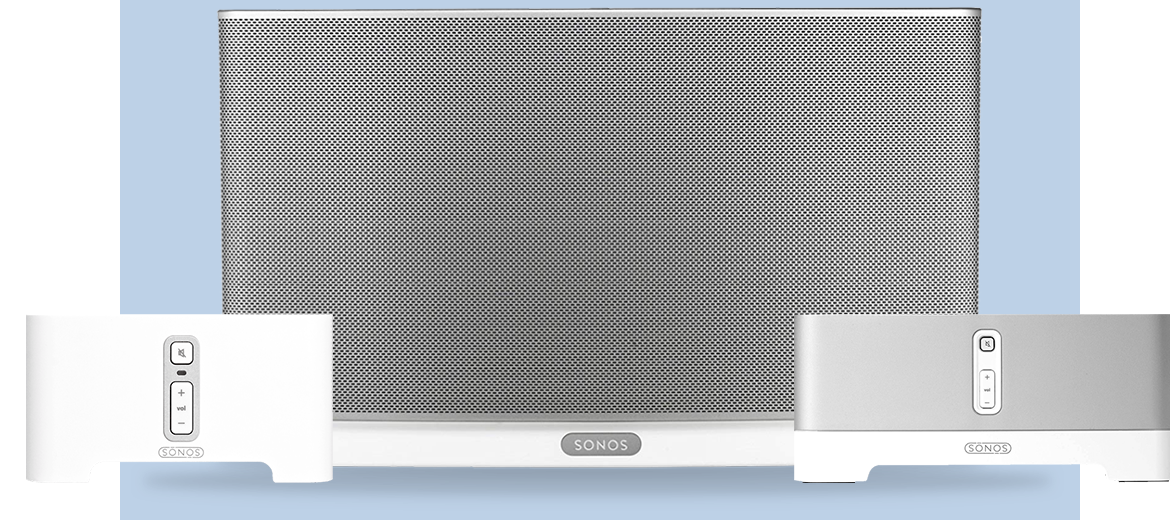
@kassey22000, I’ll look into that, but I’m not sure if there’s a specific list that I can grab to publish. I know I’ve seen another thread from someone (I thought you) which had all of the ways to identify if the device was updated or not. The memory change on the Connect and Connect:Amp happened along with the physical changes to the outside. So the easy spot is if it has a play/pause button, instead of a mute button, it should be one of those updated versions.

Translate
Mark good posts by pressing the like button, and select the best answer on questions you've asked to help others find solutions.
chickentender
Feb 2, 2020 9:46 PM UTC

At the risk of being repetitive,  when you buy an expensive system,  you expect that, if you prefer,  you can keep that original configuration as long as you like in working condition.  When I chose to upgrade it was because I wanted to,  not because my old system life was being cut short by the manufacturer’s built in design obsolescence.  Sonos offer of support for as “long as possible”  doesn't cut it.  It isn’t going to be any more comforting for anyone to know that their equipment might continue to operate for a long period when there is a very real possibility it’s functionality also might be lost in a few months. Functionality of the system at any equipment age should not be affected if the customer does not wish to progress to the next technological level.


Look, we all recognize technology does evolve over time. However,  Sonos does bear responsibility for having some foresight if they are to be considered forerunners in the field. When a product is designed,  there has to be forays into the unknown,  or else there would be no technological advancement.   The areas that were most vulnerable to change should have been isolated into a single component that would be subject to change, and then,  only if the customer so desired. When Sonos designed their products, they should have foreseen the customer problems that are now consuming their business.


So the company should be judged by it’s ability to understand what the possible consequences of their actions are,  and how successful they were in dealing with them.  That’s what makes them stand or fall by the wayside.

Any excuses are just that,  excuses.  This thread has produced many ideas,  I assume some workable,  some not.  But don’t think for one minute the engineers at Sonos can’t up up with a workable solution.  You guys don’t have to come up with one for them.

Thanks for mentioning Bluesound. I hadn’t heard of them. If my streaming music services become deprecated come May, I will be switching all my equipment over to Bluesound rather than “upgrading”. It looks like the price is a little higher for similar products, but it will likely be a lot less expensive in the long run considering the Sonos components are only guaranteed to be supported for 5 years.

I too have a Bluesound (Node 2i) as of fairly recently (as described somewhere deep in this thread https://en.community.sonos.com/controllers-software-228995/the-sonos-brexit-and-pragmatic-ways-past-it-6836056 ) and I’d echo @rAndison as far as quality of that device goes, emphatically so far. But not, in my case, as a system replacement, only as a streamer replacement for the Connect and now attached to a Connect via my receiver to feed the rest of my Sonos network for whole-house.

It’s only a part-time affair for now (streaming whole-house from the Bluesound), but in the future if services I use within the now-legacy Sonos system controller become deprecated, it’ll become more and more regular. That solution works fine for me. I’ve no immediate plans to replace the rest of my system with more Bluesound, for obvious reasons many have mentioned (frying pan into the fire etc),  it’s both a stop gap and also a quality/options increase; the Node 2i provided me with many more options in my setup and the two in conjunction with my receiver (Node and Connect) is far better than my previous arrangement. So all in all, I’m happier than I was before the sunset announcement. 

And, in the meantime I’ll continue using the Sonos controller’s streaming capabilities if I’m only using my Sonosnet and not including my main-room stereo setup. Options are good. The Node 2i so far is simply great.

Translate
Lyricist I
Feb 3, 2020 12:17 AM UTC

Probably best to return the Play 1 to Costco and inform the manager of the situation so that they can pull and return their stock to Sonos. This may begin a loss-of-sales cascade that will result in faster action to address the issue. I’m guessing that Costco is unaware that they are selling ‘legacy’ SONOS devices as new/current speakers.

They aren’t selling legacy Sonos devices as new. The Play:1 is a modern Sonos device, fully supported and updating with the other devices you could buy in stores today. No legacy devices are still sold in stores.


@kassey22000

Dear Ryan, what exactly do you mean by fully supported? I have a recent pair of Play:1s bought less that 6 months ago and another pair bought 1 year ago. I'm having all sorts of issues, especially when trying to group them either between them or with my beam. 

If this is "fully supported" I really don't want to know what unsupported means to you guys...

Translate
Intelebop
Lyricist III
Feb 3, 2020 12:41 AM UTC

@Winter S, if you purchased a Connect brand new that recently it shouldn’t be legacy. Any Connect still for sale from an official reseller should be 2015 version of the Connect which has some updated specs and is not a legacy product. In May, when the older version of the Connect becomes legacy, the 2015 Connect will continue on as a modern device. To check if you have a legacy device, you can go to your account page here: https://www.sonos.com/myaccount/system/households/devices/

I purchased my Connect in late 2016 and it’s legacy. I think moving forward you should re-number products in the same line with newer firmware to make it clearer. Eg, Play 1.1, Sonos 1.1SL. That way when you go to a retailer you can make sure you are buying the newest version.

Translate
Intelebop
Lyricist III
Feb 3, 2020 1:13 AM UTC

Actually I’ve just checked my account page and my Connect is listed as a modern device. I had assumed it was a legacy one as I had been notified at the end of last year it was eligible for bricking. Once again this is about Sonos wishing to maximise income by persuading people with speakers which have a few more years in them to upgrade.

Translate
Enthusiast I
Feb 3, 2020 3:45 AM UTC

The more I think about this, the more I realise that my ‘legacy’ product will never, ever work with the rest of my ‘modern’ system:

I have my turntable running into a pre-amp which in turn runs into a ZP80. This then allows a line-in (the turntable) to become available to all the Sonos speakers in all other rooms and areas. 

If the system becomes split, I have nothing. Where will the ZP80’s line-in be broadcast to? Nowhere.

Surely I’m not the only one who has this use case. The ZP80 is never used to get streaming services and share these. It’s just taking a signal from another component and making it available across the Sonos network.

@ryan - Is this a correct assumption at this point? Like almost everyone else on here, I’m pretty loathed to spend money on a system that is going to quickly (in terms of expensie audio equipment) become obsolete. 

Translate
Feb 3, 2020 4:21 AM UTC

@ledbyexample There isn't any “if the system becomes split” till you choose to split it. So, don’t split it. Job done and status quo preserved.

Translate
Enthusiast I
Feb 3, 2020 4:35 AM UTC

@ledbyexample There isn't any “if the system becomes split” till you choose to split it. So, don’t split it. Job done and status quo preserved.

Not really a great outcome is it? If I chose not to split it all the stuff I’ve bought a lot more recently will start to degrade! It’s like driving a car with the tyres gradually balding: one day ones gonna blow and the whole thing goes bad. 
 

Like many have suggested: why not build a cheap device that acts as a translator between legacy and modern? I guess the answer is always “of course not” because profits trump all. 

Translate