
Ryan S
Retired Sonos Staff
Jan 22, 2020 3:20 PM UTC

End of Software Support - Clarifications
  • Dec 8, 2022 11:29 AM UTC
  • 4256 replies
  • 270531 views
  • Translate All
End of Software Support - Clarifications

We announced yesterday that some of our oldest Sonos products will be moving into a legacy mode in May of 2020. Our commitment is to support products with regular software updates for a minimum of five years after we stop selling them, and we have a track record of supporting products far longer. 

Here is some public information we’ve shared, gathered into one place to respond to some of your questions in one easy thread, so that people can find the correct information easily.

Beginning in May, software updates and new features from Sonos will only be delivered to systems with only modern products.

After May, systems that include legacy products will continue to work as before - but they will no longer receive software updates or new features. 

Sonos will work to maintain the existing experience and conduct bug fixes, but our efforts will ultimately be limited by the lack of memory and processing power of these legacy products.

We don’t expect any immediate impact to your experience, but access to services and overall functionality will eventually be disrupted, particularly as partners evolve their own services and features. 


Customers with both legacy and modern products have time to decide what option is best for them. You can continue to use your whole system in legacy mode - in this case, it will stop receiving updates and new features. 

You will also be able to separate your legacy products from your modern products, so that the modern products can still receive updates and new features, and legacy products can still be used separately. We’ll have more information on how to do this in May when you can take that action.

Another option available to all customers with legacy products is to take advantage of the Trade Up program, which allows you to upgrade older Sonos products to modern ones with a 30% discount. Trade Up will be open to customers at any time should they decide to upgrade. 

We recognize this is new for Sonos owners, just as it is for Sonos. We are committed to help you by making options available to you to support the best decision for your home.
 

If you have any further questions, please don’t hesitate with asking.

Update 2/22: A message from our CEO

We heard you. We did not get this right from the start. My apologies for that and I wanted to personally assure you of the path forward:

First, rest assured that come May, when we end new software updates for our legacy products, they will continue to work as they do today. We are not bricking them, we are not forcing them into obsolescence, and we are not taking anything away. Many of you have invested heavily in your Sonos systems, and we intend to honor that investment for as long as possible. While legacy Sonos products won’t get new software features, we pledge to keep them updated with bug fixes and security patches for as long as possible. If we run into something core to the experience that can’t be addressed, we’ll work to offer an alternative solution and let you know about any changes you’ll see in your experience.

Secondly, we heard you on the issue of legacy products and modern products not being able to coexist in your home. We are working on a way to split your system so that modern products work together and get the latest features, while legacy products work together and remain in their current state. We’re finalizing details on this plan and will share more in the coming weeks.

While we have a lot of great products and features in the pipeline, we want our customers to upgrade to our latest and greatest products when they’re excited by what the new products offer, not because they feel forced to do so. That’s the intent of the trade up program we launched for our loyal customers.

Thank you for being a Sonos customer. Thank you for taking the time to give us your feedback. I hope that you’ll forgive our misstep, and let us earn back your trust. Without you, Sonos wouldn’t exist and we’ll work harder than ever to earn your loyalty every single day.

If you have any further questions please don’t hesitate to contact us.


Patrick Spence
CEO, Sonos

This topic has been closed for further comments. You can use the search bar to find a similar topic, or create a new one by clicking Create Topic at the top of the page.

4256 replies

User694694
Enthusiast II
Jan 30, 2020 8:28 PM UTC

Not much new, but some interesting tidbits. Not sure if it was already posted here:

https://www.fool.com/investing/2020/01/29/heres-why-sonos-customers-were-angry-about-plans-t.aspx

Translate
chickentender
Jan 30, 2020 8:43 PM UTC

Very well stated.  However,  isn’t it still appropriate that we judge things in hindsight in order to express our disappointments with the past and be sure that we and those around us aren’t doomed to repeat them in the future?  As you said, technology unknowns at the time are somewhat to blame,  but Sonos does bear responsibility for some foresight if they are to be considered forerunners in the field.  When a product is designed,  there has to be forays into the unknown,  or else there would be no technological advancement ,  would there?  So the company should be judged by their ability to understand what the possible consequences of their actions are,  and how successful they are at predicting them.  That’s what makes them stand or fall by the wayside.  Sonos included.

Boeing for instance, made one helluva misjudgment on the affects that changes they made on their 737 max would have on flight performance.  They can’t pass that off to hindsight just because at the time they couldn’t forsee the consequences of their design decisions.  The key is to find these problems out before you sell the product to your customers.  The reason I use this example is because I spent 35 years in the aircraft design business,  I know what it’s like.


Certainly so. I don't deny this is a watershed moment for Sonos. They’re a canary deep down the coal mine right now.

Translate
chickentender
Jan 30, 2020 8:53 PM UTC

I want to go further to address the additional disparity between definitions of “SUPPORT” here, many that seem to extend all the way down to “ABLE TO USE AT ALL”. They are not the same thing.

(Even though I was harsh on analogies a bit ago, I’m going to use one.)
Take the auto industry. Liken “support” to “under warranty”. You can expect your car to receive product recalls and certain amounts of maintenance from the manufacturer, including all the perks the car salesman rattled off and you looked at on a sheet of paper and on screen when you got home. These days you get enrolled into a myriad of other tech plans as well; remote start features via apps or roadside service at a button-touch within the car. All of these services eventually run out. You eventually pay for them separately, but the car still runs. As support fades, you’re responsible for keeping it on the road and you accept that some things aren’t worth it and you let those features fade away, but you still drive the car and have it serviced out-of-pocket. 

And liken to if you wish, anything you’ve added after purchase to that car’s “system” (though in many cases, depending what it is it may void your warranty) by way of performance upgrades, a new stereo, accessories in the cabin, a hot set of wheels and/or winter tires, etc. etc. Many of those additions can be transferred to a new car, under warranty, when you choose to move on. Or you can part with them when sell the car and include them, not adding much value in many cases but attractive additions for the new buyer. You certainly won't recoup all that initial outlay of expensive or even close to it.

This analogy sucks. In many ways. I know that. No analogy truly works. Many will try and pick this one apart and I will largely agree with them. I’m just making it to illustrate that no one really questions that auto industry reality and haven’t for decades. This IoT realm is all new. Whether this was planned by Sonos or not doesn’t really matter to me, not pragmatically. The software is not the hardware and never will be. Proceed accordingly, in spite of the marketing and the new car “amazing warranty” features sales pitch. If you feel irreparably burned by Dodge, buy a Volkswagen or ride a bike. :smiley:

(edit: and I know what’s coming.
“Sonos didn’t tell me when my warranty was to run out”.
I know. That’s the problem. That’s the source of the anger. That’s the naivety. That’s the “new” information and IoT enlightenment and I’d wager it will all change in the near future.)

Translate
Lyricist III
Jan 30, 2020 9:09 PM UTC

I want to go further to address the additional disparity between definitions of “SUPPORT” here, many that seem to extend all the way down to “ABLE TO USE AT ALL”. They are not the same thing.

(Even though I was harsh on analogies a bit ago, I’m going to use one.)
Take the auto industry. Liken “support” to “under warranty”. You can expect your car to receive product recalls and certain amounts of maintenance from the manufacturer, including all the perks the car salesman rattled off and you looked at on a sheet of paper and on screen when you got home. These days you get enrolled into a myriad of other tech plans as well; remote start features via apps or roadside service at a button-touch within the car. All of these services eventually run out. You eventually pay for them separately, but the car still runs. As support fades, you’re responsible for keeping it on the road and you accept that some things aren’t worth it and you let those features fade away, but you still drive the car and have it serviced out-of-pocket. 

And liken to if you wish, anything you’ve added after purchase to that car’s “system” (though in many cases, depending what it is it may void your warranty) by way of performance upgrades, a new stereo, accessories in the cabin, a hot set of wheels and/or winter tires, etc. etc. Many of those additions can be transferred to a new car, under warranty, when you choose to move on. Or you can part with them when sell the car and include them, not adding much value in many cases but attractive additions for the new buyer. You certainly won't recoup all that initial outlay of expensive or even close to it.

This analogy sucks. In many ways. I know that. No analogy truly works. Many will try and pick this one apart and I will largely agree with them. I’m just making it to illustrate that no one really questions that auto industry reality and haven’t for decades. This IoT realm is all new. Whether this was planned by Sonos or not doesn’t really matter to me, not pragmatically. The software is not the hardware and never will be. Proceed accordingly, in spite of the marketing and the new car “amazing warranty” features sales pitch. If you feel irreparably burned by Dodge, buy a Volkswagen or ride a bike. :smiley:

As you say,  analogies are difficult to postulate.  But I’m failing to see you point on this one.  Your car warranty example I think is a perfect example of the point I was trying to make before.  After warranty,  I can choose to maintain it myself or trade up to a new car.  I will have many avenues to get the help and parts to keep it on the road as long as I like.  The auto manufacturer does not have the ability to pressure me into a new car if I don’t want.  If that were the case,  there would be no auto transportation available in Cuba.

To reiterate my words,  “Functionality of the system at any equipment age should not be affected if the customer does not wish to progress to the next technological level.”

Translate
chickentender
Jan 30, 2020 9:26 PM UTC

As you say,  analogies are difficult to postulate.  But I’m failing to see you point on this one.  Your car warranty example I think is a perfect example of the point I was trying to make before.  After warranty,  I can choose to maintain it myself or trade up to a new car.  I will have many avenues to get the help and parts to keep it on the road as long as I like.  The auto manufacturer does not have the ability to pressure me into a new car if I don’t want.  If that were the case,  there would be no auto transportation available in Cuba.

To reiterate my words,  “Functionality of the system at any equipment age should not be affected if the customer does not wish to progress to the next technological level.”

That is what Sonos has reiterated they will try to accomodate for those remaining within a legacy framework. To what degree that succeeds is a complete unknown at this point. But again, it's interconnected; the hardware is not the software but the two are linked. This is all new.

To the auto industry analogy, you can choose to replace the integrated (eventual) Amazon Music API failure with a “part” from a 3rd party manufacturer as it were. (And further, Amazon and others are already 3rd party capability to the “car” itself, e.g. warranty & support comes into clear focus if you replace a stock header on a Subaru with one from Borla - you get more performance but it’s additional outlay and if something goes wrong Subaru isn’t the one to address the concern to, but Borla). One thing Sonos has said, multiple times, is indeed that the core operation of the system, e.g. grouping zones and playing music served from a personal library is the thing least likely to be affected at all over time. The wheels will still turn. The car will still start. But your car is ineligible for navigation system upgrades and newest brake caliper design does not apply. But you can fit it out 3rd party or DIY. You can attach a Chromecast to a line-in. Or buy Garmin nav system. Again, this analogy is terribly insufficient.

I’m not interested in debate. Many have strong feelings that are largely justified. I just wanted to share my more measured thoughts as they’ve coalesced in the that past week or so. They’re very different my own initial reactions. Cheers.

Translate
Trending Lyricist I
Jan 30, 2020 10:11 PM UTC

Our commitment is to support products with regular software updates for a minimum of five years after we stop selling them 


I bought my Sonos Connect from Amazon four months ago. In fact, Amazon is still selling them, brand new. 

Don’t tell me Sonos stopped selling this product over five years ago. Even if you stopped selling them directly on your own website, Amazon is still getting its stock from somewhere.

Your commitment means nothing. How about if I send you my Connect, less than four months old, and you give me credit for the FULL VALUE toward a product that will still work?

Oh yeah, you won’t.  Because you are a fraud.

Translate
Ryan S
Ryan SAuthor
Retired Sonos Staff
Jan 30, 2020 10:24 PM UTC

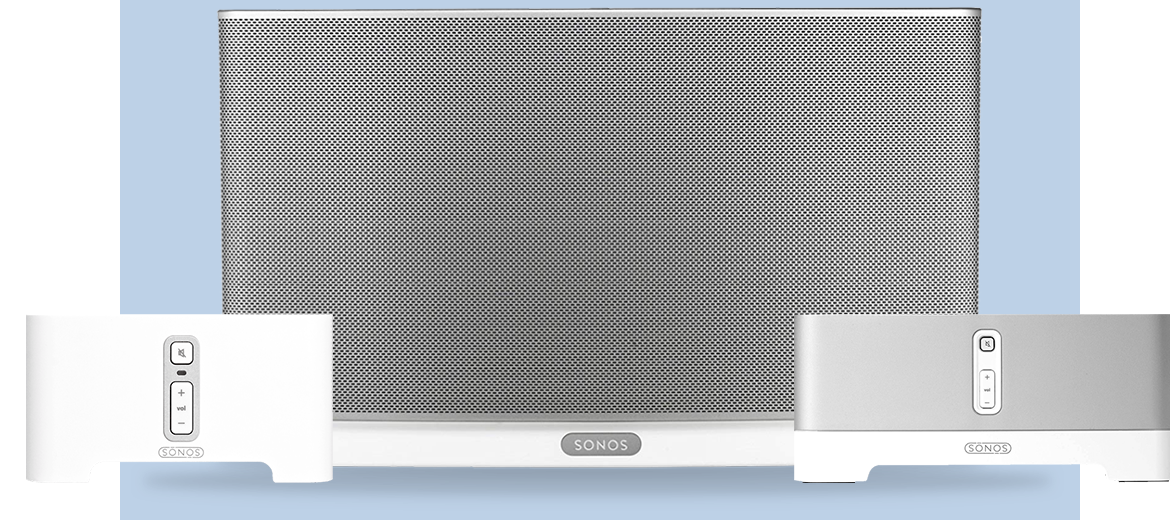
@Winter S, if you purchased a Connect brand new that recently it shouldn’t be legacy. Any Connect still for sale from an official reseller should be 2015 version of the Connect which has some updated specs and is not a legacy product. In May, when the older version of the Connect becomes legacy, the 2015 Connect will continue on as a modern device. To check if you have a legacy device, you can go to your account page here: https://www.sonos.com/myaccount/system/households/devices/

Translate
Mark good posts by pressing the like button, and select the best answer on questions you've asked to help others find solutions.
Trending Lyricist I
Jan 30, 2020 10:44 PM UTC

@Winter S, if you purchased a Connect brand new that recently it shouldn’t be legacy. Any Connect still for sale from an official reseller should be 2015 version of the Connect which has some updated specs and is not a legacy product. In May, when the older version of the Connect becomes legacy, the 2015 Connect will continue on as a modern device. To check if you have a legacy device, you can go to your account page here: https://www.sonos.com/myaccount/system/households/devices/


There are multiple products with the same name? That wasn’t clear from the notification I read. Adding to the confusion, I have received several Emails from Sonos urging me to trade up this product, even though I just bought it. Thanks for the clarification -- I’ll check my account but I’m done with Sonos over this whole incident, regardless.

Translate
Contributor I
Jan 30, 2020 10:56 PM UTC

Why are there 125 pages when yesterday there was over 170?

Translate
Enthusiast II
Jan 30, 2020 11:00 PM UTC

@Winter S, if you purchased a Connect brand new that recently it shouldn’t be legacy. Any Connect still for sale from an official reseller should be 2015 version of the Connect which has some updated specs and is not a legacy product. In May, when the older version of the Connect becomes legacy, the 2015 Connect will continue on as a modern device. To check if you have a legacy device, you can go to your account page here: https://www.sonos.com/myaccount/system/households/devices/

Ryan,

isn’t this part of the problem? Sonos never informed customers of changes to the internals of the products. Why would I think that a Connect bought in 2016, even assuming that Sonos has perfect inventory management, would be any different than one bought in 2014? or for that matter why would a store feel the need to clear out their older inventory before putting the new shipment on the floor?

The fact is that I suspect that Sonos has been happy to continue selling the “same” product for years as it reinforced much of the messaging that it continues to deliver to this day (Everything works together…, Start with one speaker...). Consumers are reassured about slowly expanding their network when they see the product bought 10 years ago is still being sold without knowing that maintaining the outer shell was actually a bait and switch.

I feel like a fool who believed that Sonos would actually stand by its words. At this point I have started to move away from the Sonos ecosystem and will likely never come back. I returned 2 play 1s, am selling a Connect, will try to sell another Connect and a Connect:Amp, and will soon be selling one of my playbars and subs because I replaced my Sonos home theater setup with a Denon amp with Heos support. At this stage I will still hold on to my Gen 1 Play 5s but I am continuing to debate even that. While I can’t be sure how long Denon and Marantz will continue to support the platform, I am getting better sound, for less money, and I know that I will always be able to use it in that room (can’t be sure how long the playbar will be able to work with the Play 3s that I use as surround speakers). I may also experiment with other platforms as the opportunity arises. I would not have even considered this 2 weeks ago.

I am getting over the anger I feel but not the disappointment. A clear message could have gone a long way to addressing what I feel but I don't see one coming and don’t even believe that whatever is said or done in May will help, it will be too little too late.

I will get back whatever money I can on the used market and will deal with the few pieces I decide to keep while I gradually switch over to another platform. The odds are that I will end up with a legacy system and I hope it doesn’t die quickly but I have little to no confidence at this point that Sonos will do anything to delay the demise of legacy components.

I have been spending a lot of time on this as I was holding out hope that some new information would emerge. I’ve been slowly taking a step back and will continue to do so.

Translate