
Ryan S
Retired Sonos Staff
Jan 22, 2020 3:20 PM UTC

End of Software Support - Clarifications
  • Dec 8, 2022 11:29 AM UTC
  • 4256 replies
  • 270531 views
  • Translate All
End of Software Support - Clarifications

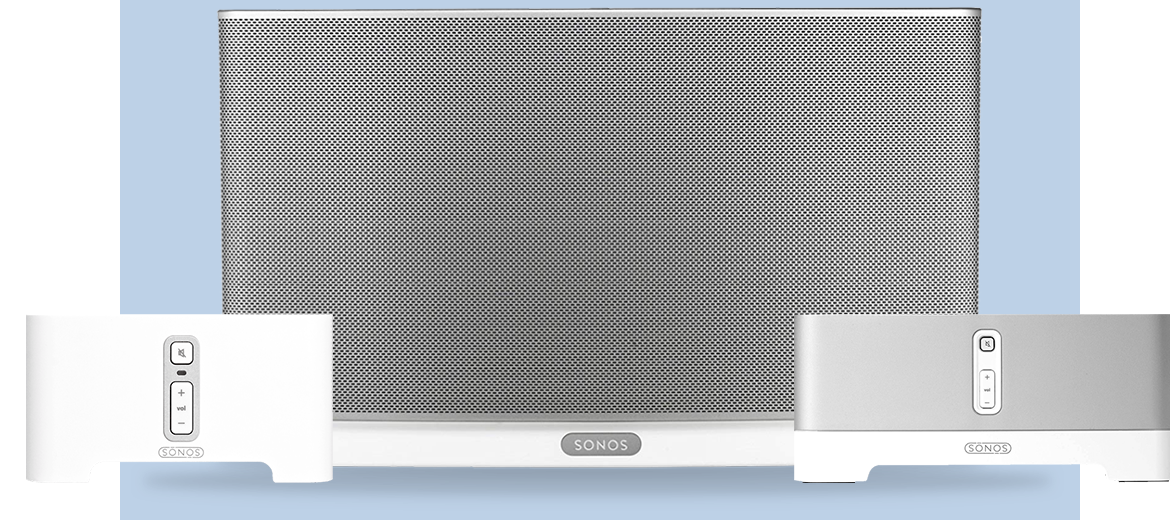
We announced yesterday that some of our oldest Sonos products will be moving into a legacy mode in May of 2020. Our commitment is to support products with regular software updates for a minimum of five years after we stop selling them, and we have a track record of supporting products far longer. 

Here is some public information we’ve shared, gathered into one place to respond to some of your questions in one easy thread, so that people can find the correct information easily.

Beginning in May, software updates and new features from Sonos will only be delivered to systems with only modern products.

After May, systems that include legacy products will continue to work as before - but they will no longer receive software updates or new features. 

Sonos will work to maintain the existing experience and conduct bug fixes, but our efforts will ultimately be limited by the lack of memory and processing power of these legacy products.

We don’t expect any immediate impact to your experience, but access to services and overall functionality will eventually be disrupted, particularly as partners evolve their own services and features. 


Customers with both legacy and modern products have time to decide what option is best for them. You can continue to use your whole system in legacy mode - in this case, it will stop receiving updates and new features. 

You will also be able to separate your legacy products from your modern products, so that the modern products can still receive updates and new features, and legacy products can still be used separately. We’ll have more information on how to do this in May when you can take that action.

Another option available to all customers with legacy products is to take advantage of the Trade Up program, which allows you to upgrade older Sonos products to modern ones with a 30% discount. Trade Up will be open to customers at any time should they decide to upgrade. 

We recognize this is new for Sonos owners, just as it is for Sonos. We are committed to help you by making options available to you to support the best decision for your home.
 

If you have any further questions, please don’t hesitate with asking.

Update 2/22: A message from our CEO

We heard you. We did not get this right from the start. My apologies for that and I wanted to personally assure you of the path forward:

First, rest assured that come May, when we end new software updates for our legacy products, they will continue to work as they do today. We are not bricking them, we are not forcing them into obsolescence, and we are not taking anything away. Many of you have invested heavily in your Sonos systems, and we intend to honor that investment for as long as possible. While legacy Sonos products won’t get new software features, we pledge to keep them updated with bug fixes and security patches for as long as possible. If we run into something core to the experience that can’t be addressed, we’ll work to offer an alternative solution and let you know about any changes you’ll see in your experience.

Secondly, we heard you on the issue of legacy products and modern products not being able to coexist in your home. We are working on a way to split your system so that modern products work together and get the latest features, while legacy products work together and remain in their current state. We’re finalizing details on this plan and will share more in the coming weeks.

While we have a lot of great products and features in the pipeline, we want our customers to upgrade to our latest and greatest products when they’re excited by what the new products offer, not because they feel forced to do so. That’s the intent of the trade up program we launched for our loyal customers.

Thank you for being a Sonos customer. Thank you for taking the time to give us your feedback. I hope that you’ll forgive our misstep, and let us earn back your trust. Without you, Sonos wouldn’t exist and we’ll work harder than ever to earn your loyalty every single day.

If you have any further questions please don’t hesitate to contact us.


Patrick Spence
CEO, Sonos

This topic has been closed for further comments. You can use the search bar to find a similar topic, or create a new one by clicking Create Topic at the top of the page.

4256 replies

Enthusiast II
Jan 30, 2020 3:35 PM UTC

No. Someone buying a Connect now has a guarantee of at least 5 years. You really have problems grasping this fact.

I dont have a problem with it having a 5 year guarantee that it will get all possible new features.

I have a big problem with a product that in 5 years will have key functionality it has had for 5 years away. (Multi room)

Translate
Enthusiast II
Jan 30, 2020 3:37 PM UTC

Seems to be a big spike in astroturfing/apologists today.


Yeah, if one was just a bit conspiratory one could think that sonos might have hired some people or made some of their own people go to the forum and try to persuade people that the lemon they have fed people, is actually not as sour as it really is.

Not totally unheard of, as a means of damage control.

Translate
Enthusiast II
Jan 30, 2020 3:40 PM UTC

Is anyone aware of a commercial audio system that consists of a local/on premise streaming device that reads streams/audio from diverse sources, such as spotify, local file servers, CD players, and outputs streams to ‘dumb’ wirelessly connected speakers that can be grouped etcetera?


Just to be clear, what you are asking for sounds like sonos, but the distinction between Sonos and this solution you are looking for is “dumb” speakers? 


Pretty much but I was thinking more of one central streaming server to minimise the replacement burden if it goes obsolete or fails. Also is there such a thing as ‘dumb’ wireless speakers, if so is there a standard communications protocol between these and a sender/server?

I don’t know of a commercial solution. I’ve started testing an open source solution called Picoreplayer which does what you ask, but it isn’t an out of the box solution by any means. 


That looks interesting but probably a fair amount of work assembling it! I’d be interested to know how you get on with it.

I think https://www.hifiberry.com/ plus https://www.openmediavault.org/ looks pretty powerful

I was previously considering buying a couple of the IKEA speakers to add into my system before this situation blew up; previously I never had a reason to look elsewhere, but now I am and my eyes are opened up to the possibilities

This is pretty much what I am testing. I’ve got the server/player set up on  a RPi, but long term would move the server to a docker on my OMV server. 


Translate
Enthusiast II
Jan 30, 2020 3:41 PM UTC

Seems to be a big spike in astroturfing/apologists today.


Not totally unheard of, as a means of damage control.

Standard operating procedure these days. I have no evidence that this is actually going on, just an observation.

Translate
Enthusiast II
Jan 30, 2020 3:43 PM UTC

Is anyone aware of a commercial audio system that consists of a local/on premise streaming device that reads streams/audio from diverse sources, such as spotify, local file servers, CD players, and outputs streams to ‘dumb’ wirelessly connected speakers that can be grouped etcetera?


Just to be clear, what you are asking for sounds like sonos, but the distinction between Sonos and this solution you are looking for is “dumb” speakers? 


Pretty much but I was thinking more of one central streaming server to minimise the replacement burden if it goes obsolete or fails. Also is there such a thing as ‘dumb’ wireless speakers, if so is there a standard communications protocol between these and a sender/server?

I don’t know of a commercial solution. I’ve started testing an open source solution called Picoreplayer which does what you ask, but it isn’t an out of the box solution by any means. 


That looks interesting but probably a fair amount of work assembling it! I’d be interested to know how you get on with it.

I think https://www.hifiberry.com/ plus https://www.openmediavault.org/ looks pretty powerful

I was previously considering buying a couple of the IKEA speakers to add into my system before this situation blew up; previously I never had a reason to look elsewhere, but now I am and my eyes are opened up to the possibilities

This is pretty much what I am testing. I’ve got the server/player set up on  a RPi, but long term would move the server to a docker on my OMV server. 


have you found anything good to use to control playback from Android? (I mean an app that can control the pi’s and effect playback from omv)

Translate
melvimbe
Jan 30, 2020 3:48 PM UTC

But it IS a hostage situation because sonos would clearly be able to make the legacy products work and still have newer firmware versions on the newer products.


Sonos has stated otherwise.    No one has access to the level of technology to prove this one way or the other.  The fact that you or anyone else isn’t aware of a technical reason is not proof that there isn’t one.  You can chose to believe them or not. 

Look Danny whether you like it or not, or agree with it or not….

If we have a legacy system with old and new units in it, then our new units are being held hostage at an old version of the system. 

You can debate the reasons for this all you like - you object to the words that I use all you like…

BUT whatever defence you may suggest for Sonos’ decisions it doesn’t change the above fact.


I don’t think I was fully clear on my previous statement that you quoted above.  I was referring to “sonos would clearly be able to make the legacy products work and still have newer firmware versions on the newer products”, not ‘hostage”.  I agree that modern units will not be able to receive updates while in the same system as legacy units.    Sonos  has stated there are technical reasons for this and no one is required to believe them.  It is possible that Sonos is lying about this.  It is also possible that Sonos is telling the truth.


Translate
Danny
Enthusiast II
Jan 30, 2020 3:48 PM UTC

Is anyone aware of a commercial audio system that consists of a local/on premise streaming device that reads streams/audio from diverse sources, such as spotify, local file servers, CD players, and outputs streams to ‘dumb’ wirelessly connected speakers that can be grouped etcetera?


Just to be clear, what you are asking for sounds like sonos, but the distinction between Sonos and this solution you are looking for is “dumb” speakers? 


Pretty much but I was thinking more of one central streaming server to minimise the replacement burden if it goes obsolete or fails. Also is there such a thing as ‘dumb’ wireless speakers, if so is there a standard communications protocol between these and a sender/server?

I don’t know of a commercial solution. I’ve started testing an open source solution called Picoreplayer which does what you ask, but it isn’t an out of the box solution by any means. 


That looks interesting but probably a fair amount of work assembling it! I’d be interested to know how you get on with it.

I think https://www.hifiberry.com/ plus https://www.openmediavault.org/ looks pretty powerful

I was previously considering buying a couple of the IKEA speakers to add into my system before this situation blew up; previously I never had a reason to look elsewhere, but now I am and my eyes are opened up to the possibilities

This is pretty much what I am testing. I’ve got the server/player set up on  a RPi, but long term would move the server to a docker on my OMV server. 


have you found anything good to use to control playback from Android? (I mean an app that can control the pi’s and effect playback from omv)

Yes, there’s a Material skin which I am using and looks great mobile and desktop, link goes to screenshots. But there are also a pretty big number of well review apps in Google Play (assume iOS too) but I haven’t got that far yet.


Edit screen shot from my Chromebook that I scaled down so it’s not obnoxiously large


Translate
Enthusiast II
Jan 30, 2020 3:48 PM UTC

That looks interesting but probably a fair amount of work assembling it! I’d be interested to know how you get on with it.

If one were very cheeky, one could theoretically disassemble a sonos speaker and rip out the electronics and just fit this player inside and connect to the existing speaker units inside.

From the drawings on the website it does look like it needs to be wired to the network switch which i hope is not needed and it can run wirelessly.

The LMS part can be run off of a NAS, which i have anyway.

Also...It seems it is only mono, which is annoying in the play 5...But maybe it is possible to add 2 picoplayers inside and just set them up as a stereo pair.

Link saved, i will be looking into this.

Translate
Lyricist III
Jan 30, 2020 3:51 PM UTC

Is anyone aware of a commercial audio system that consists of a local/on premise streaming device that reads streams/audio from diverse sources, such as spotify, local file servers, CD players, and outputs streams to ‘dumb’ wirelessly connected speakers that can be grouped etcetera?


Just to be clear, what you are asking for sounds like sonos, but the distinction between Sonos and this solution you are looking for is “dumb” speakers? 


Pretty much but I was thinking more of one central streaming server to minimise the replacement burden if it goes obsolete or fails. Also is there such a thing as ‘dumb’ wireless speakers, if so is there a standard communications protocol between these and a sender/server?

I don’t know of a commercial solution. I’ve started testing an open source solution called Picoreplayer which does what you ask, but it isn’t an out of the box solution by any means. 


An app like Hi-Fi Cast can do a lot - it isn’t a server by itself, but it can send your music from a server to e.g. a Sonos device, a MusicCast device, or probably many others (I have tried only those two).

Translate
“This is a chance now to come up with a system that doesn’t cause massive planetary damage in exchange for disposable stuff,” Proctor said. (https://www.vice.com/en_us/article/3a8dpn/sonos-makes-it-clear-you-no-longer-own-the-things-you-buy)
Enthusiast II
Jan 30, 2020 3:52 PM UTC

Sonos has stated otherwise.    No one has access to the level of technology to prove this one way or the other.  The fact that you or anyone else isn’t aware of a technical reason is not proof that there isn’t one.  You can chose to believe them or not. 

Could you please speculate on what the technical reason that my play 5 that can do multi room with my other speakers today is going to be unable to do this after may and needs to be put in a seperate network.

The ONLY reason is that sonos has chosen not to do it.

PS. We can not make the speakers run on different firmware versions is NOT a valid reason, this is a “Won’t” problem, not a “can’t” problem

Translate