
Ryan S
Retired Sonos Staff
Jan 22, 2020 3:20 PM UTC

End of Software Support - Clarifications
  • Dec 8, 2022 11:29 AM UTC
  • 4256 replies
  • 270520 views
  • Translate All
End of Software Support - Clarifications

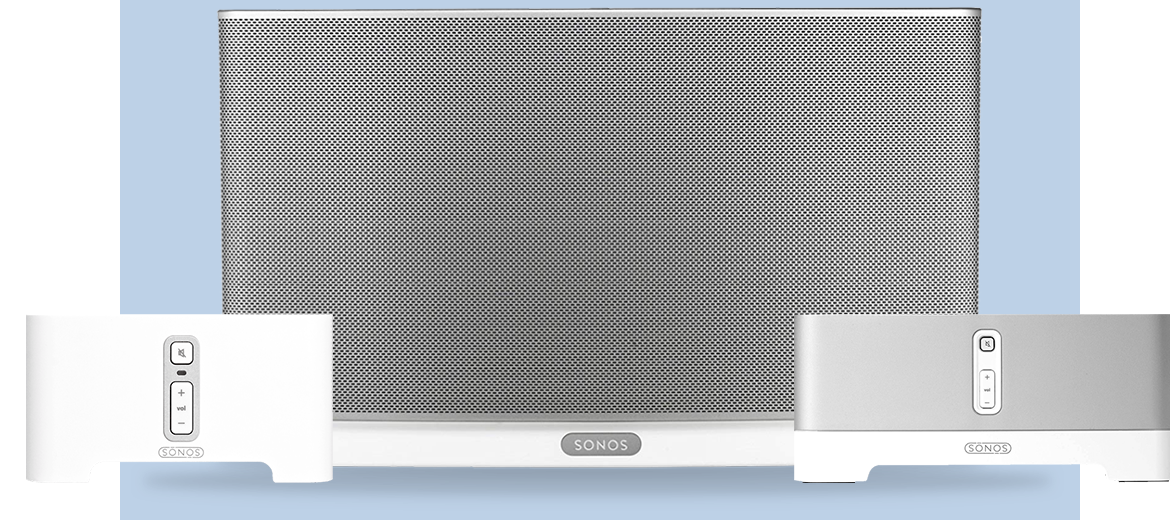
We announced yesterday that some of our oldest Sonos products will be moving into a legacy mode in May of 2020. Our commitment is to support products with regular software updates for a minimum of five years after we stop selling them, and we have a track record of supporting products far longer. 

Here is some public information we’ve shared, gathered into one place to respond to some of your questions in one easy thread, so that people can find the correct information easily.

Beginning in May, software updates and new features from Sonos will only be delivered to systems with only modern products.

After May, systems that include legacy products will continue to work as before - but they will no longer receive software updates or new features. 

Sonos will work to maintain the existing experience and conduct bug fixes, but our efforts will ultimately be limited by the lack of memory and processing power of these legacy products.

We don’t expect any immediate impact to your experience, but access to services and overall functionality will eventually be disrupted, particularly as partners evolve their own services and features. 


Customers with both legacy and modern products have time to decide what option is best for them. You can continue to use your whole system in legacy mode - in this case, it will stop receiving updates and new features. 

You will also be able to separate your legacy products from your modern products, so that the modern products can still receive updates and new features, and legacy products can still be used separately. We’ll have more information on how to do this in May when you can take that action.

Another option available to all customers with legacy products is to take advantage of the Trade Up program, which allows you to upgrade older Sonos products to modern ones with a 30% discount. Trade Up will be open to customers at any time should they decide to upgrade. 

We recognize this is new for Sonos owners, just as it is for Sonos. We are committed to help you by making options available to you to support the best decision for your home.
 

If you have any further questions, please don’t hesitate with asking.

Update 2/22: A message from our CEO

We heard you. We did not get this right from the start. My apologies for that and I wanted to personally assure you of the path forward:

First, rest assured that come May, when we end new software updates for our legacy products, they will continue to work as they do today. We are not bricking them, we are not forcing them into obsolescence, and we are not taking anything away. Many of you have invested heavily in your Sonos systems, and we intend to honor that investment for as long as possible. While legacy Sonos products won’t get new software features, we pledge to keep them updated with bug fixes and security patches for as long as possible. If we run into something core to the experience that can’t be addressed, we’ll work to offer an alternative solution and let you know about any changes you’ll see in your experience.

Secondly, we heard you on the issue of legacy products and modern products not being able to coexist in your home. We are working on a way to split your system so that modern products work together and get the latest features, while legacy products work together and remain in their current state. We’re finalizing details on this plan and will share more in the coming weeks.

While we have a lot of great products and features in the pipeline, we want our customers to upgrade to our latest and greatest products when they’re excited by what the new products offer, not because they feel forced to do so. That’s the intent of the trade up program we launched for our loyal customers.

Thank you for being a Sonos customer. Thank you for taking the time to give us your feedback. I hope that you’ll forgive our misstep, and let us earn back your trust. Without you, Sonos wouldn’t exist and we’ll work harder than ever to earn your loyalty every single day.

If you have any further questions please don’t hesitate to contact us.


Patrick Spence
CEO, Sonos

This topic has been closed for further comments. You can use the search bar to find a similar topic, or create a new one by clicking Create Topic at the top of the page.

4256 replies

Lyricist III
Jan 30, 2020 1:26 PM UTC

Another more philosophical thought came to mind last night now that my initial anger has turned more to apathy.

Many, if not most of your customers probably bought into the Sonos ecosystem because of our disdain for "planned obsolescence". Sonos appeared to be one of the few technology companies that didn't buy into this philosophy.  

Even more disturbing than the fact that specific products have become obsolete was the statement that we will guarantee products for five years after last production.  That is the very definition of planned obsolescence.  It puts any future purchase on a countdown to obsolescence and I suspect that in itself will turn many off of future purchases.  

I understand some would like to see a guaranteed time period but I personally would feel better with once again having faith that planned obsolescence was not at all part of the corporate culture again.


It isn't planned obsolescence st all.  It is just saying we cannot be sure what might be necessary so here is a worst case scenario.

It's not even obsolescence. 


I think the difference in our two opinions will end up coming down to company philosophy.  If a company says we will support a product for a minimum of 5 years after last manufacture and then 5 years plus one day our product starts becoming less functional because the company wants more revenue from us, that is the very definition of planned obsolescence.  If a company continues to attempt to keep older products working at 5 years plus one but a true technical issue prevents it and that company makes a serious effort to assist legacy users to upgrade the legacy product then I agree that is not planned obsolescence.

I think in the end it will come down to the faith we have in the new management.  Many of us believed sonos was a product and service focused company.  Many of us either no longer believe it or at the very least are seeing signs from senior management that are causing doubts.


Translate
Virtuoso
Jan 30, 2020 1:32 PM UTC

I understand the anger at the original announcement (and I have a Bridge and a Connect that are affected by it), but I have to confess that I don’t understand the continuing anger now. Sonos have said that legacy products will continue to be supported for as long as possible, but that they won’t get new features due to the limitations of the hardware. This seems like a pretty reasonable stance to me.

They deserve criticism for misreading the lay of the land, but equally they deserve some credit for responding quickly with a reasonable compromise.

Sonos actually said from the start that legacy devices would not get updates (and nor would other speakers if you chose legacy mode) but would continue to be usable.  What do you think they said?


Sorry, yes, I wasn’t clear. The problem was the “if you have any legacy products, none of your products will receive updates” thing. The compromise was that Sonos will provide a way of allowing legacy and modern products to co-exist, but allow the modern products to receive new features.

Where have you read that, only way new units get updated after May is if you split your system into new and legacy..

Translate
Jan 30, 2020 1:39 PM UTC


Where have you read that, only way new units get updated after May is if you split your system into new and legacy..

The first post in this thread?

Translate
melvimbe
Jan 30, 2020 1:48 PM UTC

I think the difference in our two opinions will end up coming down to company philosophy.  If a company says we will support a product for a minimum of 5 years after last manufacture and then 5 years plus one day our product starts becoming less functional because the company wants more revenue from us, that is the very definition of planned obsolescence.  If a company continues to attempt to keep older products working at 5 years plus one but a true technical issue prevents it and that company makes a serious effort to assist legacy users to upgrade the legacy product then I agree that is not planned obsolescence.


I don’t think you can really narrow it down to two opinions so cleanly.  This thread has a wide range of opinions all over the board.  Some are claiming that the products should last atleast 20 years and continue to be supported towards hardware failure.  Some believe that the system design should have allowed for products of low capability to work with higher capability, the higher capability handling the heavy load.  Some are accepting the technical issues, but feel Sonos should have given more warning.  Some feel that Sonos should over more than 30% discount on replacement products.  Some feel Sonos should offer to modify your existing product to increase it’s capabilities.  Some think Sonos should be charging support fees.


I get an appreciate that you’re trying to make sense of it all, but the views we see here are rather diverse, some based on fact and some based on speculation.


I think in the end it will come down to the faith we have in the new management. 


New management?


Many of us believed sonos was a product and service focused company.  Many of us either no longer believe it or at the very least are seeing signs from senior management that are causing doubts.


I think many are also realizing that smart speakers are more like computers than traditional speakers in terms of how they age, further complicated by the fact they belong to a tightly integrated system. 

Translate
Danny
Jan 30, 2020 1:52 PM UTC

I think the difference in our two opinions will end up coming down to company philosophy.  If a company says we will support a product for a minimum of 5 years after last manufacture and then 5 years plus one day our product starts becoming less functional because the company wants more revenue from us, that is the very definition of planned obsolescence.  If a company continues to attempt to keep older products working at 5 years plus one but a true technical issue prevents it and that company makes a serious effort to assist legacy users to upgrade the legacy product then I agree that is not planned obsolescence.


I don’t think you can really narrow it down to two opinions so cleanly.  This thread has a wide range of opinions all over the board.  Some are claiming that the products should last atleast 20 years and continue to be supported towards hardware failure.  Some believe that the system design should have allowed for products of low capability to work with higher capability, the higher capability handling the heavy load.  Some are accepting the technical issues, but feel Sonos should have given more warning.  Some feel that Sonos should over more than 30% discount on replacement products.  Some feel Sonos should offer to modify your existing product to increase it’s capabilities.  Some think Sonos should be charging support fees.


I get an appreciate that you’re trying to make sense of it all, but the views we see here are rather diverse, some based on fact and some based on speculation.


I think in the end it will come down to the faith we have in the new management. 


New management?


Many of us believed sonos was a product and service focused company.  Many of us either no longer believe it or at the very least are seeing signs from senior management that are causing doubts.


I think many are also realizing that smart speakers are more like computers than traditional speakers in terms of how they age, further complicated by the fact they belong to a tightly integrated system. 

Danny you are doing it again. Providing thoughtful, perceptive, informed and bslanced arguments. You really don't belong on this thread. 

Translate
Lyricist III
Jan 30, 2020 2:06 PM UTC

I think the difference in our two opinions will end up coming down to company philosophy.  If a company says we will support a product for a minimum of 5 years after last manufacture and then 5 years plus one day our product starts becoming less functional because the company wants more revenue from us, that is the very definition of planned obsolescence.  If a company continues to attempt to keep older products working at 5 years plus one but a true technical issue prevents it and that company makes a serious effort to assist legacy users to upgrade the legacy product then I agree that is not planned obsolescence.


I don’t think you can really narrow it down to two opinions so cleanly.  This thread has a wide range of opinions all over the board.  Some are claiming that the products should last atleast 20 years and continue to be supported towards hardware failure.  Some believe that the system design should have allowed for products of low capability to work with higher capability, the higher capability handling the heavy load.  Some are accepting the technical issues, but feel Sonos should have given more warning.  Some feel that Sonos should over more than 30% discount on replacement products.  Some feel Sonos should offer to modify your existing product to increase it’s capabilities.  Some think Sonos should be charging support fees.


I get an appreciate that you’re trying to make sense of it all, but the views we see here are rather diverse, some based on fact and some based on speculation.


I think in the end it will come down to the faith we have in the new management. 


New management?


Many of us believed sonos was a product and service focused company.  Many of us either no longer believe it or at the very least are seeing signs from senior management that are causing doubts.


I think many are also realizing that smart speakers are more like computers than traditional speakers in terms of how they age, further complicated by the fact they belong to a tightly integrated system. 

I believe you are correct.  I meant the two views comment only in regards to the term planned obsolescence not to the thread as a whole.  Ie do we feel planned obsolescence is a corporate strategy in a specific company.  

As to new management, I am referring to pre-ipo /founder run , vs post ipo.  Undoubtedly some of my biases are showing as to which type of company i generally prefer.  And I understand these biases are not always fair.

Translate
melvimbe
Jan 30, 2020 2:10 PM UTC

Eh.  I’m not really saying anything.  I’m  just pointing out some of the points of view  that have been expressed in this thread (and I have not come close to reading it all).  I’m not challenging any of those opinions (in this post anyway).  I don’t see how you can narrow these down to 2 categories of opinions.  It would be really nice if we could.

Translate
Danny
Enthusiast II
Jan 30, 2020 2:14 PM UTC

Another more philosophical thought came to mind last night now that my initial anger has turned more to apathy.

Many, if not most of your customers probably bought into the Sonos ecosystem because of our disdain for "planned obsolescence". Sonos appeared to be one of the few technology companies that didn't buy into this philosophy.  

Even more disturbing than the fact that specific products have become obsolete was the statement that we will guarantee products for five years after last production.  That is the very definition of planned obsolescence.  It puts any future purchase on a countdown to obsolescence and I suspect that in itself will turn many off of future purchases.  

I understand some would like to see a guaranteed time period but I personally would feel better with once again having faith that planned obsolescence was not at all part of the corporate culture again.


I bet no one would pay the prices sonos asks if they knew that they were essentially buying a “5 year lease to use”.

I mean, who in their right mind would go out and buy a playbar today. This was introduced in February of 2013, making it just shy of 7 years old.

I would think it was nearing its end of life, and would be slated for a gen 2 successor.

I would NEVER buy this one as i would always fear that it would be superseeded in 6 months, making the investment a 5½ year investment and then it would essentially be worthless.

From now on, sonos need to speed up their update cycle to sell, as no one would dare buy an “old” product out of fear that it would soon be obsolete

This is how i feel, i dont think i had the play 1 first gen more than a year before it was superseeded by the gen 2. Should have waited a year and gotten a gen 2, but when i bought it i was not aware that it was a ~6 year old model and at that time, what did i care, i “knew” that with sonos, it would not matter, as it would just continue to work and work until the day the hardware failed, and at that time i would replace it.


Now sonos is trying to force me into doing this prematurely, because of their appetite for my money.

Translate
Enthusiast II
Jan 30, 2020 2:16 PM UTC

It isn't planned obsolescence st all.  It is just saying we cannot be sure what might be necessary so here is a worst case scenario.

It's not even obsolescence. 


I have not seen their letters as “This is worst case, we are going to do everything we can to prevent it becoming the reality”


I, and most others see it as a “This is what we ARE going to do….” …. But i agree on it being the worst case scenario.

Breaking the multiroom part OR keeping all the other modern units hostage, IS the worst case.

Translate
Enthusiast II
Jan 30, 2020 2:29 PM UTC

It isn't planned obsolescence st all.  It is just saying we cannot be sure what might be necessary so here is a worst case scenario.

It's not even obsolescence. 


I have not seen their letters as “This is worst case, we are going to do everything we can to prevent it becoming the reality”


I, and most others see it as a “This is what we ARE going to do….” …. But i agree on it being the worst case scenario.

Breaking the multiroom part OR keeping all the other modern units hostage, IS the worst case.


“Breaking the multiroom part OR keeping all the other modern units hostage, IS the worst case”


^ BUT this is what they are doing - split your system to get updates for your new units and you no longer have multiroom grouping (between old and new units) available as confirmed on twitter by Sonos and reported earlier on this thread; otherwise run old and new as a legacy system and you can still group old and new units BUT you get no updates to your new units again confirmed by Sonos on twitter - so you are held hostage at an old version of the system.

Translate