
Ryan S
Retired Sonos Staff
Jan 22, 2020 3:20 PM UTC

End of Software Support - Clarifications
  • Dec 8, 2022 11:29 AM UTC
  • 4256 replies
  • 270510 views
  • Translate All
End of Software Support - Clarifications

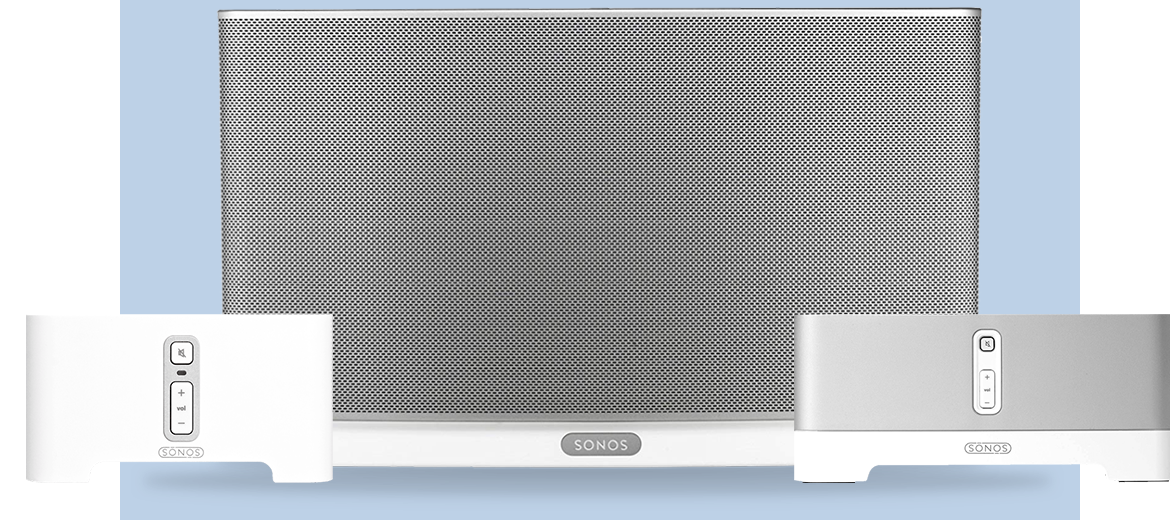
We announced yesterday that some of our oldest Sonos products will be moving into a legacy mode in May of 2020. Our commitment is to support products with regular software updates for a minimum of five years after we stop selling them, and we have a track record of supporting products far longer. 

Here is some public information we’ve shared, gathered into one place to respond to some of your questions in one easy thread, so that people can find the correct information easily.

Beginning in May, software updates and new features from Sonos will only be delivered to systems with only modern products.

After May, systems that include legacy products will continue to work as before - but they will no longer receive software updates or new features. 

Sonos will work to maintain the existing experience and conduct bug fixes, but our efforts will ultimately be limited by the lack of memory and processing power of these legacy products.

We don’t expect any immediate impact to your experience, but access to services and overall functionality will eventually be disrupted, particularly as partners evolve their own services and features. 


Customers with both legacy and modern products have time to decide what option is best for them. You can continue to use your whole system in legacy mode - in this case, it will stop receiving updates and new features. 

You will also be able to separate your legacy products from your modern products, so that the modern products can still receive updates and new features, and legacy products can still be used separately. We’ll have more information on how to do this in May when you can take that action.

Another option available to all customers with legacy products is to take advantage of the Trade Up program, which allows you to upgrade older Sonos products to modern ones with a 30% discount. Trade Up will be open to customers at any time should they decide to upgrade. 

We recognize this is new for Sonos owners, just as it is for Sonos. We are committed to help you by making options available to you to support the best decision for your home.
 

If you have any further questions, please don’t hesitate with asking.

Update 2/22: A message from our CEO

We heard you. We did not get this right from the start. My apologies for that and I wanted to personally assure you of the path forward:

First, rest assured that come May, when we end new software updates for our legacy products, they will continue to work as they do today. We are not bricking them, we are not forcing them into obsolescence, and we are not taking anything away. Many of you have invested heavily in your Sonos systems, and we intend to honor that investment for as long as possible. While legacy Sonos products won’t get new software features, we pledge to keep them updated with bug fixes and security patches for as long as possible. If we run into something core to the experience that can’t be addressed, we’ll work to offer an alternative solution and let you know about any changes you’ll see in your experience.

Secondly, we heard you on the issue of legacy products and modern products not being able to coexist in your home. We are working on a way to split your system so that modern products work together and get the latest features, while legacy products work together and remain in their current state. We’re finalizing details on this plan and will share more in the coming weeks.

While we have a lot of great products and features in the pipeline, we want our customers to upgrade to our latest and greatest products when they’re excited by what the new products offer, not because they feel forced to do so. That’s the intent of the trade up program we launched for our loyal customers.

Thank you for being a Sonos customer. Thank you for taking the time to give us your feedback. I hope that you’ll forgive our misstep, and let us earn back your trust. Without you, Sonos wouldn’t exist and we’ll work harder than ever to earn your loyalty every single day.

If you have any further questions please don’t hesitate to contact us.


Patrick Spence
CEO, Sonos

This topic has been closed for further comments. You can use the search bar to find a similar topic, or create a new one by clicking Create Topic at the top of the page.

4256 replies

melvimbe
Jan 29, 2020 3:26 PM UTC

Yamaha MusicCast Legacy Products

I put all my SONOS equipment on eBay the day after the announcement and have been looking into an alternative whole house music product.  Yesterday I came across someone saying the old equipment can’t play Amazon Music, but the new equipment can.  I have Spotify, so I could care less, but I called Yamaha and talked to there tech support.  Here’s my paraphrasing of our conversation:

Me: “I have some old MusicCast products and I’m thinking of switching from Spotify to Amazon Music, but my equipment doesn’t support it.  What should I do?”

Yamaha: “You will need equipment manufactured after 2018 to support Amazon Music.  Here’s a link that shows which products support the different streaming services.”

Me: “So what happens to my old equipment if I get a new product to stream Amazon Music?”

Yamaha: “Nothing, they will continue to operate as before.”

Me: “So how do I listen to Amazon Music in a room with equipment that doesn’t support it?”

Yamaha: “Start Amazon Music in the room that does have equipment that supports it, then group it to the other room.”

Me: “That’s it?”

Yamaha: “Yes”.


SONOS - did you really screw up your equipment design or is this legacy equipment won’t work with non-legacy equipment just a cheap attempt to milk your existing customers out of more money?


All Sonos products, whether legacy or modern, supports Amazon music service.   I’m not seeing how your conversation with Yamaha reflects on the technical capabilities of Sonos in any way.   Really, all you’ve provided is evidence that the Yamaha system is not as capable as Sonos. 

To make your point, you would need to find a feature that yamaha is doing with their equipment that Sonos is not, and that the memory/processing of related yamaha and Sonos devices are similar.  Even then, you would really need to do a full feature comparison to make a claim that Sonos design is inferior and/or Sonos is not telling the truth about the capabilities of it’s legacy equipment.


BTW, not all Sonos products support airplay 2.  You can use airplay 2 on modern devices and then group with legacy devices to play that audio.  Essentially what Yamaha is doing with Amazon music.  Other than that, there isn’t any specific streaming service that Sonos doesn’t do on all of their devices.

Translate
Danny
Enthusiast II
Jan 29, 2020 3:28 PM UTC

Careful what you wish for with MusicCast.  Like Bose, Yamaha has a nasty habit of dropping their entire lineup of multi-room speaker systems when they don’t work out and/or can’t support new features.  Unlike Bose, who have only done it once (after 3 refreshes in 4 years), Yamaha has dropped their entire lineup at least 3 times.  

This is so true. I would not jump to Bose. I know nothing about Musiccast, but it's another locked in ecosystem like Sonos. If you can, wait until May before you ditch- unless you are getting good prices for your used devices ,😀


Translate
jgatie
Jan 29, 2020 3:37 PM UTC

This is so true. I would not jump to Bose. I know nothing about Musiccast, but it's another locked in ecosystem like Sonos. If you can, wait until May before you ditch- unless you are getting good prices for your used devices ,😀


What Bose did to SoundTouch customers makes Sonos look like Santa Claus.  They just stopped selling all SoundTouch products and came out with a completely new lineup that was incompatible with the old.  No warning, no legacy and modern mixed systems, no upgrade discount.  They simply abandoned the devices, even those purchased right up to the very day they dropped the lineup.  All because they couldn’t get Alexa to work on SoundTouch units. 

On the other hand, Sonos had Alexa working on products that were over a decade old.  


Translate
Enthusiast II
Jan 29, 2020 3:45 PM UTC

To make your point, you would need to find a feature that yamaha is doing with their equipment that Sonos is not, and that the memory/processing of related yamaha and Sonos devices are similar.  Even then, you would really need to do a full feature comparison to make a claim that Sonos design is inferior and/or Sonos is not telling the truth about the capabilities of it’s legacy equipment.

Unfortunately you missed my point.  It’s not about which system is more capable, but how future products that add capability are integrated into the existing system.  Unlike SONOS, which is now saying legacy products will not work with modern equipment, Yamaha’s MusicCast, can operate seemlessly with legacy and modern equipment.

Translate
jgatie
Jan 29, 2020 3:48 PM UTC

Unfortunately you missed my point.  It’s not about which system is more capable, but how future products that add capability are integrated into the existing system.  Unlike SONOS, which is now saying legacy products will not work with modern equipment, Yamaha’s MusicCast, can operate seemlessly with legacy and modern equipment.


Until they drop the entire lineup and come out with something incompatible with the old stuff.  


Again.


For the 4th time.

Translate
Enthusiast II
Jan 29, 2020 3:55 PM UTC

Unfortunately you missed my point.  It’s not about which system is more capable, but how future products that add capability are integrated into the existing system.  Unlike SONOS, which is now saying legacy products will not work with modern equipment, Yamaha’s MusicCast, can operate seemlessly with legacy and modern equipment.


Until they drop the entire lineup and come out with something incompatible with the old stuff.  


Again.


For the 4th time.

I can’t find 3 previous variants of MusicCast.  I can find one, the MCX-1000 released in 2003 that was a CD ripping music server with wireless speakers.  It didn’t stream any music from the Internet.  The only thing the current version of products have in common with the 2003 product is the name.


Please source the other two times Yamaha has done this.

Translate
jgatie
Jan 29, 2020 4:08 PM UTC

I can’t find 3 previous variants of MusicCast.  I can find one, the MCX-1000 released in 2003 that was a CD ripping music server with wireless speakers.  It didn’t stream any music from the Internet.  The only thing the current version of products have in common with the 2003 product is the name.


Please source the other two times Yamaha has done this.


That was the first (and it was billed as multi-room) and streaming from the internet was in it’s infancy then.  The two other times were failed attempts that barely made it to market.  The current MusicCast stuff came out in 2015, and you are going to trust Yamaha more than Sonos?  Good luck. 

Translate
melvimbe
Jan 29, 2020 4:08 PM UTC

To make your point, you would need to find a feature that yamaha is doing with their equipment that Sonos is not, and that the memory/processing of related yamaha and Sonos devices are similar.  Even then, you would really need to do a full feature comparison to make a claim that Sonos design is inferior and/or Sonos is not telling the truth about the capabilities of it’s legacy equipment.

Unfortunately you missed my point.  It’s not about which system is more capable, but how future products that add capability are integrated into the existing system.  Unlike SONOS, which is now saying legacy products will not work with modern equipment, Yamaha’s MusicCast, can operate seemlessly with legacy and modern equipment.


I got your point, I just don’t see evidence supporting your point.  You’re comparing that whatever functionality Sonos has for modern products that is not compatible with legacy products to Yamaha’s amazon music functionality.  Not all functionality is the same.  I actually gave you an example, airplay 2, where Sonos did exactly what you think they should do, which should at least give you a hint they have made modern and legacy products work together in the past when they command.


Again, show a specific feature where Yamaha makes legacy and modern work together that Sonos says they can’t do.

Translate
Danny
Enthusiast II
Jan 29, 2020 4:15 PM UTC

Again, show a specific feature where Yamaha makes legacy and modern work together that Sonos says they can’t do.

You’re drinking the SONOS KoolAid.  SONOS hasn’t specified WHY they’re breaking their equipment into legacy and modern.  I’ve sent multiple requests to SONOS for clarification and have only heard crickets in return.

But to the point of my conversation with Yamaha, MusicCast products can operate in a Master--Slave relationship.  Anything that can go to a modern piece of equipment can be send to a legacy product.

This is EXACTLY what SONOS is saying it can’t do.  So there you have it.

Translate
jgatie
Jan 29, 2020 4:28 PM UTC

Again, show a specific feature where Yamaha makes legacy and modern work together that Sonos says they can’t do.

You’re drinking the SONOS KoolAid.  SONOS hasn’t specified WHY they’re breaking their equipment into legacy and modern.  I’ve sent multiple requests to SONOS for clarification and have only heard crickets in return.


All the legacy devices are limited to 32 MB RAM and storage.  All the modern devices have at least 64 MB RAM and storage.  Do the math, it’s not that hard.


But to the point of my conversation with Yamaha, MusicCast products can operate in a Master--Slave relationship.  Anything that can go to a modern piece of equipment can be send to a legacy product.

This is EXACTLY what SONOS is saying it can’t do.  So there you have it.


Actually, Sonos has done exactly that when it comes to Airplay 2.  That has nothing to do with the fact older devices simply do not have the resources to run newer software, it’s apples and oranges.  MusicCast would be running into the exact same issues if they had units designed a decade ago with half to 1/32 of the resources of more modern units.  There comes a time where you just can’t squeeze any more blood out of the stone.  

Translate