
Ryan S
Retired Sonos Staff
Jan 22, 2020 3:20 PM UTC

End of Software Support - Clarifications
  • Dec 8, 2022 11:29 AM UTC
  • 4256 replies
  • 270460 views
  • Translate All
End of Software Support - Clarifications

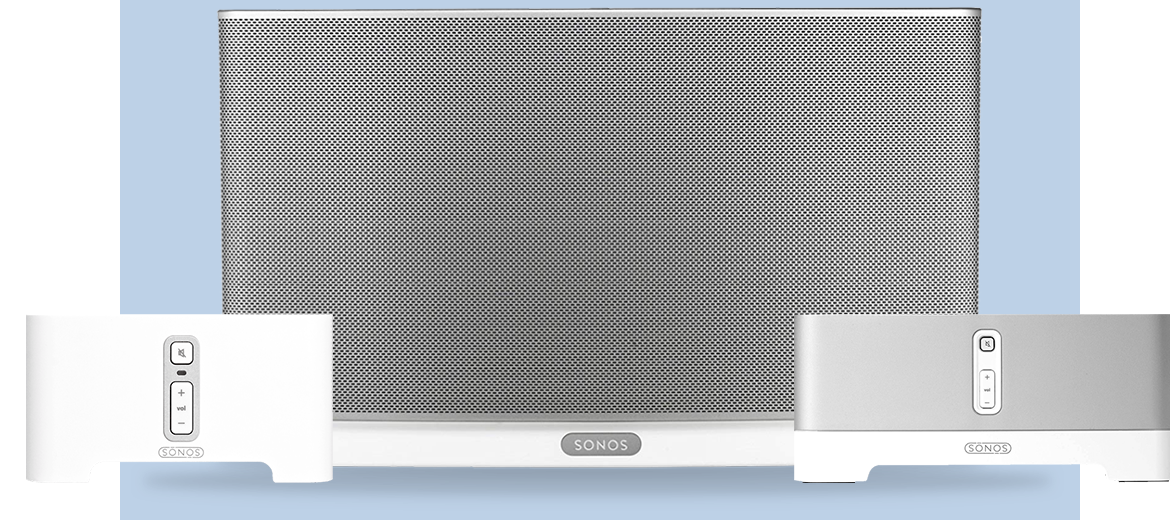
We announced yesterday that some of our oldest Sonos products will be moving into a legacy mode in May of 2020. Our commitment is to support products with regular software updates for a minimum of five years after we stop selling them, and we have a track record of supporting products far longer. 

Here is some public information we’ve shared, gathered into one place to respond to some of your questions in one easy thread, so that people can find the correct information easily.

Beginning in May, software updates and new features from Sonos will only be delivered to systems with only modern products.

After May, systems that include legacy products will continue to work as before - but they will no longer receive software updates or new features. 

Sonos will work to maintain the existing experience and conduct bug fixes, but our efforts will ultimately be limited by the lack of memory and processing power of these legacy products.

We don’t expect any immediate impact to your experience, but access to services and overall functionality will eventually be disrupted, particularly as partners evolve their own services and features. 


Customers with both legacy and modern products have time to decide what option is best for them. You can continue to use your whole system in legacy mode - in this case, it will stop receiving updates and new features. 

You will also be able to separate your legacy products from your modern products, so that the modern products can still receive updates and new features, and legacy products can still be used separately. We’ll have more information on how to do this in May when you can take that action.

Another option available to all customers with legacy products is to take advantage of the Trade Up program, which allows you to upgrade older Sonos products to modern ones with a 30% discount. Trade Up will be open to customers at any time should they decide to upgrade. 

We recognize this is new for Sonos owners, just as it is for Sonos. We are committed to help you by making options available to you to support the best decision for your home.
 

If you have any further questions, please don’t hesitate with asking.

Update 2/22: A message from our CEO

We heard you. We did not get this right from the start. My apologies for that and I wanted to personally assure you of the path forward:

First, rest assured that come May, when we end new software updates for our legacy products, they will continue to work as they do today. We are not bricking them, we are not forcing them into obsolescence, and we are not taking anything away. Many of you have invested heavily in your Sonos systems, and we intend to honor that investment for as long as possible. While legacy Sonos products won’t get new software features, we pledge to keep them updated with bug fixes and security patches for as long as possible. If we run into something core to the experience that can’t be addressed, we’ll work to offer an alternative solution and let you know about any changes you’ll see in your experience.

Secondly, we heard you on the issue of legacy products and modern products not being able to coexist in your home. We are working on a way to split your system so that modern products work together and get the latest features, while legacy products work together and remain in their current state. We’re finalizing details on this plan and will share more in the coming weeks.

While we have a lot of great products and features in the pipeline, we want our customers to upgrade to our latest and greatest products when they’re excited by what the new products offer, not because they feel forced to do so. That’s the intent of the trade up program we launched for our loyal customers.

Thank you for being a Sonos customer. Thank you for taking the time to give us your feedback. I hope that you’ll forgive our misstep, and let us earn back your trust. Without you, Sonos wouldn’t exist and we’ll work harder than ever to earn your loyalty every single day.

If you have any further questions please don’t hesitate to contact us.


Patrick Spence
CEO, Sonos

This topic has been closed for further comments. You can use the search bar to find a similar topic, or create a new one by clicking Create Topic at the top of the page.

4256 replies

Jan 25, 2020 2:20 PM UTC

The message from Patrick Spence is welcome but it beggars belief that a corporation the size of Sonos can get it this wrong. Very pleased to see that the Customer remains king! What has still not been addressed is the environmental impact of the still bricked returned units if I decide to upgrade at some stage. What is happening to these?

Sadly the customer does not remain king. The message simply says we’re going to do what we said in the first place - stop updating software on your ‘legacy’ units (they might update bug/security aspects but they will potentially still stop working as soon as a streaming service updates its API). And if you want to keep using your legacy units while they last, they won’t interface with any new units you buy (or any “modern” units you own if you dare to update the software on them) - you will have to have two systems.

But if you look at some media comments, there may be a glimmer of hope that, whatever may have been their original intention, they are saying the issue was the inability of older units to be updated with capacity hungry modern updates. If one can’t update, none can.  Therefore looking to split system for updates so each generation receives appropriate updates.  One comment says looking then to see if old and new can work together… but does say not sure if they can… look at my earlier posts and you can see the development/ reference points of these arguments.. If this can be made to work with newer units accessing new features but old ones like out from them, but all units working together when requirement is within their capability, then I’m as happy as I was before and will upgrade when I feel the need to have the newer features… If whole home grouping not possible, then I remain angry… 

I think you are projecting an enormous amount of what you want to see on to the situation. There has been nothing from Sonos in any of these announcements that has entertained the idea that legacy and current will work together. NOTHING. 

The articles in the media you refer to also do not quote anyone at Sonos saying anything directly that changes anything. I think you give the journalists too much credit; some of them are doing the same thing you are and reading the wishy-washy language from Sonos and assuming the most positive interpretation of the ambiguity.

The number one reason to refuse sonos the benefit of the doubt is simply that we (referring to the members of the community who are technical, which isn’t everyone) know for a cast iron fact that there is NO barrier to an integrated system continuing to work other than Sonos’ business decision not to do so, yet Sonos have dodged this point in every statement and forum post they’ve made on this point.

They don’t want your old components to continue to work, they just want you to shut up and buy some new ones. They aren’t trying to do the best they can by you in the face of technical limitations, they’re trying to make the weakest possible commitments they can to make the complaining stop. That’s it.

Indeed… 

The clarification seems to add little. There is a preface with ‘we are sorry’ but it is then followed by a restatement. Legacy products will not be bricked in May but they will continue working for ‘as long as possible’. How long is that? Of course, no clarification on which functionality / features may be gradually dropped. Will spotify still work 3 months after May? Is this ‘as long as possible’? Will Tunein Radio work 6 months after May? 
Sure, that may all depend on how partner services change and when … sonos may not know. Why not deal with this in the same way as how Airplay 2 is streamed through a compatible device that is then grouped with older non supporting units. Yes it is slightly clunky but it enables older units to offer whole home audio with Airplay 2.

Is the memory / processor module the weak link? How about an upgrade program (at a cost of course) that allows customers to send the speaker back to sonos for an upgrade on the computer part of the unit?

The ‘clarification’ only seems to clarify what was initially announced albeit with a preface of an apology statement. 

Kind of ‘Sorry but we are not sorry’ ;-)

… and no, the smartphone analogy does not stand. I know in advance that my android phone will only receive roughly 2 years of updates. After that , no more updates and no more security updates either. I also know that most apps I use will keep working for 3-4 years after the end of updates  (if I choose to keep my device that long). Hell, I can root the smartphone and use Lineage OS to extend the life. I have both i) choice and iii) in advance information to enable me to decide on purchasing or not. 

With apple it is different, less freedom but then again I have the information that my smartphone will be updated for 6 years. I know this in advance though so I choose to buy or not based on that information. 
 

… and I only have a single smartphone, I don't need to replace an android phone for each room in my place :-)

Translate
Ken_Griffiths
Jan 25, 2020 2:20 PM UTC

Patrick

The sonos Email telling me my connect and play 5 are obsolete arrived during a rather busy week, but not too busy to give this little problem some thought.  Your follow up clarification arrived this morning. My verdict is you are going to have to do way better than that to recover sonos’ fortunes with its customer base.  I suggest you google the Gerald Ratner case study; Gerald’s high street jewellery chain went straight the pan after he told his customers that the jewellery in his stores was all rubbish. You my friend have just done exactly the same. Sonos RIP.

What this sorry state highlights is the folly of throwing your all in with a closed system like Sonos, I for one will now investigate the other options available going forward that adopt a more open approach. 

Just as a final thought, given that sonos is a network, I fail to see why the so called shortcomings of this older kit cannot be compensated for elsewhere in the network. There are also sockets on the back of most speakers, surely some expansion device can be place in those! 


“Obsolete?”… no mention of that..!! They just won’t get any new features is the actual crux of the message. All will work post may 2020 and for the foreseeable future, including some fixes and necessary updates to keep them running. Maybe read the messages again, a little more carefully, perhaps? I guess it’s understandable to have misunderstood the situation after your rather busy week.

Translate
Lyricist III
Jan 25, 2020 2:44 PM UTC

Have to say Jwinter think you have hit the nail on the head there, if the comments on the forum are anything to go by the statement has had little effect on the ill feeling amongst current owners. I would think the national news coverage has stopped possible new buyers in their tracks and with nothing but the derisory 30% bricking offer on the table for current owners the share prices are set to jump off a cliff anytime soon. Either way we as current owners appear to be well and truly screwed over…....

Thanks. Thinking about what would be needed for reinstating sales. It would be, indeed drastically, a full retraction from the announced path along with a new and different plan for the future.

The new plan should contain some rock-solid guarantees for the life-length of each product as well as some attractive perks for regular customers, such as serious rebates on add-on purchases and buy-back offers. If anything in such a plan includes retiring devices, the full process for this should be disclosed, including what will happen to the old ones and how this can be said to be the best solution for the environment and for their customers’ economy.

We need to see some kind of ROI calculation for the alternative solutions (“ROI” as understood by a consumer with a mixed focus on technological development, daily use convenience, and money).

We also need to see specific actions on the environmental area. This debate has revealed that at least a large share of current users do care about the environment.

And we need to see an honest and forward-looking plan for the existing products, complete with retirement date and a gradually reduced support that stretches over a number of years.

Finally, for trust to be regained, I could imagine that a more open concept will be necessary. Many customers have expressed a new anxiety of being tied to one vendor and would prefer a solution that can be maintained even if the current vendor goes out of business or changes strategy. The IKEA collaboration is in this respect already a step in the right direction - more must come.

I do think, however, that we will all have to swallow the bitter pill of accepting that each product will have a finite life-length - it just needs to be announced way ahead of the end-of-life, and for new products be available before the purchase decision is made.

This will be a new start for Sonos - but one that could lead to growth and happy customers. And the CEO capable of doing this would come out of the mess as a rescuing hero.

Translate
“This is a chance now to come up with a system that doesn’t cause massive planetary damage in exchange for disposable stuff,” Proctor said. (https://www.vice.com/en_us/article/3a8dpn/sonos-makes-it-clear-you-no-longer-own-the-things-you-buy)
Contributor I
Jan 25, 2020 2:51 PM UTC

The fact that Sonos CEO Patrick Spence has had to write to try and convince me that my Sonos equipment will work past May 2020 is proof of the marketing disaster Sonos has brought upon themselves. I have invested over £20000 in Sonos equipment, all installed just over 10 years ago, there should never be a doubt, not for one moment that this equipment should be reliable and work for many many years. But with their badly worded and executed announcement this week, regardless of Mr Patrick Spence’s belated assurances, you have successfully put serious doubt in my and many hundreds of thousands SONOS customers mind that this is not the case.
 

I live in the UK, many of us here will remember a chirpy CEO chappy named Gerald Ratner, I doubt if Peter Spence or the young hip kids at Sonos have heard of him. Can I suggest to you Mr Spence that you Google him ASAP and then fire your Head of Communications (if you haven’t done so already), I actually think this is your Gerald Rainer moment and you have probably taken the decision of whether to buy Sonos equipment in the future, out of my hands. You will now have to spend millions of marketing dollars just to try and undo some of the damage you have self inflicted on what was a good brand name. Best of luck with that!

Translate
Enthusiast II
Jan 25, 2020 2:51 PM UTC

Is the memory / processor module the weak link? How about an upgrade program (at a cost of course) that allows customers to send the speaker back to sonos for an upgrade on the computer part of the unit?


It’s not that i dont like the idea, but this is not feasible because of the price it would cost.

It seems that the Play 1 has a PCB just like the one in the Ikea Symfonisk but with the difference that they play 1 has 64/128 (Flash/Ram) and the Symfonisk has 256/512

So you should be able to buy a Symfonisk, disassemble it, disassemble the Play 1 and swap PCB’s and then discard the symfonisk.

You would then have a Symfonisk in a Play 1 cabinet, and from what i have read, there is no difference in how the 2 works in day to day operation.


What is more chocking is that the old Play 5 has 32/32, while the 2.gen only has 256/256 whereas the Sonos one and the move has 1024/1024

I wonder how many years before even the Play 5 2.gen will be obsolete because of lack of ram/rom as it only has ¼ of modern devices

Translate
Enthusiast I
Jan 25, 2020 3:03 PM UTC

Am I missing something!

I understand that older Sonos speakers may become incompatible with the latest innovations due to hardware limitations, for instance older speakers can’t support voice commands or receive a bluetooth signal,, but I can’t see a  technical reason why they shouldn’t be usable in the future using the existing software ( if you didn’t wish to add a newer one then this wouldn’t be a problem.)

As all these speakers are connected through wifi over a mesh network (SonosNet ) I don’t understand why a new speaker would be incompatible with an older speaker (so called legacy), unless Sonos plan to change how they transmit the data (music) requiring a hardware change,  If so why don’t Sonos just say that they are going to change to a new system (Sonos 2) instead of saying the older speakers are “legacy”?

If not, why couldn’t a new speaker act as a lead speaker and transmit the data to the other ones (old and new), with the caveat that older speakers would be no longer be standalone when using the Sonos (2) software.


Translate
Enthusiast I
Jan 25, 2020 3:04 PM UTC

i agree

why not design an adapter or “bridge” so that the old will interface with the new and continue as a whole system

id buy it ….i say again …. id buy it !!!!

ps

I don't give hoot about all the future advance updates ,

Don't want them at the expense of my working system

Translate
Ken_Griffiths
Jan 25, 2020 3:10 PM UTC

Here’s another thought, given there are lots of eyes on this forum at the moment a few of them have to be bright spark techies or electronics wizards, unlike myself I hasten to add😁 

what we need is one of these clever guys to whip the top off a play1, 3 or 5 and figure out how to retrofit a line in,  aux Jack, possibly even a Bluetooth module. I love the sound quality of my Sonos kit and always have and I would personally pay to have my gear retro fitted and thus make it independent of any software shenanigans. I think people would queue up for this to be done. 
 

come on one of you bright sparks get the soldering iron out and get yourself a profitable ready made business all in one go 😁👍🏻

The play: 5 has a line-in already and just to say the Play:1 and 3 devices are not part of the annoucement .. hope that assists. 👍

Hi Ken,

yep my Play 5 does have a line in but it still needs the Sonos app to work, I’m talking about making each unit wholly independent of the software and app, a standalone powered speaker. Whilst the 1’s and 3’s are not the issue at the moment Mr Spence’s mealy mouthed reply sure made it clear they will be part of the issue at some point…...

Just to say (briefly) the line in, when set to Autoplay, will always work without the Sonos App and without WiFi for that matter. Some folk take them from Home to Work and run them off their mobile with the usual 3.5mm cable. Just so you know that option remains open to you. Not that I think you will ever need to go to such lengths, personally speaking. 

Translate
Enthusiast II
Jan 25, 2020 3:15 PM UTC

Out of interest, as I’ve never used this feature on my 5, would you be confident that you’d NEVER need to go in to your app to do this? Eg, does it work automatically after a long time without power, without WiFi etc?

I’m interested in starting to use this as a way of continuing to use my 5 after Sonos kill it. 

Translate
Jan 25, 2020 3:19 PM UTC


Earlier in the thread some poor sod, had a playbar for sorround, backed by 2 Play 5’s as rear speakers.

He can either go legacy og pay up for 2 new speakers to replace the relatively expensive speakers he bought 4 years ago in 2015/2016, when resellers were still selling their remaining stock of gen 1 play 5’s.


Imagine buying 2 speakers ~4 years ago, paying over $1000 for them, only to be told they are obsolete now.

There has been a fair bit of misinformation peddled by the baying mob on this thread, but this wins the prize for the biggest pile of doo-doo.  THE GEN 1 PLAY:5 CANNOT BE USED AS SURROUND SPEAKERS AND NEVER COULD.  So this is pure nonsense. 

Translate