
Ryan S
Retired Sonos Staff
Jan 22, 2020 3:20 PM UTC

End of Software Support - Clarifications
  • Dec 8, 2022 11:29 AM UTC
  • 4256 replies
  • 270443 views
  • Translate All
End of Software Support - Clarifications

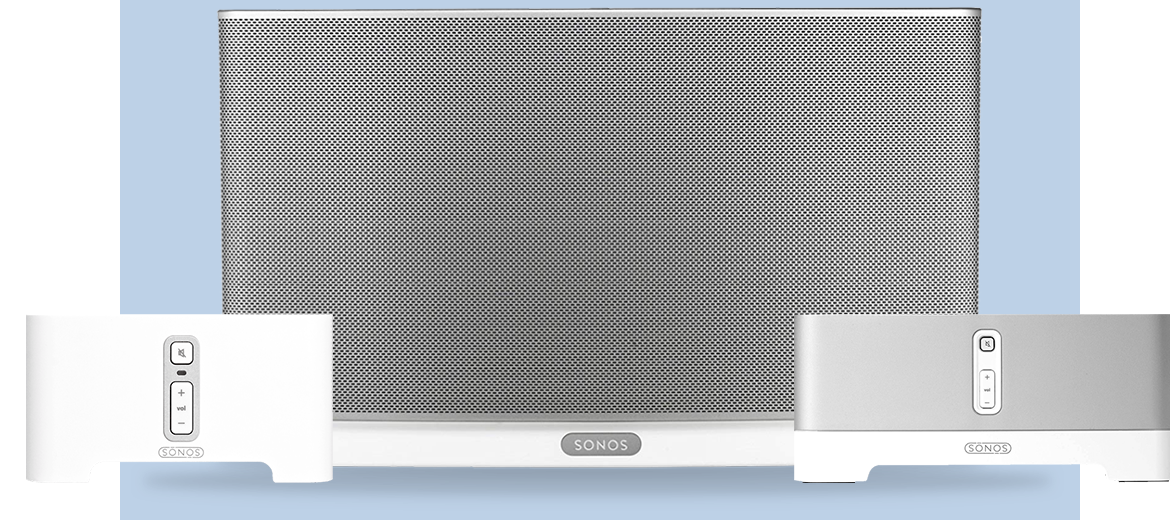
We announced yesterday that some of our oldest Sonos products will be moving into a legacy mode in May of 2020. Our commitment is to support products with regular software updates for a minimum of five years after we stop selling them, and we have a track record of supporting products far longer. 

Here is some public information we’ve shared, gathered into one place to respond to some of your questions in one easy thread, so that people can find the correct information easily.

Beginning in May, software updates and new features from Sonos will only be delivered to systems with only modern products.

After May, systems that include legacy products will continue to work as before - but they will no longer receive software updates or new features. 

Sonos will work to maintain the existing experience and conduct bug fixes, but our efforts will ultimately be limited by the lack of memory and processing power of these legacy products.

We don’t expect any immediate impact to your experience, but access to services and overall functionality will eventually be disrupted, particularly as partners evolve their own services and features. 


Customers with both legacy and modern products have time to decide what option is best for them. You can continue to use your whole system in legacy mode - in this case, it will stop receiving updates and new features. 

You will also be able to separate your legacy products from your modern products, so that the modern products can still receive updates and new features, and legacy products can still be used separately. We’ll have more information on how to do this in May when you can take that action.

Another option available to all customers with legacy products is to take advantage of the Trade Up program, which allows you to upgrade older Sonos products to modern ones with a 30% discount. Trade Up will be open to customers at any time should they decide to upgrade. 

We recognize this is new for Sonos owners, just as it is for Sonos. We are committed to help you by making options available to you to support the best decision for your home.
 

If you have any further questions, please don’t hesitate with asking.

Update 2/22: A message from our CEO

We heard you. We did not get this right from the start. My apologies for that and I wanted to personally assure you of the path forward:

First, rest assured that come May, when we end new software updates for our legacy products, they will continue to work as they do today. We are not bricking them, we are not forcing them into obsolescence, and we are not taking anything away. Many of you have invested heavily in your Sonos systems, and we intend to honor that investment for as long as possible. While legacy Sonos products won’t get new software features, we pledge to keep them updated with bug fixes and security patches for as long as possible. If we run into something core to the experience that can’t be addressed, we’ll work to offer an alternative solution and let you know about any changes you’ll see in your experience.

Secondly, we heard you on the issue of legacy products and modern products not being able to coexist in your home. We are working on a way to split your system so that modern products work together and get the latest features, while legacy products work together and remain in their current state. We’re finalizing details on this plan and will share more in the coming weeks.

While we have a lot of great products and features in the pipeline, we want our customers to upgrade to our latest and greatest products when they’re excited by what the new products offer, not because they feel forced to do so. That’s the intent of the trade up program we launched for our loyal customers.

Thank you for being a Sonos customer. Thank you for taking the time to give us your feedback. I hope that you’ll forgive our misstep, and let us earn back your trust. Without you, Sonos wouldn’t exist and we’ll work harder than ever to earn your loyalty every single day.

If you have any further questions please don’t hesitate to contact us.


Patrick Spence
CEO, Sonos

This topic has been closed for further comments. You can use the search bar to find a similar topic, or create a new one by clicking Create Topic at the top of the page.

4256 replies

Enthusiast II
Jan 25, 2020 8:40 AM UTC


4. There is quite an amount of anger on here.  It's very understandable, given people have made big investments.  A number of users seem to be making a big effort to hurt the company with bad ratings on Amazon and elsewhere.  But from the many reviews I've read over the last few years of Sonos and the alternatives, it does seem to be that in terms of audio quality and reliability, Sonos is still one of the very best products in the wireless speaker market.  And it looks like most or all of the competitors' control apps are poor.  If Sonos were to be bought by Apple or Google, or to go out of business, the end of life date for all Sonos products would be much earlier than if Sonos continues to grow.  And then we'd be forced to switch to a poorer setup.  


Great post, and I can agree with you that Sonos is a good product.

However, back at the start of 2018 my whole five-zone Sonos system was acting up. I lost countless hours and days trying to diagnose it, support brushed it off as being a problem with my network but I replaced the switch with a managed one just so I could Wireshark the Sonos traffic.

In despair I bought a Bluesound Node 2 to start replacing the Sonos... and it was great!

The controller wasn’t as good as Sonos, but it was steadily improving while Sonos’ offering was getting less polished and usable with each update. The hardware was beautiful - and far better specs than even the latest Sonos models released since. Anyone familiar with the Sonos products would be at home with Bluesound - they have the equivalent of ZP80/90/Connect, ZP100/120/Connect:Amp, phone apps and even a desktop controller (PC/Mac). It plays music from your NAS (I still use Samba shares). The even have their own NAS but it’s not necessary. The only bummer is that, being quite similar to Sonos, they chose to differentiate themselves by being even more expensive.

But then I had two incompatible systems, Bluesound and Sonos. The only link between the two was through Line In, which caused delays and meant I needed to use two apps - one to select the music (Bluesound), one to control the volume (of the Sonos players feeding off Bluesound). Needless to say, this is not going to give the best sound quality and could only work as a temporary solution while upgrading Sonos for Bluesound one by one. An expensive proposition.

After a while and another round of factory resets, the Sonos system eventually started working again. I cancelled plans to switch over, because it was an unnecessary cost. I stayed with Sonos because of compatibility and put the Bluesound Node 2 on eBay.

If I had known that Sonos was going to impose the same situation on all its early customers as the one I faced above, I would have put the Sonos gear on eBay and proceeded with the switch to Bluesound and to hell with the cost.

Translate
Enthusiast II
Jan 25, 2020 8:41 AM UTC

This whole mess has killed the concept of whole home audio solotions like sonos, all the other types of home system is going to be prone to this, other manufacturers must be equally hating sonos at this point for showing the weakness in these type of meshed network systems. Hence if I do invest in another system I will get one or maybe two devices and scrap the whole home audio thing. Or possibly convert my old sonos to dumb speakers and get a central device to stream from. This is my favoured route A. My exposure to this type of event will be minimal and B. the cost will be minimal. I now have got the email from our mate Patrick and I'm not even going to waste my time in a response. I think the routes sonos can really now take and that is exchange like for like our systems for these new units, find a way to upgrade our units at there cost via your local vender. But upgrades with any % reduction will just not cut it, split systems will not cut it, the envoiromentl cost won't cut it. I think sonos won't change there mind on this which is a shame as my system works as expected at this time but maybe the shareholders meeting might be a glimmer of hope as they can force sonos to change there view so I urge our US users to get just one share and attend that meeting and force the minds of the ostriches at sonos.

Translate
Trending Lyricist I
Jan 25, 2020 8:49 AM UTC


4. There is quite an amount of anger on here.  It's very understandable, given people have made big investments.  A number of users seem to be making a big effort to hurt the company with bad ratings on Amazon and elsewhere.  But from the many reviews I've read over the last few years of Sonos and the alternatives, it does seem to be that in terms of audio quality and reliability, Sonos is still one of the very best products in the wireless speaker market.  And it looks like most or all of the competitors' control apps are poor.  If Sonos were to be bought by Apple or Google, or to go out of business, the end of life date for all Sonos products would be much earlier than if Sonos continues to grow.  And then we'd be forced to switch to a poorer setup.  


Great post, and I can agree with you that Sonos is a good product.

However, back at the start of 2018 my whole five-zone Sonos system was acting up. I lost countless hours and days trying to diagnose it, support brushed it off as being a problem with my network but I replaced the switch with a managed one just so I could Wireshark the Sonos traffic.

In despair I bought a Bluesound Node 2 to start replacing the Sonos... and it was great!

The controller wasn’t as good as Sonos, but it was steadily improving while Sonos’ offering was getting less polished and usable with each update. The hardware was beautiful - and far better specs than even the latest Sonos models released since. Anyone familiar with the Sonos products would be at home with Bluesound - they have the equivalent of ZP80/90/Connect, ZP100/120/Connect:Amp, phone apps and even a desktop controller (PC/Mac). It plays music from your NAS (I still use Samba shares). The even have their own NAS but it’s not necessary. The only bummer is that, being quite similar to Sonos, they chose to differentiate themselves by being even more expensive.

But then I had two incompatible systems, Bluesound and Sonos. The only link between the two was through Line In, which caused delays and meant I needed to use two apps - one to select the music (Bluesound), one to control the volume (of the Sonos players feeding off Bluesound). Needless to say, this is not going to give the best sound quality and could only work as a temporary solution while upgrading Sonos for Bluesound one by one. An expensive proposition.

After a while and another round of factory resets, the Sonos system eventually started working again. I cancelled plans to switch over, because it was an unnecessary cost. I stayed with Sonos because of compatibility and put the Bluesound Node 2 on eBay.

If I had known that Sonos was going to impose the same situation on all its early customers as the one I faced above, I would have put the Sonos gear on eBay and proceeded with the switch to Bluesound and to hell with the cost.

How did the Bluesound app compare to Sonos in your experience?

Translate
Contributor I
Jan 25, 2020 8:57 AM UTC

This whole mess has killed the concept of whole home audio solotions like sonos, all the other types of home system is going to be prone to this, other manufacturers must be equally hating sonos at this point for showing the weakness in these type of meshed network systems. Hence if I do invest in another system I will get one or maybe two devices and scrap the whole home audio thing. Or possibly convert my old sonos to dumb speakers and get a central device to stream from. This is my favoured route A. My exposure to this type of event will be minimal and B. the cost will be minimal. I now have got the email from our mate Patrick and I'm not even going to waste my time in a response. I think the routes sonos can really now take and that is exchange like for like our systems for these new units, find a way to upgrade our units at there cost via your local vender. But upgrades with any % reduction will just not cut it, split systems will not cut it, the envoiromentl cost won't cut it. I think sonos won't change there mind on this which is a shame as my system works as expected at this time but maybe the shareholders meeting might be a glimmer of hope as they can force sonos to change there view so I urge our US users to get just one share and attend that meeting and force the minds of the ostriches at sonos.

Couldn’t agree more. As mentioned in my previous post, I still have my Rotel amp and Pioneer turntable bought in 1976, and also my Technics CD player from the 90s. Now I just need to retrieve my vinyl and CD collections from the attic, connect it all up to my Tannoy speakers and I’m all set! And it’s all 100% future proofed, no pesky software updates necessary 😀

Translate
Lyricist III
Jan 25, 2020 9:01 AM UTC

From the Roon support site. Someone asked the question and got the following answer from a Roon developer.


benRoon Labs: Developer

17h


My question is if Roon will continue to support the Sonos Connect after May. Since it appears that Roon’s software is controlling the Connect unit, can I make the assumption that we should be able to use our Sonos Connect units with the Roon software if the upcoming Roon updates supports the Connect Unit?

Yes, you can assume that. Making things like this keep working is what we do, and I’d like to think we’re good at it.


If that is the case then there may be an easy solution

Translate
Enthusiast II
Jan 25, 2020 9:03 AM UTC

This whole mess has killed the concept of whole home audio solotions like sonos, all the other types of home system is going to be prone to this, other manufacturers must be equally hating sonos at this point for showing the weakness in these type of meshed network systems. Hence if I do invest in another system I will get one or maybe two devices and scrap the whole home audio thing. Or possibly convert my old sonos to dumb speakers and get a central device to stream from. This is my favoured route A. My exposure to this type of event will be minimal and B. the cost will be minimal. I now have got the email from our mate Patrick and I'm not even going to waste my time in a response. I think the routes sonos can really now take and that is exchange like for like our systems for these new units, find a way to upgrade our units at there cost via your local vender. But upgrades with any % reduction will just not cut it, split systems will not cut it, the envoiromentl cost won't cut it. I think sonos won't change there mind on this which is a shame as my system works as expected at this time but maybe the shareholders meeting might be a glimmer of hope as they can force sonos to change there view so I urge our US users to get just one share and attend that meeting and force the minds of the ostriches at sonos.

Couldn’t agree more. As mentioned in my previous post, I still have my Rotel amp and Pioneer turntable bought in 1976, and also my Technics CD player from the 90s. Now I just need to retrieve my vinyl and CD collections from the attic, connect it all up to my Tannoy speakers and I’m all set! And it’s all 100% future proofed, no pesky software updates necessary 😀

My wife said can she have her radio back.

another aspect to this is the song artists won't get there streaming fees for user listening to there music.

Translate
Enthusiast II
Jan 25, 2020 9:10 AM UTC

This article nicely sums up the difficult position Sonos has put itself in. https://www.slashgear.com/sonos-nightmare-was-inevitable-24607638/


The reality is that if they had said.


Dear users of older Sonos products, from May your legacy product will get a final firmware update, that will lock in the features it has, and from that time on, newer firmware versions will be released with functions, not available on the older hardware, to your newer sonos speakers.

Your older hardware will still retain the core functionality of streaming MP3 music, music from streaming services like spotify, and internet radio stations like today.

If these services change their streaming format, we will do our best to see if we can make an update to the legacy software but if this is not technically possible, you might at that time, loose some functionality.

We are deeply sorry that we need to take this step, but the hardware inside these speakers is rather old now, and it will probably not be able to keep up forever, but we will do our best to make it work for as long as it is technically possible.

We will contact you again when something “breaks” and we are not able to fix it because of hardware limitations and ask you to make a decision on, whether to live on with that functionality missing or if you would at that time like to trade in the speaker for a discount.


THIS letter would have been WAY better received, most people would understand the technical perspective and understand that Sonos would do what it could to keep the legacy products working.

Translate
Lyricist I
Jan 25, 2020 9:15 AM UTC

Corporate greed, build a great product and brand and then knock it down like a jenga towel by taking out the bottom bricks #boardroomballsuosonos how stupid !!! Count me out of future purchases . Dickheads 

Translate
Enthusiast II
Jan 25, 2020 9:19 AM UTC

You can totally do this with a pi. Part of this whole thing is a plan by Sonos to get us to spend money upgrading, when they could have done workarounds.

I would imagine so yes.


But i have not found any “Take an audio stream from the internet, transcode it to another format and retransmit it as a stream” programs for the PI.

Translate
Enthusiast II
Jan 25, 2020 9:26 AM UTC

From the Roon support site. Someone asked the question and got the following answer from a Roon developer.


benRoon Labs: Developer

17h


My question is if Roon will continue to support the Sonos Connect after May. Since it appears that Roon’s software is controlling the Connect unit, can I make the assumption that we should be able to use our Sonos Connect units with the Roon software if the upcoming Roon updates supports the Connect Unit?

Yes, you can assume that. Making things like this keep working is what we do, and I’d like to think we’re good at it.


If that is the case then there may be an easy solution

Looks very intreasting indeed.

Translate