
Ryan S
Retired Sonos Staff
Jan 22, 2020 3:20 PM UTC

End of Software Support - Clarifications
  • Dec 8, 2022 11:29 AM UTC
  • 4256 replies
  • 270371 views
  • Translate All
End of Software Support - Clarifications

We announced yesterday that some of our oldest Sonos products will be moving into a legacy mode in May of 2020. Our commitment is to support products with regular software updates for a minimum of five years after we stop selling them, and we have a track record of supporting products far longer. 

Here is some public information we’ve shared, gathered into one place to respond to some of your questions in one easy thread, so that people can find the correct information easily.

Beginning in May, software updates and new features from Sonos will only be delivered to systems with only modern products.

After May, systems that include legacy products will continue to work as before - but they will no longer receive software updates or new features. 

Sonos will work to maintain the existing experience and conduct bug fixes, but our efforts will ultimately be limited by the lack of memory and processing power of these legacy products.

We don’t expect any immediate impact to your experience, but access to services and overall functionality will eventually be disrupted, particularly as partners evolve their own services and features. 


Customers with both legacy and modern products have time to decide what option is best for them. You can continue to use your whole system in legacy mode - in this case, it will stop receiving updates and new features. 

You will also be able to separate your legacy products from your modern products, so that the modern products can still receive updates and new features, and legacy products can still be used separately. We’ll have more information on how to do this in May when you can take that action.

Another option available to all customers with legacy products is to take advantage of the Trade Up program, which allows you to upgrade older Sonos products to modern ones with a 30% discount. Trade Up will be open to customers at any time should they decide to upgrade. 

We recognize this is new for Sonos owners, just as it is for Sonos. We are committed to help you by making options available to you to support the best decision for your home.
 

If you have any further questions, please don’t hesitate with asking.

Update 2/22: A message from our CEO

We heard you. We did not get this right from the start. My apologies for that and I wanted to personally assure you of the path forward:

First, rest assured that come May, when we end new software updates for our legacy products, they will continue to work as they do today. We are not bricking them, we are not forcing them into obsolescence, and we are not taking anything away. Many of you have invested heavily in your Sonos systems, and we intend to honor that investment for as long as possible. While legacy Sonos products won’t get new software features, we pledge to keep them updated with bug fixes and security patches for as long as possible. If we run into something core to the experience that can’t be addressed, we’ll work to offer an alternative solution and let you know about any changes you’ll see in your experience.

Secondly, we heard you on the issue of legacy products and modern products not being able to coexist in your home. We are working on a way to split your system so that modern products work together and get the latest features, while legacy products work together and remain in their current state. We’re finalizing details on this plan and will share more in the coming weeks.

While we have a lot of great products and features in the pipeline, we want our customers to upgrade to our latest and greatest products when they’re excited by what the new products offer, not because they feel forced to do so. That’s the intent of the trade up program we launched for our loyal customers.

Thank you for being a Sonos customer. Thank you for taking the time to give us your feedback. I hope that you’ll forgive our misstep, and let us earn back your trust. Without you, Sonos wouldn’t exist and we’ll work harder than ever to earn your loyalty every single day.

If you have any further questions please don’t hesitate to contact us.


Patrick Spence
CEO, Sonos

This topic has been closed for further comments. You can use the search bar to find a similar topic, or create a new one by clicking Create Topic at the top of the page.

4256 replies

Lyricist III
Jan 24, 2020 3:52 PM UTC

Thanks Danny. No I did not get an email telling me my Connect:Amp is a legacy product. I read the Sonos announcement which included the Connect: Amp in the legacy list. I’m confused - how do I tell?

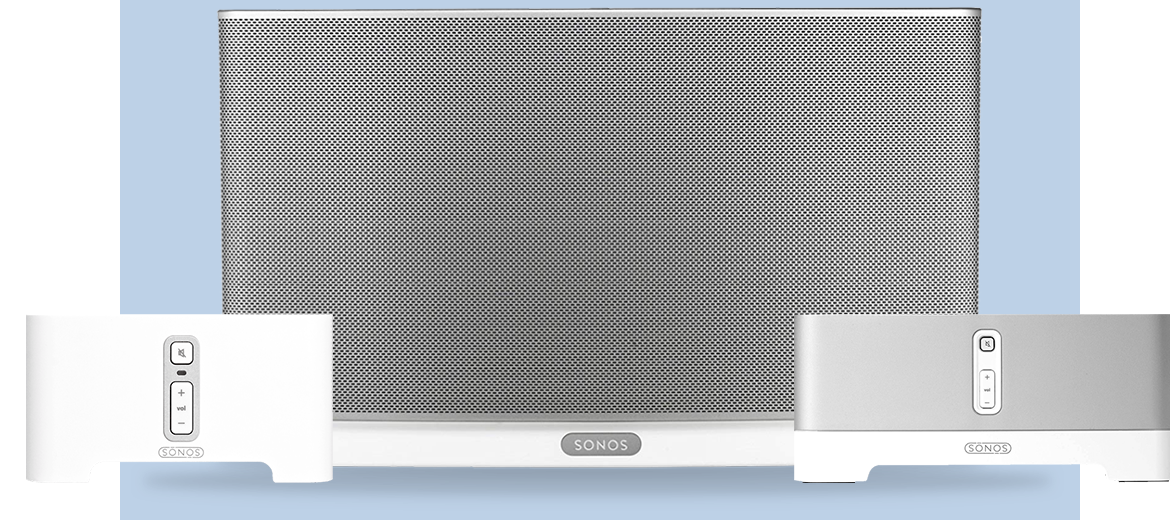
This changes things.  If you have a play/pause button on the front it’s a post-2015 connect:amp with 256mb of memory (8x the pre-2015 Connect:amp).  You are still modern/will get software updates.  They were selling these through 2018 or early 2019, so under their policy, you’ll be supported until at least 2023. 


Not true.  My connect Amps have a play pause button, but are all listed as legacy.


They look like this?  With that symbol on the play/pause button?  Are you in the US?


Have just set up my new connect “with a play pause button” not “mute button” and it displays as Modern when I list my system on the SONOS site.  My older one says legacy. Think that's good news...

Translate
Enthusiast II
Jan 24, 2020 4:02 PM UTC

Thanks Danny. No I did not get an email telling me my Connect:Amp is a legacy product. I read the Sonos announcement which included the Connect: Amp in the legacy list. I’m confused - how do I tell?

This changes things.  If you have a play/pause button on the front it’s a post-2015 connect:amp with 256mb of memory (8x the pre-2015 Connect:amp).  You are still modern/will get software updates.  They were selling these through 2018 or early 2019, so under their policy, you’ll be supported until at least 2023. 


Not true.  My connect Amps have a play pause button, but are all listed as legacy.


They look like this?  With that symbol on the play/pause button?  Are you in the US?


Have just set up my new connect “with a play pause button” not “mute button” and it displays as Modern when I list my system on the SONOS site.  My older one says legacy. Think that's good news...

Yes.  That’s how they all broke down for me in the pile I had.  The ones with play/pause buttons were modern and the ones with the mute symbol were legacy.  Maybe Sonos/Ryan can confirm.

Translate
Enthusiast II
Jan 24, 2020 4:05 PM UTC

People are funny….

There are a lot off used Connect:Amp's coming for sale now in  the Netherlands (40 x since yesterday) for around € 275,00 - 350,00 !!!!

“Hardly ever used, perfect condition, like new!”  But no word about legacy products…..

Wenn asked about it, they tell you it is working perfectly and critical updates will be available. So they all know but are trying to get rid of their legacy product for big money :rolling_eyes:  

This is also bad pr for the Sonos brand!  you have to be a  “specialist” before buying second hand Sonos products. It is becoming an even bigger risk now…..


Yeah, in Denmark, there were atleast 15 Play 5’s put up for sale as “Working fine”

One guy even has a package of 2 Play 5’s, one Play 3 and one Amp.


Poor sod that buys that package, only to find that he essentially bought a Play 3 and a bunch of landfill material.


Not to mention that there is a great risk that some of these play 5s will be “sold” to Sonos for a 30% off, right before being shipped to the poor buyer that will then have a paperweight, 3 weeks later.
 

Translate
Enthusiast II
Jan 24, 2020 4:07 PM UTC

Thanks Danny. No I did not get an email telling me my Connect:Amp is a legacy product. I read the Sonos announcement which included the Connect: Amp in the legacy list. I’m confused - how do I tell?

This changes things.  If you have a play/pause button on the front it’s a post-2015 connect:amp with 256mb of memory (8x the pre-2015 Connect:amp).  You are still modern/will get software updates.  They were selling these through 2018 or early 2019, so under their policy, you’ll be supported until at least 2023. 


Not true.  My connect Amps have a play pause button, but are all listed as legacy.


They look like this?  With that symbol on the play/pause button?  Are you in the US?


That’s what my Connect:Amp looks like and it will be legacy in May.  

EDIT - I’m not near it now but I think mine has a mute symbol.  It’s INFURIATING that they look so alike.  I bought mine in 2017.  HAD I KNOWN THERE WERE DIFFERENT VERSIONS I WOULDN’T HAVE BOUGHT IT.  Seems to me the different versions were obfuscated on purpose, which smacks of greed or laziness or both. 

Translate
Enthusiast II
Jan 24, 2020 4:17 PM UTC

Those are the two legacy versions of the Connect:Amp that I have seen.  Notice both have a mute symbol on the button, but the Sonos logo on the first one is older.  The newer Sonos logo was also later used with the play/pause button.  That’s the modern version.  So the modern one looks like this (sorry the photos keep rotating when I upload them):


Translate
Renowned Enthusiast I
Jan 24, 2020 4:21 PM UTC

Here’s an extract from the BBC news item yesterday :


Owners who have systems that include both older and newer Sonos speakers will have to be set up two speaker groups to allow the correct updates to come through. Once a single speaker in a system can no longer receive new software it prevents the rest of the system from receiving updates.


I am one seriously disgruntled major owner of legacy and modern units, and have periodically upgraded when I’ve found something useful in the capabilities of the newer units; happy to do so since it’s my choice.


The text extract in red font above potentially provides me with a glimmer of hope:

  • We’ve all experienced situations when software updates have failed to complete rendering the system temporarily inoperable;
  • Suppose a new feature in development, such as High Res or Dolby Atmos, has software handling capacity requirements beyond the reach of the legacy items;
  • Trying to load this update across the system of legacy and modern units would presumably fail;
  • a logical solution would be to split the components into legacy and modern for the purpose of the software updates to make the update successful;
  • On subsequent playback, legacy and modern units could operate seamlessly if the features requested (grouping; playback; search; stream (current res)) only required the lowest common denominator of software (eg current release);
  • However, an attempt to play something like high res through the legacy items would presumably fail and any attempt to group legacy units with modern for these beyond current scope features would fail, or drop from the group, legacy players in capable of executing the command;
  • This seems very logical and wholly acceptable to me since once again I can group for lower level requirements and group new components should I so wish.  I’d be happy to upgrade to newer equipment over time if I so wished to access these features in more zones.


The BBC article, particularly with the focus of discussion being around software access gateways, makes me think these kind of arrangements may be behind the thinking.  If so, a statement of clarity of modus operandi (without revealing commercially sensitive info on what features may be coming) would allay the concerns of most.

Translate
MotleyMe
Lyricist I
Jan 24, 2020 4:24 PM UTC

I am with the crowd that is really upset with this announcement.  I too am an early adopter of Sonos.  This “change” means that thousands of dollars of investment in a great sound system was foolishly spent. 

In addition after spending over $2000 on Play:5s, you are telling me for another $1400 I can replace my Play:5s with lower quality Sonos Moves?!?!   How does that even make sense!   At least your upgrade program should be like for like!  And a discount for more the 30% would be better.

I am soooo mad that I am considering ditching my whole Sonos installations.

Sonos you really need to take better care of your early loyal customers as they are the ones who keep buying more speakers to expand their systems. (like me)


Best

...and remember … it says their new devices will now be supported with software updates for only 5 years …. Who would buy this price of product with such short-term built-in obsolescence.  That’s more like a mobile phone than a home speaker system! They’re trying to blackmail us into paying 70% of the cost we already paid for an updated version of something that is pristine, works fine and is nowhere near the end of it’s life. The new products of course need absolutely endless updates to point of the system being a complete pain in the nick-nacks!  This may suit Sonos but it doesn’t suit me and their customer base is all they have… Great eco credentials too Sonos! 

Translate
Enthusiast II
Jan 24, 2020 4:25 PM UTC

Here’s an extract from the BBC news item yesterday :


Owners who have systems that include both older and newer Sonos speakers will have to be set up two speaker groups to allow the correct updates to come through. Once a single speaker in a system can no longer receive new software it prevents the rest of the system from receiving updates.


I am one seriously disgruntled major owner of legacy and modern units, and have periodically upgraded when I’ve found something useful in the capabilities of the newer units; happy to do so since it’s my choice.


The text extract in red font above potentially provides me with a glimmer of hope:

  • We’ve all experienced situations when software updates have failed to complete rendering the system temporarily inoperable;
  • Suppose a new feature in development, such as High Res or Dolby Atmos, has software handling capacity requirements beyond the reach of the legacy items;
  • Trying to load this update across the system of legacy and modern units would presumably fail;
  • a logical solution would be to split the components into legacy and modern for the purpose of the software updates to make the update successful;
  • On subsequent playback, legacy and modern units could operate seamlessly if the features requested (grouping; playback; search; stream (current res)) only required the lowest common denominator of software (eg current release);
  • However, an attempt to play something like high res through the legacy items would presumably fail and any attempt to group legacy units with modern for these beyond current scope features would fail, or drop from the group, legacy players in capable of executing the command;
  • This seems very logical and wholly acceptable to me since once again I can group for lower level requirements and group new components should I so wish.  I’d be happy to upgrade to newer equipment over time if I so wished to access these features in more zones.


The BBC article, particularly with the focus of discussion being around software access gateways, makes me think these kind of arrangements may be behind the thinking.  If so, a statement of clarity of modus operandi (without revealing commercially sensitive info on what features may be coming) would allay the concerns of most.

I think that’s the plan. You’ll be able to group legacy with legacy and new with new, but not group a legacy speaker with a newer one because they will reside on separate Sonos networks.  I also hope this is because DTS, DD+, (maybe Atmos?) and some high res solution are coming. 

Translate
Trending Lyricist I
Jan 24, 2020 4:28 PM UTC

Those are the two legacy versions of the Connect:Amp that I have seen.  Notice both have a mute symbol on the button, but the Sonos logo on the first one is older.  The newer Sonos logo was also later used with the play/pause button.  That’s the modern version.  So the modern one looks like this (sorry the photos keep rotating when I upload them):


And in 2015 both kinds were in the marketplace, without any description distinguishing the difference, so people like me bought a mix without knowledge or understanding of the difference……...until now. Does that seem right?? Same price, same name, different life and functionality…….

Translate
Lyricist I
Jan 24, 2020 4:28 PM UTC

I expect that even the oldest products can be used together with the latest products. If that means that certain future functionalities wont work on older devices - so be it. But that I cannot use them together with my new devices is an absolute no go. If that is the SONOS strategy going forward I will be forced to look for an alternative which will suit my needs also on the long term.


I cannot express how disappointed and angry I am after having spent so much money on these products.

Nick - A long term Sonos Client who will now seek for alternatives

Translate