
Ryan S
Retired Sonos Staff
Jan 22, 2020 3:20 PM UTC

End of Software Support - Clarifications
  • Dec 8, 2022 11:29 AM UTC
  • 4256 replies
  • 270365 views
  • Translate All
End of Software Support - Clarifications

We announced yesterday that some of our oldest Sonos products will be moving into a legacy mode in May of 2020. Our commitment is to support products with regular software updates for a minimum of five years after we stop selling them, and we have a track record of supporting products far longer. 

Here is some public information we’ve shared, gathered into one place to respond to some of your questions in one easy thread, so that people can find the correct information easily.

Beginning in May, software updates and new features from Sonos will only be delivered to systems with only modern products.

After May, systems that include legacy products will continue to work as before - but they will no longer receive software updates or new features. 

Sonos will work to maintain the existing experience and conduct bug fixes, but our efforts will ultimately be limited by the lack of memory and processing power of these legacy products.

We don’t expect any immediate impact to your experience, but access to services and overall functionality will eventually be disrupted, particularly as partners evolve their own services and features. 


Customers with both legacy and modern products have time to decide what option is best for them. You can continue to use your whole system in legacy mode - in this case, it will stop receiving updates and new features. 

You will also be able to separate your legacy products from your modern products, so that the modern products can still receive updates and new features, and legacy products can still be used separately. We’ll have more information on how to do this in May when you can take that action.

Another option available to all customers with legacy products is to take advantage of the Trade Up program, which allows you to upgrade older Sonos products to modern ones with a 30% discount. Trade Up will be open to customers at any time should they decide to upgrade. 

We recognize this is new for Sonos owners, just as it is for Sonos. We are committed to help you by making options available to you to support the best decision for your home.
 

If you have any further questions, please don’t hesitate with asking.

Update 2/22: A message from our CEO

We heard you. We did not get this right from the start. My apologies for that and I wanted to personally assure you of the path forward:

First, rest assured that come May, when we end new software updates for our legacy products, they will continue to work as they do today. We are not bricking them, we are not forcing them into obsolescence, and we are not taking anything away. Many of you have invested heavily in your Sonos systems, and we intend to honor that investment for as long as possible. While legacy Sonos products won’t get new software features, we pledge to keep them updated with bug fixes and security patches for as long as possible. If we run into something core to the experience that can’t be addressed, we’ll work to offer an alternative solution and let you know about any changes you’ll see in your experience.

Secondly, we heard you on the issue of legacy products and modern products not being able to coexist in your home. We are working on a way to split your system so that modern products work together and get the latest features, while legacy products work together and remain in their current state. We’re finalizing details on this plan and will share more in the coming weeks.

While we have a lot of great products and features in the pipeline, we want our customers to upgrade to our latest and greatest products when they’re excited by what the new products offer, not because they feel forced to do so. That’s the intent of the trade up program we launched for our loyal customers.

Thank you for being a Sonos customer. Thank you for taking the time to give us your feedback. I hope that you’ll forgive our misstep, and let us earn back your trust. Without you, Sonos wouldn’t exist and we’ll work harder than ever to earn your loyalty every single day.

If you have any further questions please don’t hesitate to contact us.


Patrick Spence
CEO, Sonos

This topic has been closed for further comments. You can use the search bar to find a similar topic, or create a new one by clicking Create Topic at the top of the page.

4256 replies

Enthusiast II
Jan 24, 2020 2:00 PM UTC

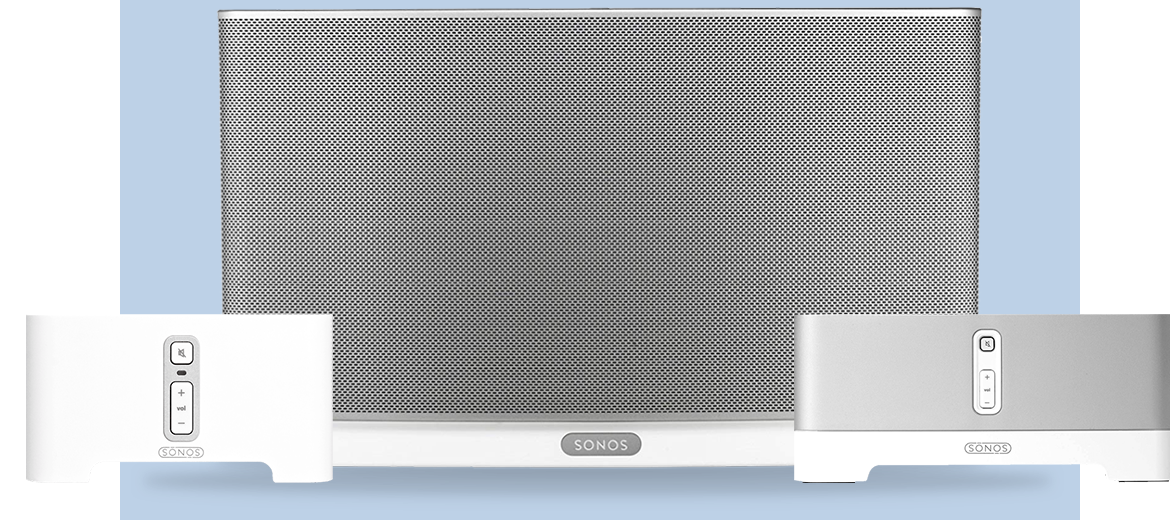
This changes things.  If you have a play/pause button on the front it’s a post-2015 connect:amp with 256mb of memory (8x the pre-2015 Connect:amp).  You are still modern/will get software updates. 

Until such time as  Paddy’s bonus packet starts looking a bit thin. After that, who knows?

They’ve demonstrated they’re willing to screw their customers if they thinks it’ll make them money - why wouldn’t they do it again?

Translate
Avid Contributor I
Jan 24, 2020 2:01 PM UTC

Yes, my Connect:Amp has a play/pause button on the front. Until now, I’ve not been aware there are different models/versions of Connect:Amp.

Translate
Enthusiast II
Jan 24, 2020 2:01 PM UTC

I buy all my Sonos kit from a company called Smart Home Systems which is an authorised Sonos agent in the UK.

Originally I thought you were saying you had a legacy Connect:Amp, but you don’t (which if someone sold you a 2015 connect amp for full price 4 years after Sonos stopped selling it would have been crazy bad).  You have a new model, which was upgraded with more memory after 2015.  Sonos says they will support models for at least 5 years after they stop selling them.  They stopped selling the newer Connect Amp in late 2018 or early 2019, so you are good till 2023 or early 2024, at least (maybe longer per Sonos), so this doesn’t impact you now. 

Translate
Contributor I
Jan 24, 2020 2:02 PM UTC

Like many other customers I am dismayed about the SONOS Legacy product announcement. However, I have read Patrick Spence's clarification and apology letter and remain confused.

He said:
Secondly, we heard you on the issue of legacy products and modern products not being able to coexist in your home. We are working on a way to split your system so that modern products work together and get the latest features, while legacy products work together and remain in their current state. We’re finalizing details on this plan and will share more in the coming weeks

Does this mean legacy and modern products will work in the same way as AirPlay and non-airplay devices i.e will they co-exist and be grouped to stream music irrespective of the new functionality implemented in modern devices (like voice control/AirPlay)? This need clarifying CLEARLY as it is the fundamental issue.  No one expects the new functionality to be rolled out to old devices forever, but they do expect them to continue functioning musically in a multi-speaker network with new and legacy speakers.  It says details are being finalised but surely this basic question can be answered simply with a yes or no. 

Translate
Lyricist II
Jan 24, 2020 2:03 PM UTC

other than breaking the deafening silence of the first ~48 hrs, and an acknowledgement that “we hear you” this is the only valuable part of CEO’s message to me:

“We are working on a way to split your system so that modern products work together and get the latest features, while legacy products work together and remain in their current state. We’re finalizing details on this plan and will share more in the coming weeks.”

Until there are details on this, I don’t think the community will let up pressure and no one will be buying anything or “trading up”.  The two-separate-systems initially vaguely suggested won’t be seen as any solution, there must be some SW integration that at least makes these usable in a single system.


Translate
Avid Contributor I
Jan 24, 2020 2:05 PM UTC

Yes, my Connect:Amp has a play/pause button on the front. Until now, I’ve not been aware there are different models/versions of Connect:Amp.

I’m not sure anyone was. They updated the internals while keeping the name and design the same, with the button being the only difference. It’s confusing everyone. 

You can also look at the status of all of your components by logging into your account and looking at the System section - next to each component it will say either Legacy or Modern

Translate
Enthusiast II
Jan 24, 2020 2:07 PM UTC

Yes, my Connect:Amp has a play/pause button on the front. Until now, I’ve not been aware there are different models/versions of Connect:Amp.

I’m not sure anyone was. They updated the internals while keeping the name and design the same, with the button being the only difference. It’s confusing everyone. 

You can also look at the status of all of your components by logging into your account and looking at the System section - next to each component it will say either Legacy or Modern

There were other differences too (I compared a bunch last night).  They changed the Sonos logo during the gen 1 era and the casing has different markings.  But I agree it wasn’t widely known that they added more memory in gen 2.  They got better about advertising that with the Sonos One. 

Translate
Enthusiast II
Jan 24, 2020 2:07 PM UTC

Like many other customers I am dismayed about the SONOS Legacy product announcement. However, I have read Patrick Spence's clarification and apology letter and remain confused.

He said:
Secondly, we heard you on the issue of legacy products and modern products not being able to coexist in your home. We are working on a way to split your system so that modern products work together and get the latest features, while legacy products work together and remain in their current state. We’re finalizing details on this plan and will share more in the coming weeks

Does this mean legacy and modern products will work in the same way as AirPlay and non-airplay devices i.e will they co-exist and be grouped to stream music irrespective of the new functionality implemented in modern devices (like voice control/AirPlay)? This need clarifying CLEARLY as it is the fundamental issue.  No one expects the new functionality to be rolled out to old devices forever, but they do expect them to continue functioning musically in a multi-speaker network with new and legacy speakers.  It says details are being finalised but surely this basic question can be answered simply with a yes or no. 

Based on everything we’ve been told, no. It means you get to have one old, slowly atrophying, Sonos network and one new Sonos network in your house that operate independently.

And note that these networks don’t have to align with any groupings you use at present. If, like me, you have a room with a Play 5, a Play 1 and a Symfonisk in it, you will now have two separate hifi systems in that room.


Translate
Lyricist III
Jan 24, 2020 2:09 PM UTC

I buy all my Sonos kit from a company called Smart Home Systems which is an authorised Sonos agent in the UK.

Originally I thought you were saying you had a legacy Connect:Amp, but you don’t.  You are good till 2023 or early 2024, at least (maybe longer per Sonos), so this doesn’t impact you now. 

Is there a list of model numbers for the legacy\modern versions of connect and connect:amp.  I’ve just ordered a connect to replace a “legacy” connect and want to make sure its the 256mb version when it arrives. I cant see SONOS ever doing this again, so pretty sure they will work to keep in the 256mb memory footprint….well I hope so. :)

Translate
Avid Contributor I
Jan 24, 2020 2:10 PM UTC

Very many thanks to everyone for taking the time and trouble to reassure me that none of my Sonos products are in the legacy category. And I’m now educated about the pre-2015 and post-2015 Connect:Amp! I wish all the best to those Sonos customers who have just discovered their Sonos kit is problematic - good luck.

Translate