
Ryan S
Retired Sonos Staff
May 6, 2020

Meet Arc, Brilliant sound for your TV
Related content:Hardware
  • May 6, 2020
  • 550 replies
  • 51464 views
Meet Arc, Brilliant sound for your TV

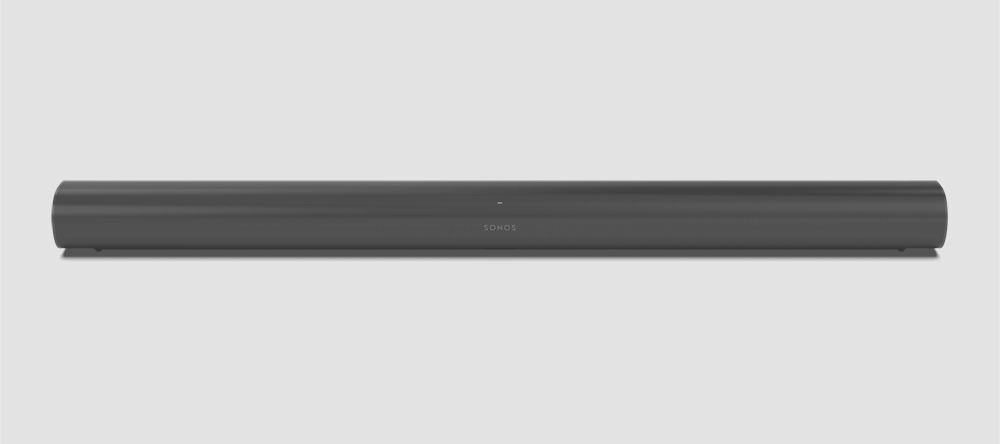
Available on June 10th, Sonos Arc is the premium smart soundbar for TV, movies, music, gaming, and more. Arc brings brilliant surround sound in 3D, along with immersive music, elegant design, and voice control built in. Experience shows, films, and games with the precise and immersive sound of Dolby Atmos, and enjoy incredible sound streaming music, podcasts, and audiobooks. 

bYRNZl3l6ouXNXqPq--kJwL9X4Hsv5-iWNYinpacIU-5-FY3CgN6-7PcbJzxeMMbhqV40WebxzfCCVxoPgDObYdrZGNH_A0jIsJW9i0KwiWmaDBvKcs7p5Yh-sOBZcHkximkoWu6

Extraordinary sound meets elegant design

Eleven high-performance drivers, including custom elliptical woofers and precisely angled side tweeters, produce vivid detail and impressive bass for home cinema and music streaming. Arc's upward-firing drivers create a multi-dimensional soundstage that moves around you, rendering every whisper and explosion with dramatic clarity, detail, and depth. 


With its elongated shape, soft profile, and seamless façade, Arc discreetly mounts to the wall or sits beneath the TV without pulling focus. When mounted, a magnetic sensor detects the orientation and smartly adjusts the EQ to temper bass resonance.


Arc’s sound was specially tuned with the help of Oscar-winning sound engineers to emphasize the human voice so you can always follow the story. The advanced processing creates five phased-array channels that masterfully deliver sound to your ears from all directions at the exact right moment. Use enhanced Trueplay tuning technology to optimize the sound for the unique acoustics of your room, even calibrating the height channels for precise localization. 


DQWhTCGCPaVFcDCO4zOsuR-17Tzj5o4vyWB8BxrHc4zOUbI7yrY_onZ6gcY9jIM62ejbLPlCWNndBrda3lKOZe5UUZvmbdr-z98sFkpGtoghniW9hJiRdIEV1CLNri7K-Cnwj4o0


You can also make a surround sound setup with a pair of our surround capable Sonos speakers, such as a pair of Sonos Ones, or amplify it all with a Sub for an extraordinary surround experience. 


Some more details on Sonos Arc:

  • Simple to set-up. Plug Arc into power and then connect it to your TV using the HDMI-ARC cord. Bring your phone up to Arc to automatically pair and securely transfer WiFi credentials using near-field communication (NFC).

  • HDMI eARC. Increased bandwidth supports high-quality audio and has lip-sync compensation built in.

  • Dolby Atmos. Play Atmos and Atmos-encoded audio to play from your collection and favorite services through your TV’s HDMI ARC or eARC connection.

  • Ambient light sensor. Arc detects how bright the room is and automatically adjusts the brightness of the LEDs to be visible but not distracting.

  • Automatic remote sync. Arc connects to your TV's HDMI eARC port with a single cable and automatically syncs with your remote.

  • Control your way. Control Sonos Arc with your voice, the Sonos app, your existing TV remote, your favorite music service’s app, or AirPlay 2. Capacitive touch controls for play, pause, skip tracks, adjust the volume, and group rooms just by tapping or swiping the top of the soundbar. LED indicates status, mute status and voice feedback.

  • Smart voice recognition. A four far-field microphone array used for advanced beamforming and multichannel echo cancellation makes sure you’re heard, even when the music is blasting, even when playing in immersive surround sound. For privacy, turn the microphone off with a tap. The LED light is hardwired and will always indicate if the microphones are enabled or if your voice assistant of choice isn't listening.

  • Optimized for your listening. From within the Sonos App, tap Speech Enhancement so you never miss a word, or Night Sound to amplify quiet noises and reduce loud ones so you can enjoy late night TV without waking the entire house.

  • Tune with Trueplay. Trueplay puts the speaker-tuning capability of the pros in the palm of your hands, adapting and optimising the sound of the speaker to the unique acoustics of the room. iOS device required.

  • Low profile and compact size. The dimensions are 3.4 x 45 x 4.5 inches (87 x 1141.7 x 115.7 mm) H x W x D and Arc weighs 13.78 lbs (6.25 kg).

Pre-order today on Sonos.com in stunning black with matte finish or white with matte finish for $799 US (€899 EUR, €799).

We’ve announced details for the Sonos Five and new Sonos Sub. You can also check out our blog for some great stories.

    This topic has been closed for further comments. You can use the search bar to find a similar topic, or create a new one by clicking Create Topic at the top of the page.

    550 replies

    Lyricist III
    May 13, 2020

    Does the Arc have any kind of on-screen OSD?

    melvimbe
    May 13, 2020

    Does the Arc have any kind of on-screen OSD?

    It will likely have a screensaver image, same as the Beam.  I haven’t heard an official word from Sonos on this.  If if it provided something more than a screensaver, Sonos surely would have advertised it as a feature.

    Danny
    melvimbe
    May 13, 2020

    No; as you noted - this wouldn’t accomplish anything (the ARC01 would basically be doing exactly what the Sonos optical adapter does).

    I specifically have this switch: https://www.amazon.com/gp/product/B07XKBR79W/ref=ask_ql_qh_dp_hza

    In general consider what ARC does on a TV … it takes audio either received as normal audio on the active HDMI input to the TV or audio generated in the TV itself (e.g. smart TV apps, etc) and sends it backward on the ARC (return) pins of some *other* input. The whole point is to send the audio to an input that isn’t active (the device feeding the active input would also be sending the normal HDMI audio and wouldn’t need the audio to return from the TV).

    The switch works essentially the same except rather than generating an ARC signal from an input it takes it from the real TV upstream (which is connected to the output of the switch so the TV receives the video and audio from whichever input is active). It then takes that ARC signal and sends it back to a particular input (I think input 4) just like a TV has a specific HDMI port that supports ARC. That way input 4 will always get the returned audio which is useful when the audio is coming from anywhere except port 4. Either generated in the TV itself (e.g. smart apps); or from one of the other HDMI inputs send to the TV as normal HDMI audio; then returned to the switch via ARC which is passed on by the switch to a beam/receiver/whatever on input 4.


    Can you verify what you’ve stated in the last paragraph?  Specifically that your switch can take the audio coming through one of the HDMI inputs (1,2, or 3), convert it to an ARC signal and send it back along HDMI input 4?  If that were the case, this would be rather useful for TVs that are not ARC capable.  My understanding was that switches like this would primarily take the audio from inputs 1-4  and send it to the audio output (analog or optical).  The ARC feature would, as you stated, take the audio from the HDMI output along the ARC channel and send that to the audio output.  I’ve not seen  one that can send an ARC signal back along an HDMI input, except perhaps where it’s passed through from the HDMI input.  I’ve not seen a device that can generate an ARC signal from an HDMI input.


    I did try and research this a bit, looking at the amazon page and the OREI’s product page (looks like they’ve updated the product), but it does not say you can send audio via ARC channels back to an input.


    Danny
    Enthusiast II
    May 13, 2020

    I’m still not sure why we need an ARC signal. The optical to hdmi Converter currently sold with the beam gets audio into the beam without generating an ARC signal. It merely transfers the audio data to the ARC audio input pins of the beam. 
     

    Surely all we need is a hdmi lead that transposes the the audio data from the standard hdmi pins across to the pins reserved for the ARC Audio on the end that fits into the arc hdmi port ?

    melvimbe
    May 13, 2020

    I’m still not sure why we need an ARC signal. The optical to hdmi Converter currently sold with the beam gets audio into the beam without generating an ARC signal. It merely transfers the audio data to the ARC audio input pins of the beam. 


    To me,’generating an ARC signal’ and ‘transfer the audio data to ARC audio input pins’ are pretty much the same thing.


    Surely all we need is a hdmi lead that transposes the the audio data from the standard hdmi pins across to the pins reserved for the ARC Audio on the end that fits into the arc hdmi port ?


    Essentialy yes.  Maybe more complex than that, I don’t know.  Problem is we don’t see a device that can do this...other than an actual TV.

    Danny
    jgatie
    May 13, 2020

    Wonder how hard it is to rig an HDMI cable with the audio out and ARC pins swapped, and if it would work?  In my younger days, I would have the soldering iron out, but my eyes aren’t that great anymore.   


    Edit: Beat to the punch again.

    Airgetlam
    May 13, 2020

    The optical part of that connection is still limited by bandwidth to Dolby Digital, so the adapter will only be good in getting a Dolby Digital signal to the Arc, and not an a Atmos signal, carried by codecs that can’t be passed by optical. 

    Bruce
    Lyricist III
    May 13, 2020

    I’ve posted a few times in this thread and have come back every once in a while to see if any better news has been provided in terms of just plugging in HDMI into the Arc from a split source and having it play audio. If there was a real solution for those of us not using ARC or eARC - I was hopeful Sonos would have clearly stated a solution since the Arc doesn’t have a passthrough. 300+ comments and I’m sure a lot of beta testing prior to the unveiling has shown that some of us are not getting a product worth upgrading from our Playbars. But alas, Sonos seems to be ready to put out a product that people will buy and it will be amazing for some, and a confusing mess for others. It will be boxed up and sent back because of this lack of transparency on how it can and can’t work in a “it should just work” fashion.

    I’m 20 Sonos devices in and still love them all. Just disappointed by my own missed expectations - and I’ll own that.

    _dave

    Lyricist III
    May 13, 2020

    Does the Arc have any kind of on-screen OSD?

    It will likely have a screensaver image, same as the Beam.  I haven’t heard an official word from Sonos on this.  If if it provided something more than a screensaver, Sonos surely would have advertised it as a feature.


    That’s unfortunate.  For something as “premium” as the Arc + whatever you get to pair with it from Sonos, it should have some kind of overlay / OSD to show things like volume when you change volume and image format (UHD, Dolby Vision, 4k, 1080p, etc.) of whatever is playing.

    Lyricist III
    May 13, 2020

    I’m still not sure why we need an ARC signal. The optical to hdmi Converter currently sold with the beam gets audio into the beam without generating an ARC signal. It merely transfers the audio data to the ARC audio input pins of the beam. 
     

    Surely all we need is a hdmi lead that transposes the the audio data from the standard hdmi pins across to the pins reserved for the ARC Audio on the end that fits into the arc hdmi port ?


    ARC is a two way connection between the TV and the AVR / soundbar.  It allows the TV to send the audio from connected sources, to the AVR / soundbar so the AVR / soundbar can process that audio.  At least that’s how I thought it works.  eARC add’s’ a higher bandwidth for that audio the TV is sending to the AVR / soundbar.