
Ryan S
Retired Sonos Staff
January 21, 2020

End of Software Updates for Legacy Products
Related content:Software
End of Software Updates for Legacy Products

Please note that we’ve created a new thread with some clarifications to questions that have come up several times in this thread. Please see here to continue the discussion if you still have any questions. The information contained in this thread is outdated and may no longer be accurate.


We have some important news regarding our oldest Sonos devices shared on the Sonos Blog today. The text of that blog post is being included here for your convenience:


Starting in May 2020, some of our oldest products will no longer receive software updates or new features. We want to explain why and your options. 

When we first set out almost 20 years ago to invent the technology to easily listen to any song in any room, most of the ways we listen to music today did not exist. In fact, the first Sonos products were introduced before the first iPhone was announced and when Myspace still ruled social media. 


In order to invent multi-room music and smart speakers, we combined the worlds of high-fidelity audio and computing. Every Sonos product has a microprocessor, flash memory, and other hardware components typically found in computers and smartphones.  


Since launching our first products, technology has advanced at an exponential rate; from streaming services and voice assistants to wireless networking and Bluetooth capabilities.  Through all of this transformation, we have continued delivering new features via software updates. We’re extremely proud of the fact that we build products that last a long time, and that listeners continue to enjoy them. In fact, 92% of the products we’ve ever shipped are still in use today. That is unheard of in the world of consumer electronics. However, we’ve now come to a point where some of the oldest products have been stretched to their technical limits in terms of memory and processing power.  

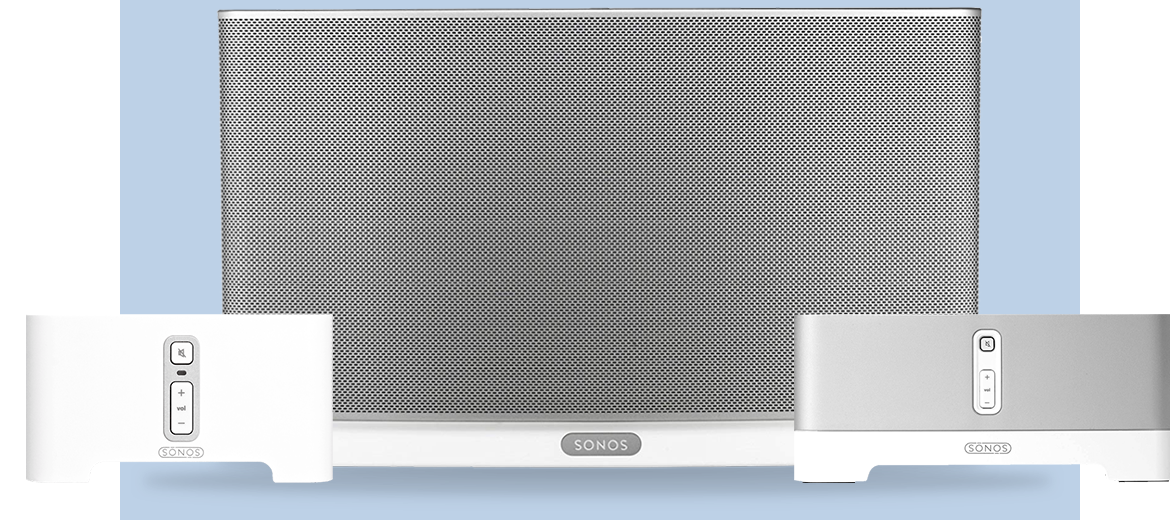
This coming May, these legacy products—our original Zone Players, Connect, and Connect:Amp (launched in 2006; includes versions sold until 2015), first-generation Play:5 (launched 2009), CR200 (launched 2009), and Bridge (launched 2007)—will no longer receive software updates or new features. 

 Today the Sonos experience relies on an interconnected ecosystem, giving you access to more than 100 streaming services, voice assistants, and control options like Apple AirPlay 2. Without new software updates, access to services and overall functionality of your sound system will eventually be disrupted, particularly as partners evolve their technology. 

To help you through this transition, we’re providing two options:

Option 1: Continue using these legacy products, recognizing that your system will no longer receive software updates and new features.  

Option 2: Trade up to a new Sonos product with a 30% credit for each legacy product you replace.

If you’re not sure if your products are affected, you can check in the System tab in your sonos.com-account

If you choose to participate in the trade up program, your legacy products will be put in Recycle Mode, a state that deletes personally identifiable information and prepares these products for e-recycling. Recycle Mode also protects unsuspecting people from buying legacy products that are approaching the end of their useful life and won’t provide the Sonos experience customers expect today. Recycle Mode will only apply to the legacy products listed above.


We ask that you take your legacy products to a nearby certified e-recycling facility. This is the most environmentally friendly way to recycle. That said, if there isn’t a facility in your area, we are happy to pay for you to ship your products back to Sonos for responsible recycling.    


Ideally all our products would last forever, but for now we’re limited by the existing technology. Our responsibility here is threefold: build products that last a long time; continually look for ways to make our products more environmentally friendly through materials, packaging, and our supply chain and take responsibility for helping you through the transition once products near the end of their useful life.  


We’ve always believed in freedom of choice, whether that means choosing a certain streaming service or way to control your listening experience. We hope the choices provided here—continuing to use these products without new software updates or trading up to our modern products—enable you to make the choice that’s right for you. 


We are honored to have a place in your home and want to make sure that we help continue to bring the best experience we can, even when products reach the end of their useful life. 


More information.


Please let us know if you have any questions.

    This topic has been closed for further comments. You can use the search bar to find a similar topic, or create a new one by clicking Create Topic at the top of the page.

    1377 replies

    January 22, 2020

    I froze my system in August 2018 at version 9.1, blocked the update server on my router so don’t get any reminders about updates.

    It’s been working fine ever since, in fact it’s been very reliable, especially not having to continually update and then try and find all the speakers again.

    I have a Sonos connect which is part of this legacy issue but I suspect it will just keep on working after May anyway.

    A very useful post for folks here, and my chosen way forward, come May. I refuse to panic just because of this bombshell, for my 3 legacy zones out of 6 system.

    @Mike_123 : the Connect for sure will keep working for you as it is now, you are not on the Sonos upgrade express since Aug 18 so it is immune to these antics. Have you seen any issues with any streaming services from then till now?

    Lyricist I
    January 22, 2020

    I  am extremely upset that the Sonos system that I have owned for 6 years is now viewed as legacy and will not receive updates and will impact my listening experience. If I  would have know of this potential risk I  wouldn’t have bought the system. It seems like bad business to have consumers pay thousands of dollars and then trick them into upgrading their system and spending more money when this issue can happen again in a few years where the updated components are again viewed as legacy. I  realize that there is a trade in program, but 30% off new equipment is NOT enough. I believe that SONOS has to more and either fix this storage problem or allow consumers to swap out there old equipment for new for free.

    Lyricist III
    January 22, 2020

    Well Done Sonos,

    Having been investing in your kit since 2010

    I’m now left with ‘essentially’ a £1000 bill for support. (cost of replacement kit -30%)

    I understand that some equipment may not meet the standards for the ‘New’ features, but as a premium manufacturer, I believe you should be treating your loyal customers, in a better way.

    Another unhappy customer...

    Lyricist III
    January 22, 2020

    I froze my system in August 2018 at version 9.1, blocked the update server on my router so don’t get any reminders about updates.

    It’s been working fine ever since, in fact it’s been very reliable, especially not having to continually update and then try and find all the speakers again.

    I have a Sonos connect which is part of this legacy issue but I suspect it will just keep on working after May anyway.

    How do get around Sonos updating their apps and controller software?

    Lyricist I
    January 22, 2020

    A suggestion for a path forward…

    Sonos pioneered using true peer-to-peer networking to dynamically assemble audio products into a cluster that could be sensibly controlled and platooned (>1 speaker with same program).

    Sonos clearly knows how to have 2 or more separate clusters, running different software.  I could have a legacy cluster, with platooning available only among products in the legacy platoon.  Its software updates could be limited to be sure that the old services (e.g., playing from libraries on PCs, streaming from URLs speaking today’s protocols) remain.

    And concurrently, I could have a “modern” cluster, with platooning only among modern products.  This cluster would benefit from new services.

    The UI apps for legacy and modern that run on PCs, Macs, smart phones could be separated (need not be, but if Sonos is concerned about reducing support costs, they could be); perhaps named “Sonos” and “Sonold”.

    This scheme should be affordable to Sonos, and would relieve many of us having “a house full of trash” as one commenter said.  Until now, I have been a proud and appreciative owner of Sonos products.  Now I seriously wonder whether the company has my investment at heart, whether with my legacy products or with the modern products (a 30% discount is not nearly enough to counter the pain).

    Renowned Enthusiast I
    January 22, 2020


    But I understand, the “system” will eventually not work at all.  A mix of legacy and non-legacy not being updated will eventually stop.  Is that right?  

    Correct, Legacy products will stop working at some point for streaming, but you could get years. You will be able to use them for local music, but consider Sonos has (purposefully?) not updated their SMB version and you are stuck with the major compromised v1.

    Ahh...I see that “you could get years” was added via an edit in the last para quoted. I would not worry too much about that aspect - what Sonos says on this count could be they playing bogeyman, or under advice of lawyers. The years may stretch out to a decade. And not all streaming services may be affected in a way that they stop working on legacy devices at the same time.

    I don't see any reason to be herded into dumping legacy products and opting for new Sonos replacements right now. That can be done even two years from now. Or more. Or by buying something else at that time.

    I didn't add that via an edit, it was a new reply to a different poster. 

    pwt
    Virtuoso
    January 22, 2020

    A suggestion for a path forward…

    Sonos pioneered using true peer-to-peer networking to dynamically assemble audio products into a cluster that could be sensibly controlled and platooned (>1 speaker with same program).

    Sonos clearly knows how to have 2 or more separate clusters, running different software.  I could have a legacy cluster, with platooning available only among products in the legacy platoon.  Its software updates could be limited to be sure that the old services (e.g., playing from libraries on PCs, streaming from URLs speaking today’s protocols) remain.

    And concurrently, I could have a “modern” cluster, with platooning only among modern products.  This cluster would benefit from new services.

    The UI apps for legacy and modern that run on PCs, Macs, smart phones could be separated (need not be, but if Sonos is concerned about reducing support costs, they could be); perhaps named “Sonos” and “Sonold”.

    This scheme should be affordable to Sonos, and would relieve many of us having “a house full of trash” as one commenter said.  Until now, I have been a proud and appreciative owner of Sonos products.  Now I seriously wonder whether the company has my investment at heart, whether with my legacy products or with the modern products (a 30% discount is not nearly enough to counter the pain).

    That’s basically what Sonos is planning, as far as we can tell from the limited information they’re disclosing.

    4 x P:5 | Sub | 4 x P:1 | 3 x Connect | 2 x Boost | Connect:Amp | 2 x One | Amp | Move | Port | Era 300
    Enthusiast I
    January 22, 2020

    I have just posted a one * review on John Lewis website against a Sonos product stating that although the products are excellent, Sonos have just announced the obsolescence of a product which was on sale as late as late 2015.  Avoid Sonos purchases at all costs.


    Suggest each of you writes similar reviews on major retailers’ sites to cause severe commercial damage to the Sonos brand (which is in effect self-inflicted)


    +1 Don’t forget the app stores!!

    January 22, 2020

    I froze my system in August 2018 at version 9.1, blocked the update server on my router so don’t get any reminders about updates.

    It’s been working fine ever since, in fact it’s been very reliable, especially not having to continually update and then try and find all the speakers again.

    I have a Sonos connect which is part of this legacy issue but I suspect it will just keep on working after May anyway.

    How do get around Sonos updating their apps and controller software?

    That will actually become very easy now! Just make sure that at least one legacy product is powered on and visible in the controller app at all times. Then Sonos will not apply any update to any part of your system. 

    Contributor I
    January 22, 2020

    Best Sonos.
    Regarding Sono's decision to stop upgrading new products if retaining older products.

    When I invested in Sono's relatively expensive products, I did so in the belief that it was a good long-term investment. But apparently not.


    It is not sustainable from a financial point of view to change, or as you call it upgrading products that work well. It is also not good from an environmental perspective to change functioning products. I'm convinced Sonos wants to work with a sustainable environment.


    I see no need to replace my Connect Amp which works just fine for us. I can accept that my Connect Amp will not be updated with new software as long as it works as it does now. But I can't accept that my new products like Move and Playbar wouldn't be updated because I keep Connect AMP!


    Sonos, do it again and do it right. Rethink and change the product update so that it can be performed on individual products. Sono's behavior towards its customers is not acceptable.

    Kent Johansson