
Ryan S
Retired Sonos Staff
January 21, 2020

End of Software Updates for Legacy Products
Related content:Software
End of Software Updates for Legacy Products

Please note that we’ve created a new thread with some clarifications to questions that have come up several times in this thread. Please see here to continue the discussion if you still have any questions. The information contained in this thread is outdated and may no longer be accurate.


We have some important news regarding our oldest Sonos devices shared on the Sonos Blog today. The text of that blog post is being included here for your convenience:


Starting in May 2020, some of our oldest products will no longer receive software updates or new features. We want to explain why and your options. 

When we first set out almost 20 years ago to invent the technology to easily listen to any song in any room, most of the ways we listen to music today did not exist. In fact, the first Sonos products were introduced before the first iPhone was announced and when Myspace still ruled social media. 


In order to invent multi-room music and smart speakers, we combined the worlds of high-fidelity audio and computing. Every Sonos product has a microprocessor, flash memory, and other hardware components typically found in computers and smartphones.  


Since launching our first products, technology has advanced at an exponential rate; from streaming services and voice assistants to wireless networking and Bluetooth capabilities.  Through all of this transformation, we have continued delivering new features via software updates. We’re extremely proud of the fact that we build products that last a long time, and that listeners continue to enjoy them. In fact, 92% of the products we’ve ever shipped are still in use today. That is unheard of in the world of consumer electronics. However, we’ve now come to a point where some of the oldest products have been stretched to their technical limits in terms of memory and processing power.  

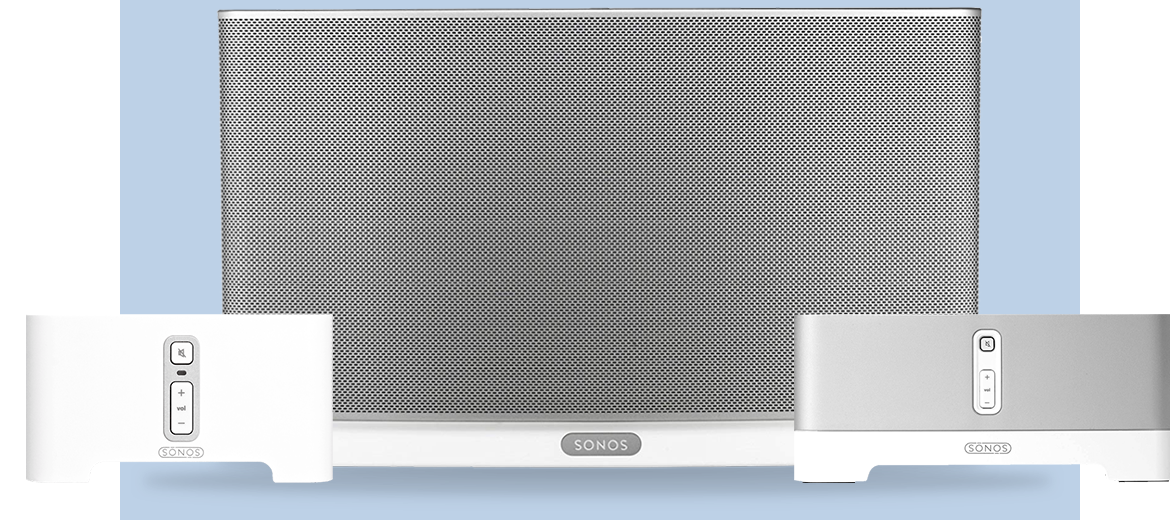
This coming May, these legacy products—our original Zone Players, Connect, and Connect:Amp (launched in 2006; includes versions sold until 2015), first-generation Play:5 (launched 2009), CR200 (launched 2009), and Bridge (launched 2007)—will no longer receive software updates or new features. 

 Today the Sonos experience relies on an interconnected ecosystem, giving you access to more than 100 streaming services, voice assistants, and control options like Apple AirPlay 2. Without new software updates, access to services and overall functionality of your sound system will eventually be disrupted, particularly as partners evolve their technology. 

To help you through this transition, we’re providing two options:

Option 1: Continue using these legacy products, recognizing that your system will no longer receive software updates and new features.  

Option 2: Trade up to a new Sonos product with a 30% credit for each legacy product you replace.

If you’re not sure if your products are affected, you can check in the System tab in your sonos.com-account

If you choose to participate in the trade up program, your legacy products will be put in Recycle Mode, a state that deletes personally identifiable information and prepares these products for e-recycling. Recycle Mode also protects unsuspecting people from buying legacy products that are approaching the end of their useful life and won’t provide the Sonos experience customers expect today. Recycle Mode will only apply to the legacy products listed above.


We ask that you take your legacy products to a nearby certified e-recycling facility. This is the most environmentally friendly way to recycle. That said, if there isn’t a facility in your area, we are happy to pay for you to ship your products back to Sonos for responsible recycling.    


Ideally all our products would last forever, but for now we’re limited by the existing technology. Our responsibility here is threefold: build products that last a long time; continually look for ways to make our products more environmentally friendly through materials, packaging, and our supply chain and take responsibility for helping you through the transition once products near the end of their useful life.  


We’ve always believed in freedom of choice, whether that means choosing a certain streaming service or way to control your listening experience. We hope the choices provided here—continuing to use these products without new software updates or trading up to our modern products—enable you to make the choice that’s right for you. 


We are honored to have a place in your home and want to make sure that we help continue to bring the best experience we can, even when products reach the end of their useful life. 


More information.


Please let us know if you have any questions.

    This topic has been closed for further comments. You can use the search bar to find a similar topic, or create a new one by clicking Create Topic at the top of the page.

    1377 replies

    Lyricist III
    January 22, 2020

    I foresee that this will be a thread of record length!


    Maybe.  Hard to tell.  This is a little different than other announcements since nothing is being bricked involuntarily.  You can continue to use what you have till it dies or doesn’t work with your streaming services anymore.    You just can’t expand your system.  This fits what a lot of people wanted when the CR100 incident happened.    

    I think people who just about a legacy Sonos product used, or about to sell, are going to be upset.  That value just hit rock bottom.  It might be a while before we start hearing those complaints.  There will be those asking for a full refund, not just 30% tradeup. 

    And if a device has been factory reset after May, and thus not registered to any one, I don’t see how it can be claimed for 30% tradeup by anyone.  This won’t make the reuse/recycle bunch happy at all.  Maybe Sonos can prevent factory resets for these after May?  Or maybe I don’t understand tradeup and factory reset properly?

    There may also be some difficulty in telling the difference between a legacy connect or connect:amp and a still supported, 2015+ connect or connect:amp.  That will bring some complaints.

    Probably not thinking of some aspects.  Still very early.


    I’m not quite sure how I feel.  I understand and respect dropping updates for products that are over 5 years old.  At the same time, I would like to keep using the non-updated products without lcoking down my system.  Seems like I should be able to take advantage of new products and features without losing the old.  However, I did get a lot of features added to my legacy products that were not even on the horizon when I originally bought my speakers, which I certainly took advantage of.

    As someone with over 17K invested in equipment, THIS REALLY SUCKS! I’m selling off my equipment and moving on. Just awful….

    Contributor I
    January 22, 2020

    is there anything missing in this thread? I don’t really think so. Until now I was an advocat for SONOS - whenever, wherever possible I honoured the SONOS product family for its overall quality and the approach of supporting all devices with sw updates.

    Since yesterday the times have changed. SONOS asked me to - more or less - brick my running system. Is that in any way sustainable? I am more than disappointed.

    Renowned Enthusiast I
    January 22, 2020


    But I understand, the “system” will eventually not work at all.  A mix of legacy and non-legacy not being updated will eventually stop.  Is that right?  

    Correct, Legacy products will stop working at some point for streaming, but you could get years. You will be able to use them for local music, but consider Sonos has (purposefully?) not updated their SMB version and you are stuck with the major compromised v1.

    Lyricist I
    January 22, 2020

    I  am extremely upset that the Sonos system that I have owned for 6 years is now viewed as legacy and will not receive updates and will impact my listening experience. If I  would have know of this potential risk I  wouldn’t have bought the system. It seems like bad business to have consumers pay thousands of dollars and then trick them into upgrading their system and spending more money when this issue can happen again in a few years where the updated components are again viewed as legacy. I  realize that there is a trade in program, but 30% off new equipment is NOT enough. I believe that SONOS has to more and either fix this storage problem or allow consumers to swap out there old equipment for new for free.

    Lyricist I
    January 22, 2020

    Another disgruntled customer here.

    Sonos adopter from the start, and having the delightful email this week telling me I have 10 legacy products that will now stop my system being supported.

    Feeling as angry as the majority on here. Yes I hear the arguments that we upgrade phones and laptops regularly, but not 10 items.

    No stacking of the 30% discount allowed either, just 30% per new item.

    Most of all feeling really guilty for having spread the word on Sonos and how impressed I was with the brand. I now have 5 friends and family with systems on my recommendation that also will be mothballed.

    A really poor communication to receive, and the ramifications not thought through. A way to split new and ‘legacy’ products is urgently needed and some more detail on the implications please Sonos.

    Interesting to see how few responses from Sonos on this thread now - I think a massive under estimation of the frustration this would cause.

    Considering non Sonos options now as really cannot face a full upgrade and living with them slowly killing my system from a distance.

    Had expected much more from Sonos - things have changed.

    Lyricist III
    January 22, 2020

    Who is going to take -30% deal? I can’t see many..

    1. That’s not a good offer because sometimes you can get that kind of deals from the shops anyway!
    2. When the product is very very expensive if you will take off 30%, it’s still very expensive!
    3. Who is going to trust that in few years you don’t have to do it again? Of course you have to do it if this goes ok for Sonos. At the moment it doesn’t look very promising for Sonos..
    4. If I will update my current system with extra money do I get extra better sound quality? No.. So all I get is empty wallet and ability to get updates in the future….for some time. Before I need to use my wallet again to keep listening the music.


    Contributor I
    January 22, 2020

    Absolute disgrace. I've spent thousands. Sonos should have a 5 year expiration message on their product boxes. 30% off please...just give me a refund and ill go elsewhere.

    Trending Lyricist I
    January 22, 2020

    I froze my system in August 2018 at version 9.1, blocked the update server on my router so don’t get any reminders about updates.

    It’s been working fine ever since, in fact it’s been very reliable, especially not having to continually update and then try and find all the speakers again.

    I have a Sonos connect which is part of this legacy issue but I suspect it will just keep on working after May anyway.

    Contributor I
    January 22, 2020

    WOW!

    If you do this, you are losing me as a customer forever. 

    So next year you'll announce that Play 1s are no longer supported or that I need to buy new Play 3s or whatever new product you come up with.

    I usually don't comment on these kind of issues, but this is bad, very bad for your customers.


    I was planning on buying another system for another place, but now, forget about it. 

    Trending Lyricist I
    January 22, 2020