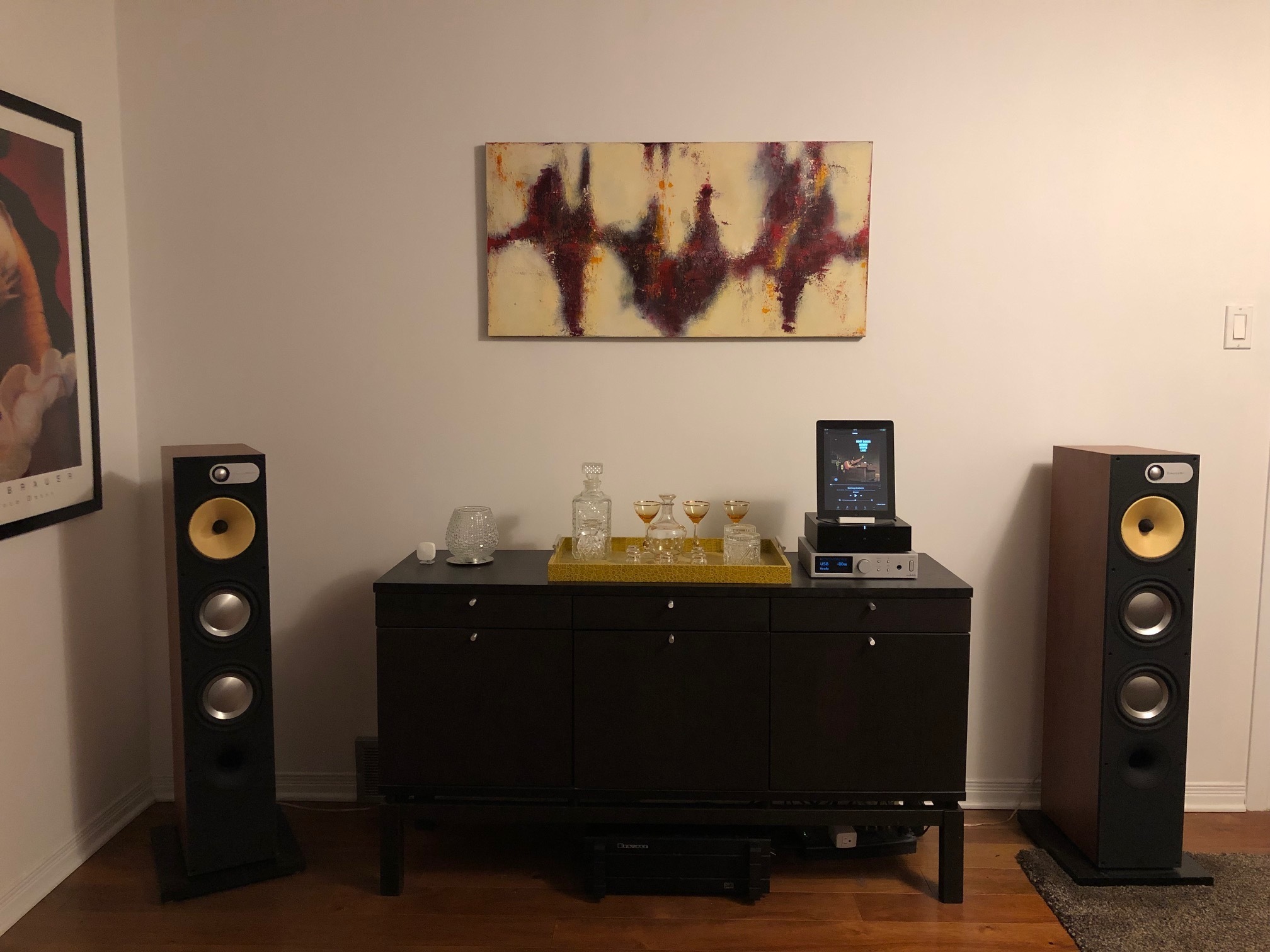
My Sonos Amp Review.
So I have hooked up the new Amp and given it a thorough listening. I am impressed.
My prior setup was B&W 683 Floorstanders into a Audiolabs MDAC Pre/DAC to a Bryston 3B-ST Amp. My streamer of choice was a RPi3B+ running PiCorePlayer and the Squeezelite software attached via USB to the MDAC.
I was a longtime Spotify user but I recently switched to using Apple Music while my wife still uses Spotify. Spotify had a squeezebox plugin so it worked well (though the Spotify Connect implementation was flaky at times). I also have over 1000 CDs ripped to ALAC on a home server.
This was a great sounding setup but I found the airplay unreliable and no native Apple Music support (other than airplay) with Squeezebox so I have been looking at other options. Since native apple music support is limited to Sonos, it was an easy choice, I just had to choose what to get.
I considered just getting the Connect and adding it into the existing system via optical to the DAC but decided to take a chance on the new Amp. Its 125W / channel vs. the Bryston's 120W so nearly identical power though the whole idea of DDFA amps had me sceptical that 125W per side could be handled by the little guy. My speakers also dip down to 3 Ohm at times so they are not the easiest to drive cleanly . The quality of the DAC was also completely unknown. That said if the Amp performance was 95% of my current setup, I could live with it. The return policy swayed me to at least give it a try. If it wasn't as good I could return it and if it does workout, I can sell the Amp and DAC and pay for the Amp.
I ordered Wednesday and it was delivered to me Friday. Unfortunately I missed the delivery guy so I picked it up at the courier depot today. Quick shipping (surprising since Im in Canada but I guess they shipped from the TO area and not from California so no border hassles).
The packaging really reminded me of Apple and I was surprised by how small the Amp actually is.
My speakers were already on banana clips so hooking it all up was quick. Basically plugging in the speakers and power cord.
Next was the app setup. The Sonos setup was easy enough. My only gotcha was that I needed to enable 802.11g on my network. I actually run two dualband routers, R7000 with a run of cat6 to an R3700 running as a Switch and Access Point. B/G clients are rare and there is a potential performance hit enabling support for it on N or AC routers so I don't normally have it on. Anyway on my 3700 2.4Ghz band I enabled G and the setup continued no issue. Added the SMB path to my ALACs and it indexed them rather fast. I also added Apple Music as a source. All very intuitive. I did have to dig a bit for EQ and Amp settings in the app but I found them. Left EQ flat, though I did turn loudness off after a quick google told me what it did (surprised it was defaulted to On on the amp...)
Anyway gave a listen to a few tracks I have locally and know well and it performed admirably. I went back and forth between the MDAC/Bryston and the Sonos Amp to A/B and it was hard to distiguish. The Bryston is an excellent amp. I would give the Bryston a slight nod on clarity, especially on lower volumes and it was actually able to drive the speaker just a bit louder despite being 5W less (to be fair I think my 3BST sample was checked out at ~155W per side on Bryston's exit QC test report more than the rated 120W). On the other hand the Sonos Amp was also able to handle the B&Ws nearly as well. It was also exceedingly quiet and also quite clear. Certainly no complaints and while it wasn't as loud, when turned up it was definitely loud.
My list of complaints about the Sonos is small.
1. It really needs a headphone jack. Its the one thing I will miss from my current DAC. I have a set of Sennheiser 650s that I use when the wife wants quiet, but now I won't have that. I can always use them with the iphone directly but the Senns need a good headphone amp to bring out the best.
2. The Front Panel UI/UX. Actual Up and Down icons for the volume to match the play / pause. Right now its 4 dots making a square. Also I am not sure what each press does but going by the slider on the ipad its not as smooth as a dial.
3. I did notice a clicking/static sound when it hit the end of a playlist. Not sure if it was related to anything else but this could get annoying as the Amp is always on. One suggestion would be to mute itself after no activity for say 5 minutes.
4. Software UI complaints. Nothing major. I am a long time user of the iPeng app that controls squeezeboxen and like its now playing screen and its swipe to left for lyrics and swipe to right to see the queue. I could find no way to see lyrics withing Sonos at all and swiping does nothing. Also need to hit edit to manipulate the queue order vs. just touching a song and moving it up or down.
Otherwise my only concern is longevity. The Bryston is a tank with a 20 year warranty. The Sonos certainly felt premium and people still use the original Connect:Amp after 10 years so. Also DDFAs are a different type of Amp. It got warm but was surprising cool all things considered. The Bryston is a heavy as it is because its a giant heatsink (not that it gets hot either...) but the size of this thing and cleaning up the wires it is crazy its actually smaller than my DAC as seen in the picture below.
My prior setup was B&W 683 Floorstanders into a Audiolabs MDAC Pre/DAC to a Bryston 3B-ST Amp. My streamer of choice was a RPi3B+ running PiCorePlayer and the Squeezelite software attached via USB to the MDAC.
I was a longtime Spotify user but I recently switched to using Apple Music while my wife still uses Spotify. Spotify had a squeezebox plugin so it worked well (though the Spotify Connect implementation was flaky at times). I also have over 1000 CDs ripped to ALAC on a home server.
This was a great sounding setup but I found the airplay unreliable and no native Apple Music support (other than airplay) with Squeezebox so I have been looking at other options. Since native apple music support is limited to Sonos, it was an easy choice, I just had to choose what to get.
I considered just getting the Connect and adding it into the existing system via optical to the DAC but decided to take a chance on the new Amp. Its 125W / channel vs. the Bryston's 120W so nearly identical power though the whole idea of DDFA amps had me sceptical that 125W per side could be handled by the little guy. My speakers also dip down to 3 Ohm at times so they are not the easiest to drive cleanly . The quality of the DAC was also completely unknown. That said if the Amp performance was 95% of my current setup, I could live with it. The return policy swayed me to at least give it a try. If it wasn't as good I could return it and if it does workout, I can sell the Amp and DAC and pay for the Amp.
I ordered Wednesday and it was delivered to me Friday. Unfortunately I missed the delivery guy so I picked it up at the courier depot today. Quick shipping (surprising since Im in Canada but I guess they shipped from the TO area and not from California so no border hassles).
The packaging really reminded me of Apple and I was surprised by how small the Amp actually is.
My speakers were already on banana clips so hooking it all up was quick. Basically plugging in the speakers and power cord.
Next was the app setup. The Sonos setup was easy enough. My only gotcha was that I needed to enable 802.11g on my network. I actually run two dualband routers, R7000 with a run of cat6 to an R3700 running as a Switch and Access Point. B/G clients are rare and there is a potential performance hit enabling support for it on N or AC routers so I don't normally have it on. Anyway on my 3700 2.4Ghz band I enabled G and the setup continued no issue. Added the SMB path to my ALACs and it indexed them rather fast. I also added Apple Music as a source. All very intuitive. I did have to dig a bit for EQ and Amp settings in the app but I found them. Left EQ flat, though I did turn loudness off after a quick google told me what it did (surprised it was defaulted to On on the amp...)
Anyway gave a listen to a few tracks I have locally and know well and it performed admirably. I went back and forth between the MDAC/Bryston and the Sonos Amp to A/B and it was hard to distiguish. The Bryston is an excellent amp. I would give the Bryston a slight nod on clarity, especially on lower volumes and it was actually able to drive the speaker just a bit louder despite being 5W less (to be fair I think my 3BST sample was checked out at ~155W per side on Bryston's exit QC test report more than the rated 120W). On the other hand the Sonos Amp was also able to handle the B&Ws nearly as well. It was also exceedingly quiet and also quite clear. Certainly no complaints and while it wasn't as loud, when turned up it was definitely loud.
My list of complaints about the Sonos is small.
1. It really needs a headphone jack. Its the one thing I will miss from my current DAC. I have a set of Sennheiser 650s that I use when the wife wants quiet, but now I won't have that. I can always use them with the iphone directly but the Senns need a good headphone amp to bring out the best.
2. The Front Panel UI/UX. Actual Up and Down icons for the volume to match the play / pause. Right now its 4 dots making a square. Also I am not sure what each press does but going by the slider on the ipad its not as smooth as a dial.
3. I did notice a clicking/static sound when it hit the end of a playlist. Not sure if it was related to anything else but this could get annoying as the Amp is always on. One suggestion would be to mute itself after no activity for say 5 minutes.
4. Software UI complaints. Nothing major. I am a long time user of the iPeng app that controls squeezeboxen and like its now playing screen and its swipe to left for lyrics and swipe to right to see the queue. I could find no way to see lyrics withing Sonos at all and swiping does nothing. Also need to hit edit to manipulate the queue order vs. just touching a song and moving it up or down.
Otherwise my only concern is longevity. The Bryston is a tank with a 20 year warranty. The Sonos certainly felt premium and people still use the original Connect:Amp after 10 years so. Also DDFAs are a different type of Amp. It got warm but was surprising cool all things considered. The Bryston is a heavy as it is because its a giant heatsink (not that it gets hot either...) but the size of this thing and cleaning up the wires it is crazy its actually smaller than my DAC as seen in the picture below.