
Ryan S
Retired Sonos Staff
January 22, 2020

End of Software Support - Clarifications
End of Software Support - Clarifications

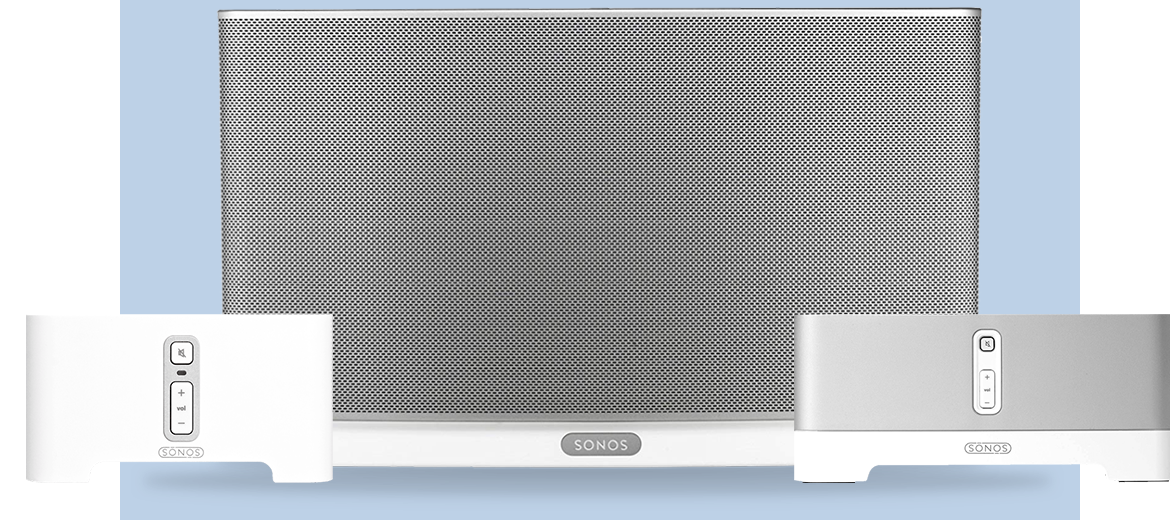
We announced yesterday that some of our oldest Sonos products will be moving into a legacy mode in May of 2020. Our commitment is to support products with regular software updates for a minimum of five years after we stop selling them, and we have a track record of supporting products far longer. 

Here is some public information we’ve shared, gathered into one place to respond to some of your questions in one easy thread, so that people can find the correct information easily.

Beginning in May, software updates and new features from Sonos will only be delivered to systems with only modern products.

After May, systems that include legacy products will continue to work as before - but they will no longer receive software updates or new features. 

Sonos will work to maintain the existing experience and conduct bug fixes, but our efforts will ultimately be limited by the lack of memory and processing power of these legacy products.

We don’t expect any immediate impact to your experience, but access to services and overall functionality will eventually be disrupted, particularly as partners evolve their own services and features. 


Customers with both legacy and modern products have time to decide what option is best for them. You can continue to use your whole system in legacy mode - in this case, it will stop receiving updates and new features. 

You will also be able to separate your legacy products from your modern products, so that the modern products can still receive updates and new features, and legacy products can still be used separately. We’ll have more information on how to do this in May when you can take that action.

Another option available to all customers with legacy products is to take advantage of the Trade Up program, which allows you to upgrade older Sonos products to modern ones with a 30% discount. Trade Up will be open to customers at any time should they decide to upgrade. 

We recognize this is new for Sonos owners, just as it is for Sonos. We are committed to help you by making options available to you to support the best decision for your home.
 

If you have any further questions, please don’t hesitate with asking.

Update 2/22: A message from our CEO

We heard you. We did not get this right from the start. My apologies for that and I wanted to personally assure you of the path forward:

First, rest assured that come May, when we end new software updates for our legacy products, they will continue to work as they do today. We are not bricking them, we are not forcing them into obsolescence, and we are not taking anything away. Many of you have invested heavily in your Sonos systems, and we intend to honor that investment for as long as possible. While legacy Sonos products won’t get new software features, we pledge to keep them updated with bug fixes and security patches for as long as possible. If we run into something core to the experience that can’t be addressed, we’ll work to offer an alternative solution and let you know about any changes you’ll see in your experience.

Secondly, we heard you on the issue of legacy products and modern products not being able to coexist in your home. We are working on a way to split your system so that modern products work together and get the latest features, while legacy products work together and remain in their current state. We’re finalizing details on this plan and will share more in the coming weeks.

While we have a lot of great products and features in the pipeline, we want our customers to upgrade to our latest and greatest products when they’re excited by what the new products offer, not because they feel forced to do so. That’s the intent of the trade up program we launched for our loyal customers.

Thank you for being a Sonos customer. Thank you for taking the time to give us your feedback. I hope that you’ll forgive our misstep, and let us earn back your trust. Without you, Sonos wouldn’t exist and we’ll work harder than ever to earn your loyalty every single day.

If you have any further questions please don’t hesitate to contact us.


Patrick Spence
CEO, Sonos

This topic has been closed for further comments. You can use the search bar to find a similar topic, or create a new one by clicking Create Topic at the top of the page.

4256 replies

Lyricist I
January 22, 2020

https://www.smarthomeandavguide.com/sonos-vs-yamaha-musiccast/

To quote the conclusion (last year)

“SONOS has been the well-deserved market leader in wireless home audio for a long time, and for very good reason. Their ease of use, software, app,  general compatibility and reliability is second to none. The MusicCast app is almost as intuitive and easy to use. However MusicCast has a much broader range of compatible products.”


Musiccast didn’t exist when I bought into Sonos. I guess based on yesterday’s announcement it is not just my speakers that are “legacy products” - Its the whole of Sonos. I’ll continue to use the speakers until they don’t work then replace with product from a Music company rather than a California Tech ripoff. 

One point I’ve not noticed being discussed - if you have a “Legacy” speaker after May, you won’t be able to add a new Sonos speaker to your system unless it has exactly the same version of software, so not only are your “modern” products stuck, you won’t be able to add new speakers unless you replace all your old ones. 

Enthusiast II
January 22, 2020

Closing the original thread to the community who are showing a huge outpouring of negativity is just another failed attempt to distract, censor and mask the sheer number of disgruntled consumers. Shameful, deceitful and shows again how SONOS are out of tune (no pun intended) with the community.


user_end_of_lifed said it best: 

Refusing to provide maintenance updates to a product that relies on integrated services for its core function is 100% killing it dead. We just don’t know the exact time of death yet.


Sonos from leader to loser in 2020.
Contributor I
January 22, 2020

You expect me to replace Sonos kit just to keep my system going. Knowing whatever Sonos I buy now will probably be defunct in 5 years. I have spent £3k on Sonos and recommended it to many people over the years. NOT ANYMORE SONOS. 
I won’t spend anymore on Sonos and tell anyone thinking of buying to avoid it.


Your marketing  strategy is a big gamble, ok you will force some to buy new hardware. But many loyal customers are going to walk away from your system. 
 

I hope the negativity on social media and in the press will make you rethink this poorly thought out strategy. 
what would have been better if people could buy a module to go on the back of legacy models to allow them to accept future updates through the module. 
 

How long before my Play 3 and play 1’s (mk1)  no longer work? 


Trending Lyricist I
January 22, 2020

Well, so Sonos decides the best way to handle this is to close a 55 page thread!?  Who’s handling damage control at Sonos?  They should be fired. @Ryan, I’ve always enjoyed your input, but now you’re just a lying hack for Sonos.  Great job!  I’ve posted at Amazon, Costco and Best Buy to NOT buy Sonos products.  I suggest everyone else do the same.


Lyricist I
January 22, 2020

OK...one more time since the original thread was shut down.  I have 6 Play 5’s, 1 Connect, 1 Bridge, plus a multitude of Play 1’s (who knows how long they have until Sonos deems them obsolete) in my house.  I was an early adopter of the system.  As friends and family experienced my system, five other household systems were later spawned by them...  I feel betrayed.

Original post on the previous thread that was shut down:

”Thousands of dollars invested in the system. Why should I buy/commit to further Sonos products if they will be deemed obsolete and no longer supported in 10 years or less?  Sorry Sonos, you’ve lost me as a supporter.”

Lyricist III
January 22, 2020

Wow, so tons of people voice their concerns and the thread gets shut down?

Apart from anything else this new thread still doesn’t address the issue of what is being done where people own components where there AREN’T any options which we can “Tradeup” to!

I rely on the “Bridge” to fill the gaps in their woeful built-in wifi, and the “Connect” to be able to integrate Sonos with my livingroom Surround Sound setup.

Neither of these two products has a replacement which I can see, and even if they did it would cost me hundreds of pounds to simply carry on as I am.

Congratulations on the mother of PR disasters. One look at the worldwide news networks will show just how much damage has been done by this.


Lyricist III
January 22, 2020

I have spent thousands of dollars on Sonos products (which I thought at the time were over-priced, but believed that the extra dollars were going for long-lasting and high-quality products).  It is claimed that Sonos has supported these products for ten years, but the fact is that I bought some of these products less than five years ago.  It is claimed that the older products don’t have the capability to be updated to modern standards.  How do we know this is true?  Has Sonos tried all the technological fixes (Including several mentioned in this and prior threads)?  What were the results of those efforts?  Also, isn’t it totally environmentally irresponsible to require an owner to basically brick their unit (and require ultimate landfill disposal) in order to trade up, rather than accepting the old product back and reselling it for whatever it can be used for? 


The bottom line:  Is Sonos motivated here by an honest and irresolvable engineering problem?  Or is Sonos motivated by a desire to boost sales for new products?  Those new products’ high prices are actually much higher, when you take into account their limited life expectancy. 


Here is my solution:  When it is time to throw away the thousands of dollars I have invested in Sonos products that no longer work, I will make this pledge:  I will never ever buy another Sonos product, and I will urge everyone I know to do likewise. 

Enthusiast I
January 22, 2020

Given that the other thread was closed, I thought I would reiterate my comment and request for the code base when you stop supporting “legacy” components.

The more I think about this the more disappointed I am becoming. 

There are many approaches that could have been taken and they seem to have taken one that is easiest on them (simply not worry about “legacy” devices any longer and let the chips fall were they may) instead of continuing to support “legacy” devices with the understanding that their functionality will not be expanded beyond their current capabilities due to hardware limitations. 

If the limitation is indeed processor and memory based then you could provide functionality in the app – or, perish the thought, the desktop application –  that allows users to load on only the features they use and want. I personally use a local library, Tunein, and Spotify. I do not need every music service loaded to every component. I would understand that such functionality may need to be at the network level so that all speakers have consistent functionality.

I do not believe that any of the people writing here would have objected to this. I do not need airplay or Chromecast in my existing speakers and I would understand having to purchase new equipment to make use of this new technology. What I do not understand is Sonos saying that they will simply stop updating those products and let them die off. 

If the current position is maintained then I ask that you provide access to the code base for the products that you will no longer support as I feel confident that there would be a community of developers that would gladly take up keeping this equipment functional for years to come.

A wee box like a raspberry pi with loadsa memory, networking, wifi and some ethernet sockets should be able to run the extra processes sonos claim is behind their bricking blackmail scam. This could deal with decades of updated software vfor 50 quid. Or put a sonos badge on it and charge 200! LOL lol ha ha ha. 

Contributor I
January 22, 2020

In this day and age of introducing longevity into electrical equipment rather than fast obsolescence what on earth are you doing? I’ve always recommended your products and been very pleased to this but think that I should have spent my money elsewhere. Wake up. I won’t be recommending Sonos again. If you sell on build quality and then withdraw support what are you saying about yourselves?

exdirtfarmer
Enthusiast II
January 22, 2020

Yup, I understand that at some point the old players would hinder progress. I am disappointed with the value of the current players for trade in and the bricking of perfectly usable product and the attitude of Sonos to get it out of circulation.

Sonos has always refused to relinquish control of the Software/Firmware delivery platform and hence has kept control over the lifespan of the equipment.  The Trade up program sells us new equipment at cost, then bricks the legacy hardware They refuse to give ANYBODY the ability to reload/reuse the hardware/software.

PLEASE, PLEASE, PLEASE, develop a local software loading procedure for the final legacy firmware so users can continue to use the equipment they purchased as is. ALLOW US TO ADD LEGACY EQUIPMENT TO OUR LEGACY SYSTEM INSTEAD OF ADDING THIS EQUIPMENT PREMATURELY TO THE RECYCLE SITES.  GIVE US CONTROL OF OUR FUTURE.

Sonos has decided to walk away from the older hardware, that is fine.  Just give us some tools to keep this stuff working until the HARDWARE fails.

A local software loading system.  Firmware 8.4 and final 10.x would keep many people happily using their equipment until it dies.


Powered by Firmware/Software 8.4 with Classic Blue Desktop Controller + CR100 + Ipod Dock + Homeseer 3 Sonos UPNP Plugin by dcorsus