
Ryan S
Retired Sonos Staff
January 22, 2020

End of Software Support - Clarifications
End of Software Support - Clarifications

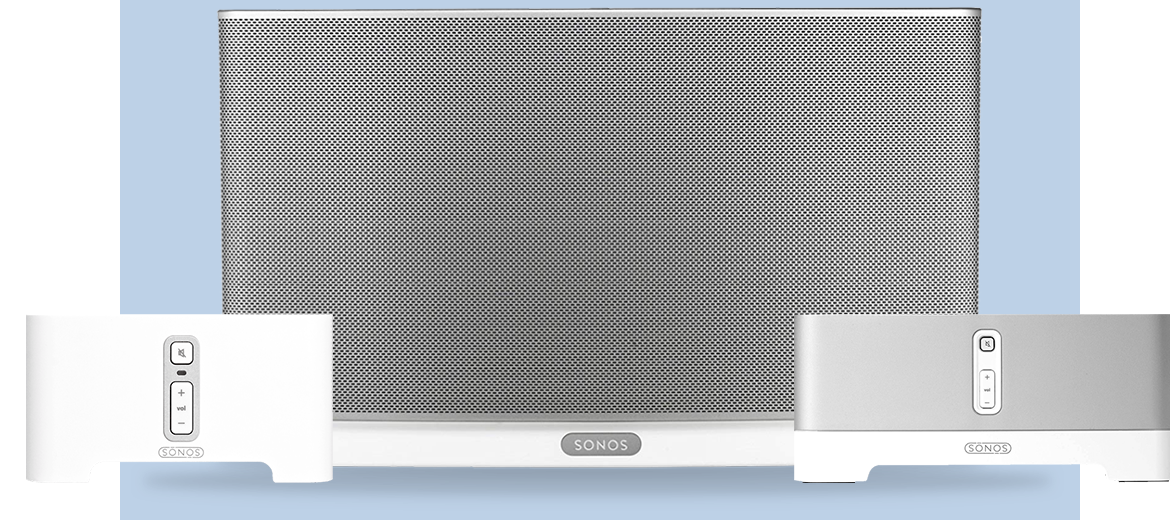
We announced yesterday that some of our oldest Sonos products will be moving into a legacy mode in May of 2020. Our commitment is to support products with regular software updates for a minimum of five years after we stop selling them, and we have a track record of supporting products far longer. 

Here is some public information we’ve shared, gathered into one place to respond to some of your questions in one easy thread, so that people can find the correct information easily.

Beginning in May, software updates and new features from Sonos will only be delivered to systems with only modern products.

After May, systems that include legacy products will continue to work as before - but they will no longer receive software updates or new features. 

Sonos will work to maintain the existing experience and conduct bug fixes, but our efforts will ultimately be limited by the lack of memory and processing power of these legacy products.

We don’t expect any immediate impact to your experience, but access to services and overall functionality will eventually be disrupted, particularly as partners evolve their own services and features. 


Customers with both legacy and modern products have time to decide what option is best for them. You can continue to use your whole system in legacy mode - in this case, it will stop receiving updates and new features. 

You will also be able to separate your legacy products from your modern products, so that the modern products can still receive updates and new features, and legacy products can still be used separately. We’ll have more information on how to do this in May when you can take that action.

Another option available to all customers with legacy products is to take advantage of the Trade Up program, which allows you to upgrade older Sonos products to modern ones with a 30% discount. Trade Up will be open to customers at any time should they decide to upgrade. 

We recognize this is new for Sonos owners, just as it is for Sonos. We are committed to help you by making options available to you to support the best decision for your home.
 

If you have any further questions, please don’t hesitate with asking.

Update 2/22: A message from our CEO

We heard you. We did not get this right from the start. My apologies for that and I wanted to personally assure you of the path forward:

First, rest assured that come May, when we end new software updates for our legacy products, they will continue to work as they do today. We are not bricking them, we are not forcing them into obsolescence, and we are not taking anything away. Many of you have invested heavily in your Sonos systems, and we intend to honor that investment for as long as possible. While legacy Sonos products won’t get new software features, we pledge to keep them updated with bug fixes and security patches for as long as possible. If we run into something core to the experience that can’t be addressed, we’ll work to offer an alternative solution and let you know about any changes you’ll see in your experience.

Secondly, we heard you on the issue of legacy products and modern products not being able to coexist in your home. We are working on a way to split your system so that modern products work together and get the latest features, while legacy products work together and remain in their current state. We’re finalizing details on this plan and will share more in the coming weeks.

While we have a lot of great products and features in the pipeline, we want our customers to upgrade to our latest and greatest products when they’re excited by what the new products offer, not because they feel forced to do so. That’s the intent of the trade up program we launched for our loyal customers.

Thank you for being a Sonos customer. Thank you for taking the time to give us your feedback. I hope that you’ll forgive our misstep, and let us earn back your trust. Without you, Sonos wouldn’t exist and we’ll work harder than ever to earn your loyalty every single day.

If you have any further questions please don’t hesitate to contact us.


Patrick Spence
CEO, Sonos

This topic has been closed for further comments. You can use the search bar to find a similar topic, or create a new one by clicking Create Topic at the top of the page.

4256 replies

Enthusiast II
January 22, 2020

So Sonos will still release firmware to fix bugs. Will a streaming service that is currently supported changing API be considered a bug and receive a fix on legacy hardware?

This is the crux of the issue for me. If say Spotify changes something that means Sonos needs to change, then will it get fixed? I don’t see “upgrading” at 30% reduced price as an incentive, far from it. 

@MrSwadge, I replied to this a few pages back, but I know some replies get missed. These legacy devices are stretched to the limits of their hardware already. Where possible, we will work to maintain the existing experience and conduct bug fixes on the legacy devices where the computing hardware will allow. 


Ryan - this is the most concerning thing (for me at least) - you say: Streaming services will work the same as well, but at some time in the future, service software changes might cause it to degrade or stop working. - So you are confirming that you won’t be updating legacy devices to cope with service software changes. It seems unlikely that these changes would impose unrealistic demands on legacy devices, so why won’t you be updating the software?

@PeteD, as above, where possible, we’ll try to update legacy devices, but we might not be able to. The hardware might not be able to support whatever solution there is to a theoretical change at the service level. 


@Ryan S So, shouldn’t Sonos be offering a simple hardware upgrade kit for our legacy equipment, most people would be happy to pay a nominal fee for an upgrade motherboard. Sonos is supposed to be a sustainable focused company, discarding 5 year old equipment isn’t in line with your company ethos.

Enthusiast II
January 22, 2020

This new thread didn’t clarify the most important points I had read in the previous thread. Answer these please...
 

  1. Will future controller apps and pc based software continue to work with legacy systems? (with existing functionality)
  2. Can Legacy and Modern speakers be grouped together?
  3. Will legacy systems allow other legacy speakers to be added after May?
  4. Will you allow hardware with various versions of Sonos OS to work side by side on a single Sonos network?
  5. I mainly use a NAS with my Sonos and rarely use streaming services. Will I still be able to do this after May?

Sonos do not delete the other thread. 

Mirrors my concerns although do also use streaming

@matthew.bacon and @attacama40  my previous post in this thread answers some of those questions, but you might have missed.​

  1. I believe this is the answer you’re looking for: You will be able get the app that works with a legacy system to use on new mobile devices, or if you accidentally delete it.
  2. You would either have a legacy system with legacy devices and modern devices, or a modern system and a legacy system. If it’s all one legacy system, than yes, they’ll group together, but if it’s two separate systems, than they’re two, separate systems.
  3. You will be able to add products to your legacy systems. We'll have more to share on the experience come May. 
  4. No, Sonos players are a system and won’t operate properly with different versions in one system.
  5. Yes, if you mostly use the NAS drive, the only likely change with your system will be that you’ll stop getting updates. Everything else will continue to function exactly as it does today. Streaming services will work the same as well, but at some time in the future, service software changes might cause it to degrade or stop working. 

Are you able to reconcile how answers 3 and 4 will be reconciled? If I buy a new component (later version) to add to a “legacy” system will I be able to downgrade the new component? what about to a version that predates the new component?

Are you ensuring that you will provide the means to downgrade the firmware in all future components to match the firmware in someone’s existing “legacy” system?

This is a critical question!

Lyricist I
January 22, 2020

Like everyone else, this notice has stopped me from considering any additional purchases.

The appeal of the Sonos system was three fold, quality components, simplicity and finally the ability to expand my system with new products.

It now looks like all of these thanks have been crushed. Quality components don’t matter if I’ve got to replace it in circa 5 years, I’ll by cheaper products. Simplicity, not if I have to set up multiple networks for my legacy devices. I’ll go back to a simple amp and speaker set up and just physically plug my iPad in. Expand the system, I’m not paying anything else to Sonos if the product has such a short life span.

Someone needs to rethink this or create a hardware solution, a “home hub” solution that can manage/stream the music to the legacy units and keep connected for the new units seems the best bet. Guarantee to keep the system working for 15 years+ if you replace the “home hub”  is also needed. It’s the only way I’d even consider looking at Sonos again.


Enthusiast I
January 22, 2020

We announced yesterday that some of our oldest Sonos products will be moving into a legacy mode in May of 2020. Our commitment is to support products with regular software updates for a minimum of five years after we stop selling them, and we have a track record of supporting products far longer. 

We’d like to answer some of the questions we’ve seen come up regularly in one easy thread so that people can find the correct information easily.

Beginning in May, software updates and new features from Sonos will only be delivered to systems with only modern products.

After May, systems that include legacy products will continue to work as before - but they will no longer receive software updates or new features. 

Sonos will work to maintain the existing experience and conduct bug fixes, but our efforts will ultimately be limited by the lack of memory and processing power of these legacy products.

We don’t expect any immediate impact to your experience, but access to services and overall functionality will eventually be disrupted, particularly as partners evolve their own services and features. 


Customers with both legacy and modern products have time to decide what option is best for them. You can continue to use your whole system in legacy mode - in this case, it will stop receiving updates and new features. 

You will also be able to separate your legacy products from your modern products, so that the modern products can still receive updates and new features, and legacy products can still be used separately. We’ll have more information on how to do this in May when you can take that action.

Another option available to all customers with legacy products is to take advantage of the Trade Up program, which allows you to upgrade older Sonos products to modern ones with a 30% discount. Trade Up will be open to customers at any time should they decide to upgrade. 

We recognize this is new for Sonos owners, just as it is for Sonos. We are committed to help you by making options available to you to support the best decision for your home.
 

If you have any further questions, please don’t hesitate with asking.

Further question: how many messages of support for this scam have you had? I'll bet you 30% of the cost of a nee Bluesound system there havent been any! 

Bluesound: better than sonos.... Ive seen that comment all over your Community thread. Even the new one you opened coz all the comments were CRITICAL. Wonder if Bluesound or Denon  will offer a better landfill deal for sonos products than sonos itself?

Contributor II
January 22, 2020

Like everyone else, this notice has stopped me from considering any additional purchases.

The appeal of the Sonos system was three fold, quality components, simplicity and finally the ability to expand my system with new products.

It now looks like all of these thanks have been crushed. Quality components don’t matter if I’ve got to replace it in circa 5 years, I’ll by cheaper products. Simplicity, not if I have to set up multiple networks for my legacy devices. I’ll go back to a simple amp and speaker set up and just physically plug my iPad in. Expand the system, I’m not paying anything else to Sonos if the product has such a short life span.

Someone needs to rethink this or create a hardware solution, a “home hub” solution that can manage/stream the music to the legacy units and keep connected for the new units seems the best bet. Guarantee to keep the system working for 15 years+ if you replace the “home hub”  is also needed. It’s the only way I’d even consider looking at Sonos again.


It's kind of absurd that Sonos, who brought us a device to hook up our old speakers, can't do the same for their own “legacy” devices. It's not “planned obsolescence” as much as its forced obsolescence.

Lyricist III
January 22, 2020

This new thread didn’t clarify the most important points I had read in the previous thread. Answer these please...
 

  1. Will future controller apps and pc based software continue to work with legacy systems? (with existing functionality)
  2. Can Legacy and Modern speakers be grouped together?
  3. Will legacy systems allow other legacy speakers to be added after May?
  4. Will you allow hardware with various versions of Sonos OS to work side by side on a single Sonos network?
  5. I mainly use a NAS with my Sonos and rarely use streaming services. Will I still be able to do this after May?

Sonos do not delete the other thread. 

Mirrors my concerns although do also use streaming

@matthew.bacon and @attacama40  my previous post in this thread answers some of those questions, but you might have missed.​

  1. I believe this is the answer you’re looking for: You will be able get the app that works with a legacy system to use on new mobile devices, or if you accidentally delete it.
  2. You would either have a legacy system with legacy devices and modern devices, or a modern system and a legacy system. If it’s all one legacy system, than yes, they’ll group together, but if it’s two separate systems, than they’re two, separate systems.
  3. You will be able to add products to your legacy systems. We'll have more to share on the experience come May. 
  4. No, Sonos players are a system and won’t operate properly with different versions in one system.
  5. Yes, if you mostly use the NAS drive, the only likely change with your system will be that you’ll stop getting updates. Everything else will continue to function exactly as it does today. Streaming services will work the same as well, but at some time in the future, service software changes might cause it to degrade or stop working. 

I see. So two further questions…

6. Will modern speakers come with a legacy mode? Otherwise those wishing to extend their all legacy system (and keep a single multi-room network) will most likely look to another brand which is the same as having separate apps for legacy and modern networks.
 

  1. As new iOS versions etc are released Sonos will support a legacy app as well or will this functionality be baked into future apps as well. A legacy mode if you like. 
melvimbe
January 22, 2020

I've got a bunch of Sonos speakers including a full surround sound set plus various speakers in assorted rooms. One of those is a Play 5. Now that speaker is sion to be obsolete?? When will the rest be? Phones + computers make sense to have a limited life span. I never expected that with supposed high end speakers. My confidence in your product is shattered. I will never buy or support your brand again. I've gone from a strong promoter to disappointed critic. Sonos sucks

 Sonos are both high end speakers and smart speakers...meaning they have the same sort of hardware and software that your phone + computers do.    In your next choice for speakers, you may want to stay away from smart speakers.  Other brands may last longer, hard to tell since most haven’t been around as long as Sonos.  Going with cheap speakers is not much of an investiment, and you may do better from one of the tech giants, since they can subsides their smart speakers from their other lines of business.

Danny
Enthusiast I
January 22, 2020

This is shocking, it feels like “upgrade and pay us or else...”. Unless they change direction I will never buy another Sonos product again. I have 6 speakers currently and have spent thousands of pounds. 

Its not just blackmail, its extortion too! LOL 

Enthusiast II
January 22, 2020

Have Sonos closed the other thread to stop the negative feedback? They clearly do not know who to deal with customers. I am yet to come across a customer who thinks this is a good idea.

Sonos has some of the loyalist consumers you will find I imagine as we buy products to extend our current system without giving much of a thought to other manufacturers. For me that will change and almost ten years of loyalty to Sonos has ended and I will look to replace my “legacy” Play:5 device with something non sonos and leave the rest of my “Modern” Sonos system intact.

Hey, Johnny, 

Who's gonna buy your play5 for 100quid when you can get a brick to do the same job for less than one pound? 

I've got two of the effin paperweights. 

Shame on sonos. Shame on Patrick Spence, CEO of sonos. 

Well the Play 5 is at least worth the value of a 30% discount to someone looking to buy a new Sonos product.  On a Sonos Amp, that’s $195.

rosenqui
Trending Lyricist I
January 22, 2020

As a software developer myself, I get it that software evolves at a rapid pace and that you’re at the mercy of 3rd parties for things like SDK updates, protocol updates, new codecs, etc.

It boggles the mind however that a more palatable solution couldn’t be found. Is it not possible to have builds of firmware for the legacy devices that keep the command & control components, mesh audio, and basic streaming services?

What about doing a circuit board swap? Surely the components other than the circuit board are still perfectly fine on these devices, and it would be a lot cheaper for customers than the laughable trade-up program. It seems a shame to be throwing out perfectly good enclosures, amplification components, speaker drivers, etc.

I can see Sonos taking a sizable financial hit as owners migrate to Denon Heos, Amazon, Google, Apple, Bluesound, etc. over this.  There will be a much larger than normal supply of used (non-legacy) Sonos gear on the market as people change vendors.

I wonder if Sonos has taken into account that this will also prevent many existing customers from buying new Sonos gear, thereby hurting the bottom line even more. I was toying with the idea of getting a Beam for the Ensuite, but now I won’t. I also won’t be able to buy any new Sonos gear after May because it won’t work with my new/legacy mixed network, and I probably won’t be able to roll it back to 10.X to get it to work.

I’m skeptical that the option of separating the legacy into its own network will be useful to me. I’ve got a Connect:AMP acting as the rear surrounds for a Playbar+SUB. I can’t separate that unit without losing my 5.1 setup. I also love the feature where I can have the Playbar TV audio play in other adjacent rooms, so I can have the TV sound in the kitchen and office. I’ll lose that ability if my Connect:AMPs are relegated to being independent of the non-legacy units.