

WiFi Outdoors
This post is not for everyone as it involves a Mesh Network and requires a wired backhaul for best performance.
If you have a family that spends a lot of time outdoors in the summer on the patio, deck or poolside; you (or they) may be using a Sonos Move (1 or 2) and/or Sonos Roam (1 or 2). On the other hand, you may want to install Sonos outdoor speakers (wired to a Sonos Amp) that will be located several yards (meters) away from the main dwelling; or Wi-Fi struggles to penetrate walls adjacent to the exterior.
There are several ways to resolve the issues I just mentioned. However, I’d like to focus on one and that’s an Outdoor Router. Outdoor routers can be powered by PoE (Power over Ethernet) or Electrical.
I recently installed one by ASUS; the “ZenWiFI BD5” Outdoor Router. It’s a full-blown dual band 2.4Ghz/5Ghz Wi-Fi 7 router that I converted to a satellite node on my existing ASUS AiMesh network.
When considering an outdoor router to be used as part of an existing Mesh network it’s best to purchase one manufactured by the maker of your current router. Mixing brands often results in conflicts.
As I said in the beginning this solution is not for everyone. On the other hand, the rewards (not just for Sonos) to sustain a good Wi-Fi connection outside may be worth further investigation.
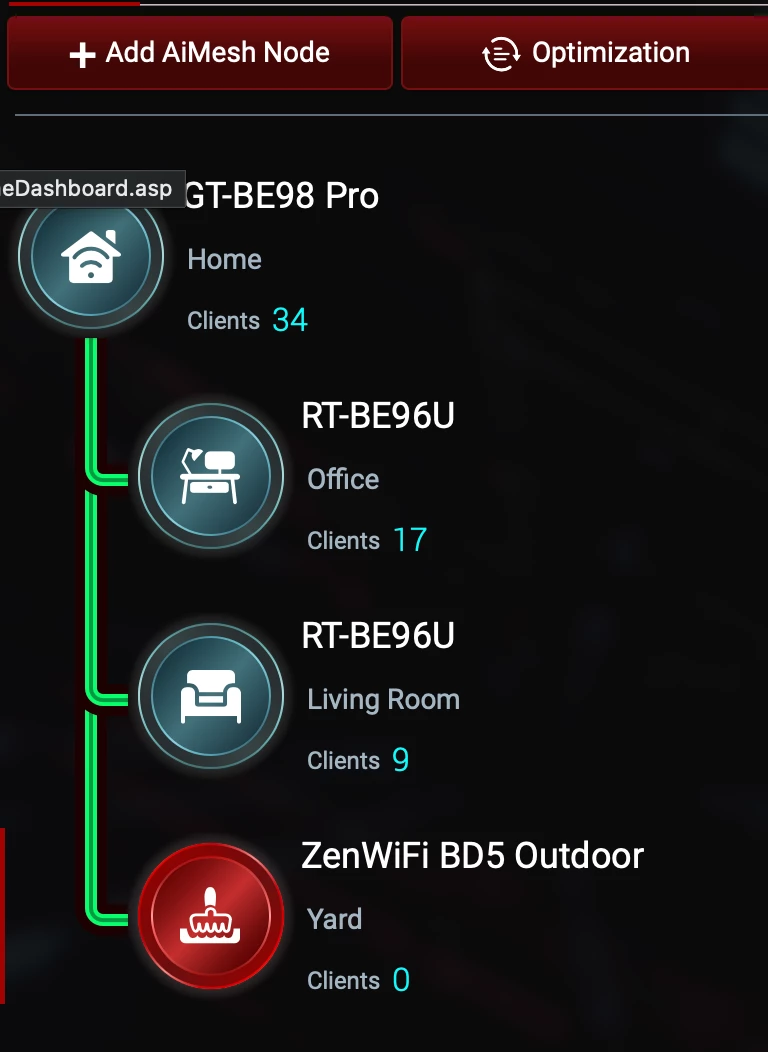
The screen shot below shows how it blends with my current Mesh network which is the node named as “Yard”.
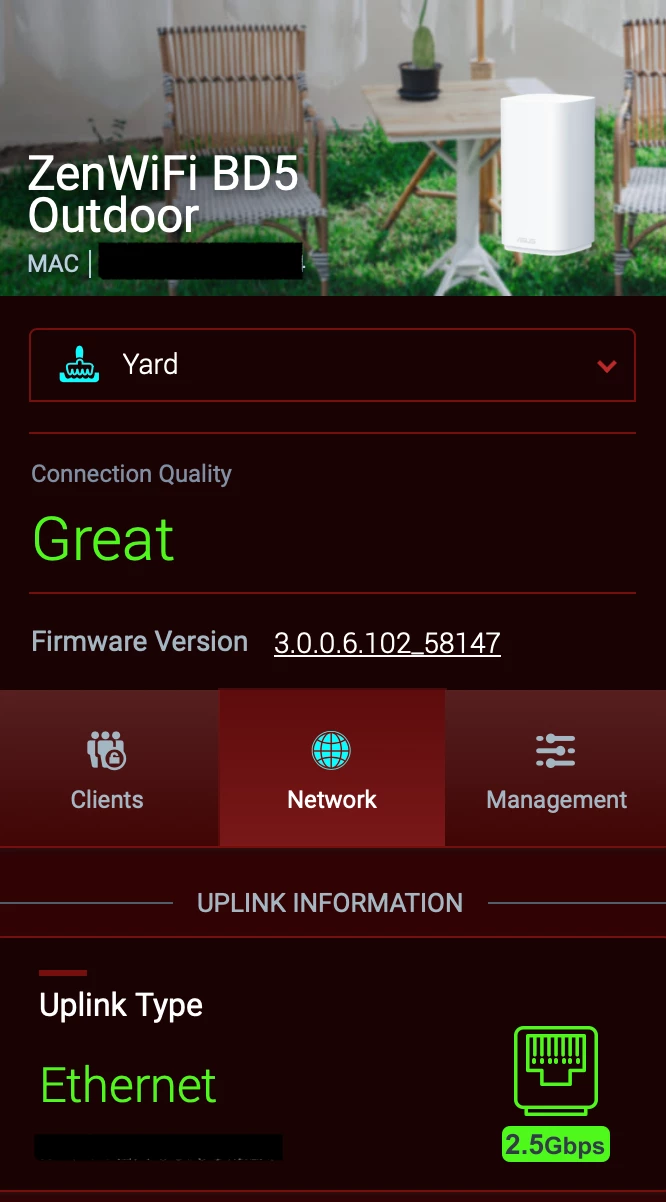
This screen shot shows the Uplink of 2.5Gbps obtained over my wired backhaul.
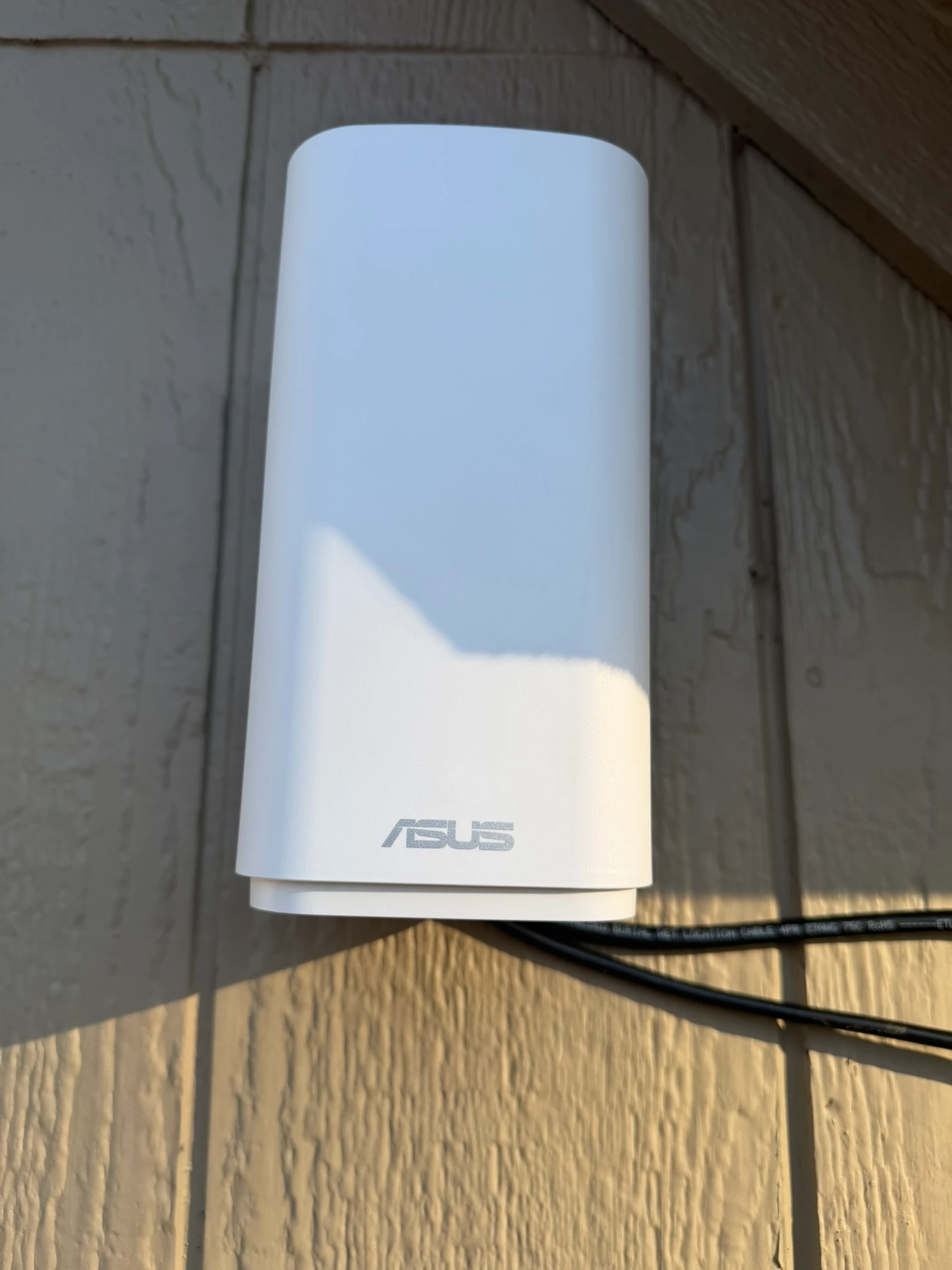
Here are pictures of the mounted ASUS ZenWiFi BD5 in closeup and perspective. *
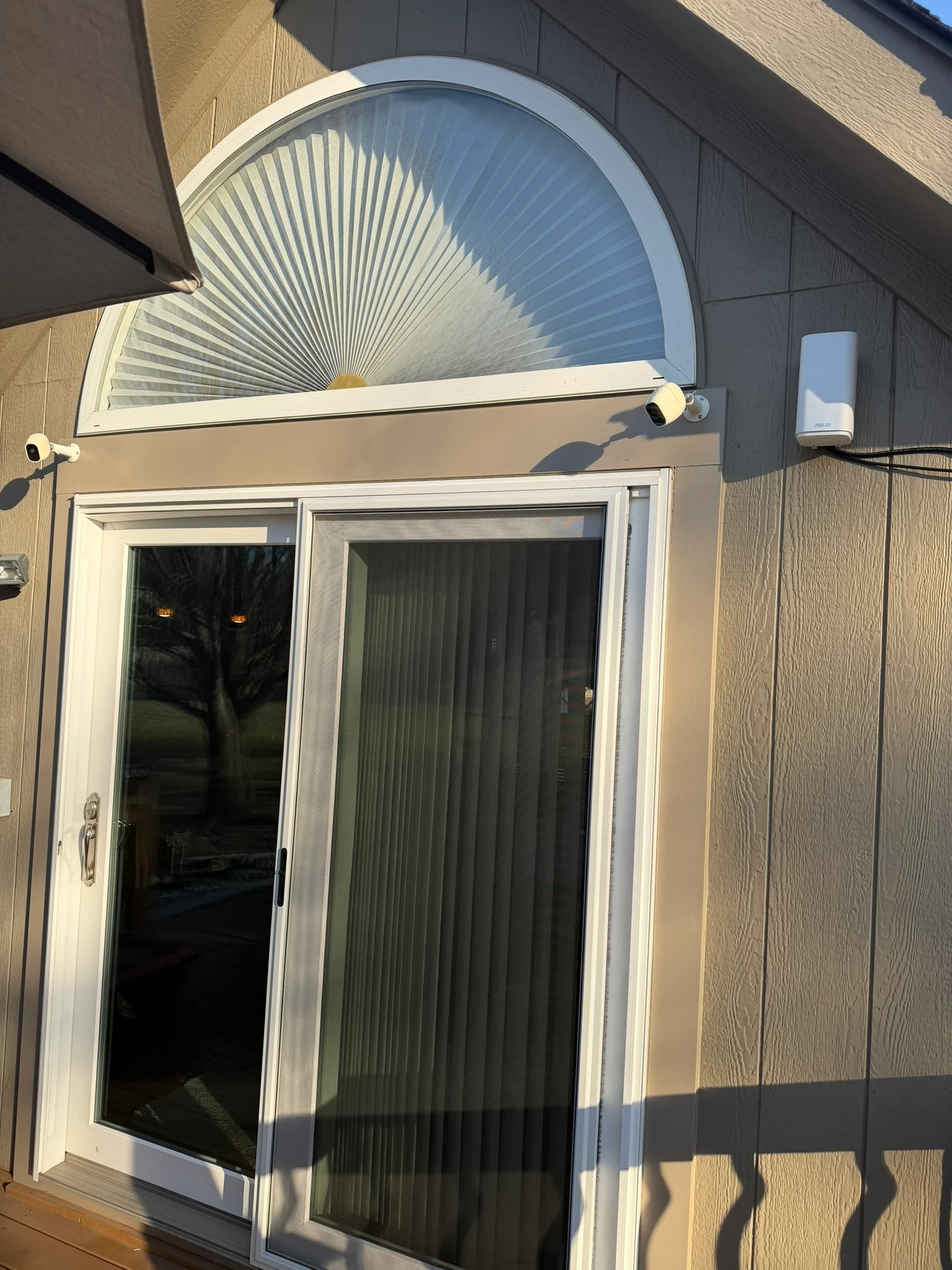
* The two cameras shown flanking the deck door didn’t jump over to the ASUS outdoor node. Their stability was already established. So, in an already stable network installing an outdoor router will not initiate an automatic migration.